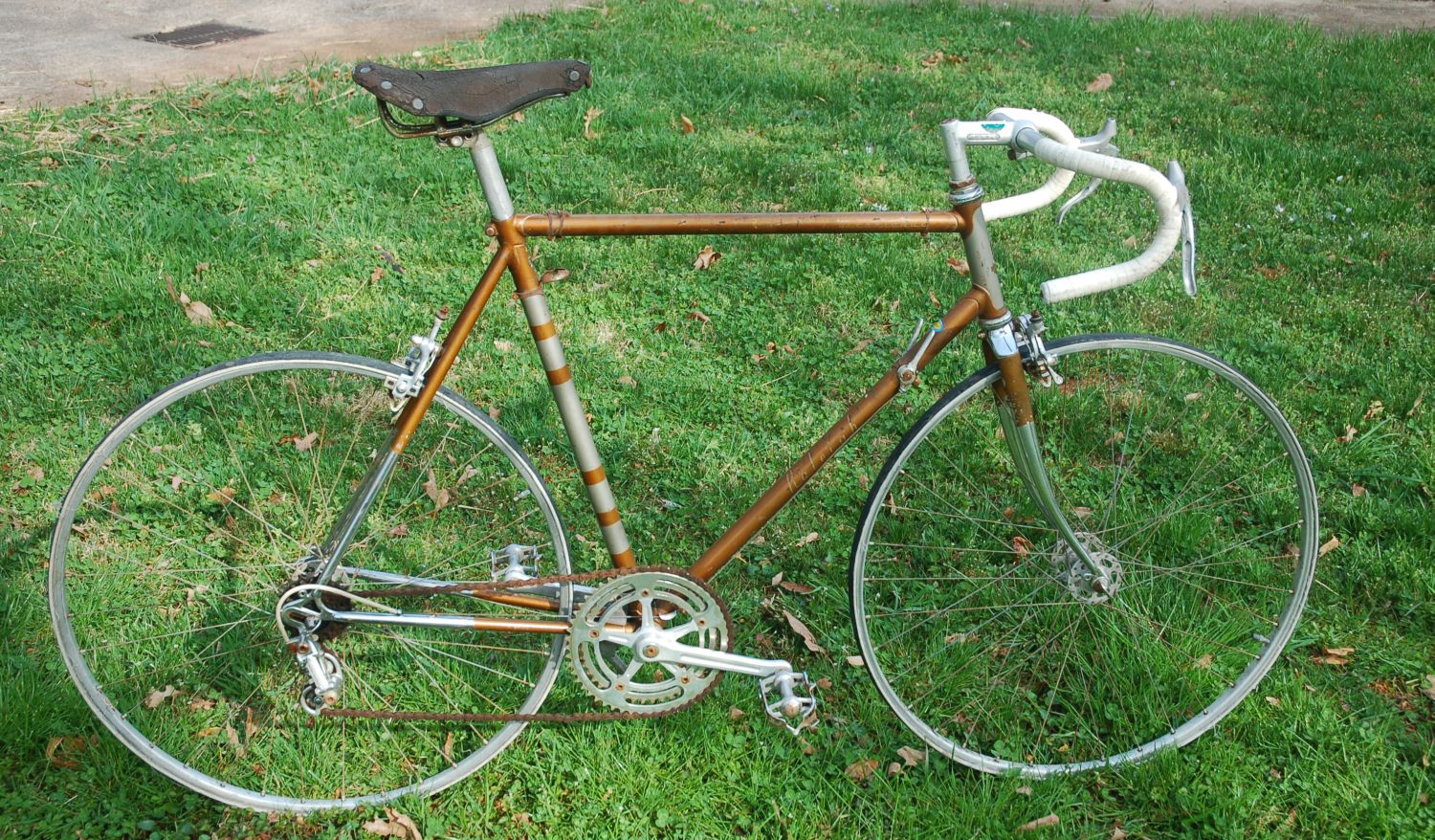
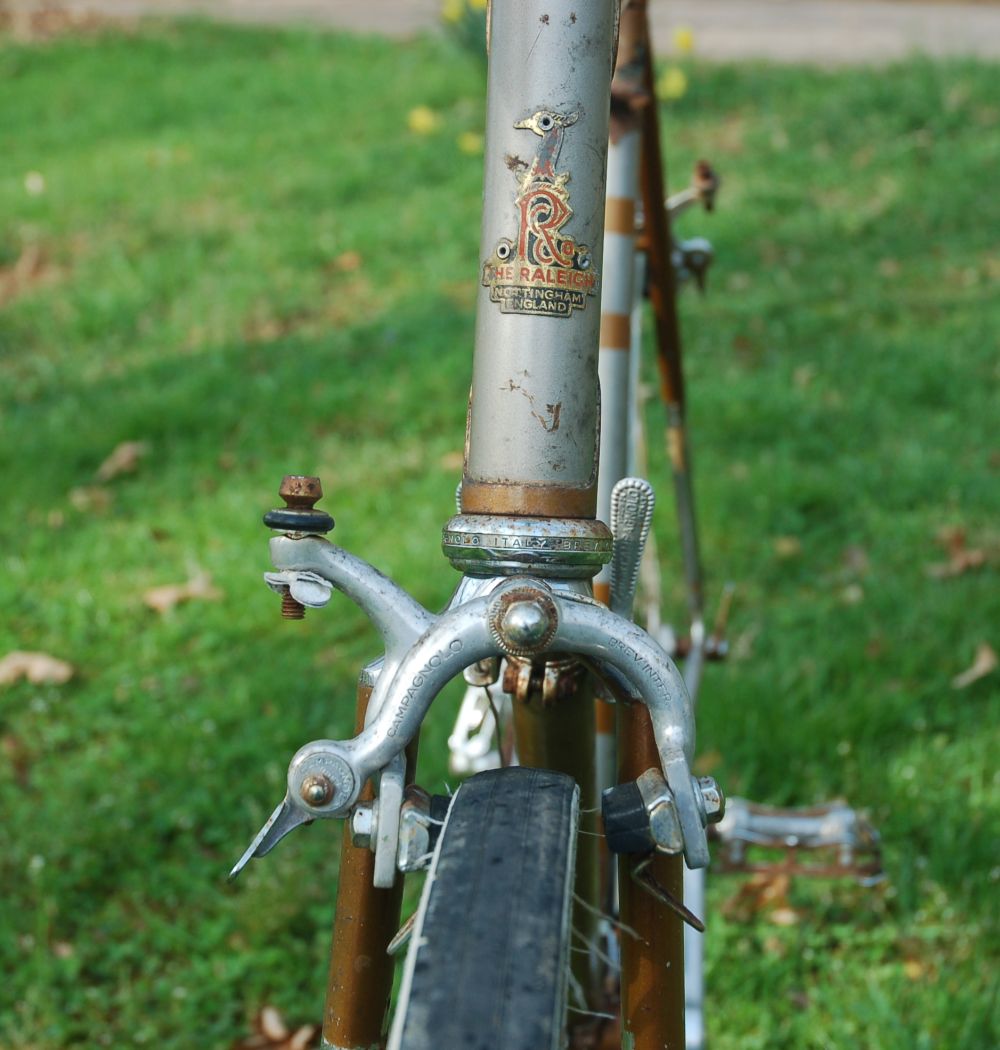
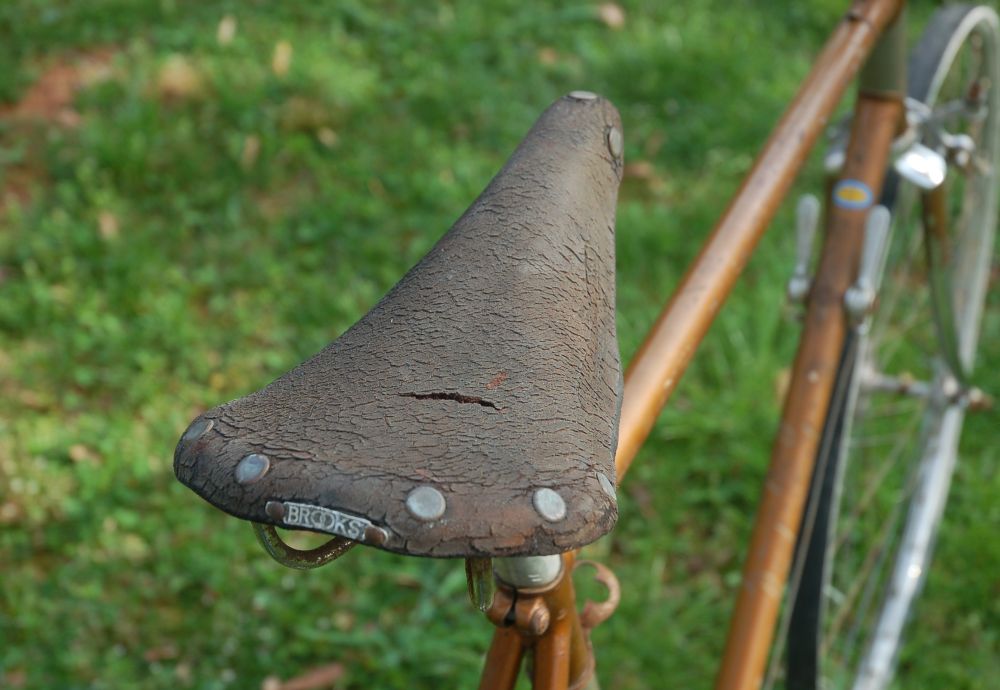
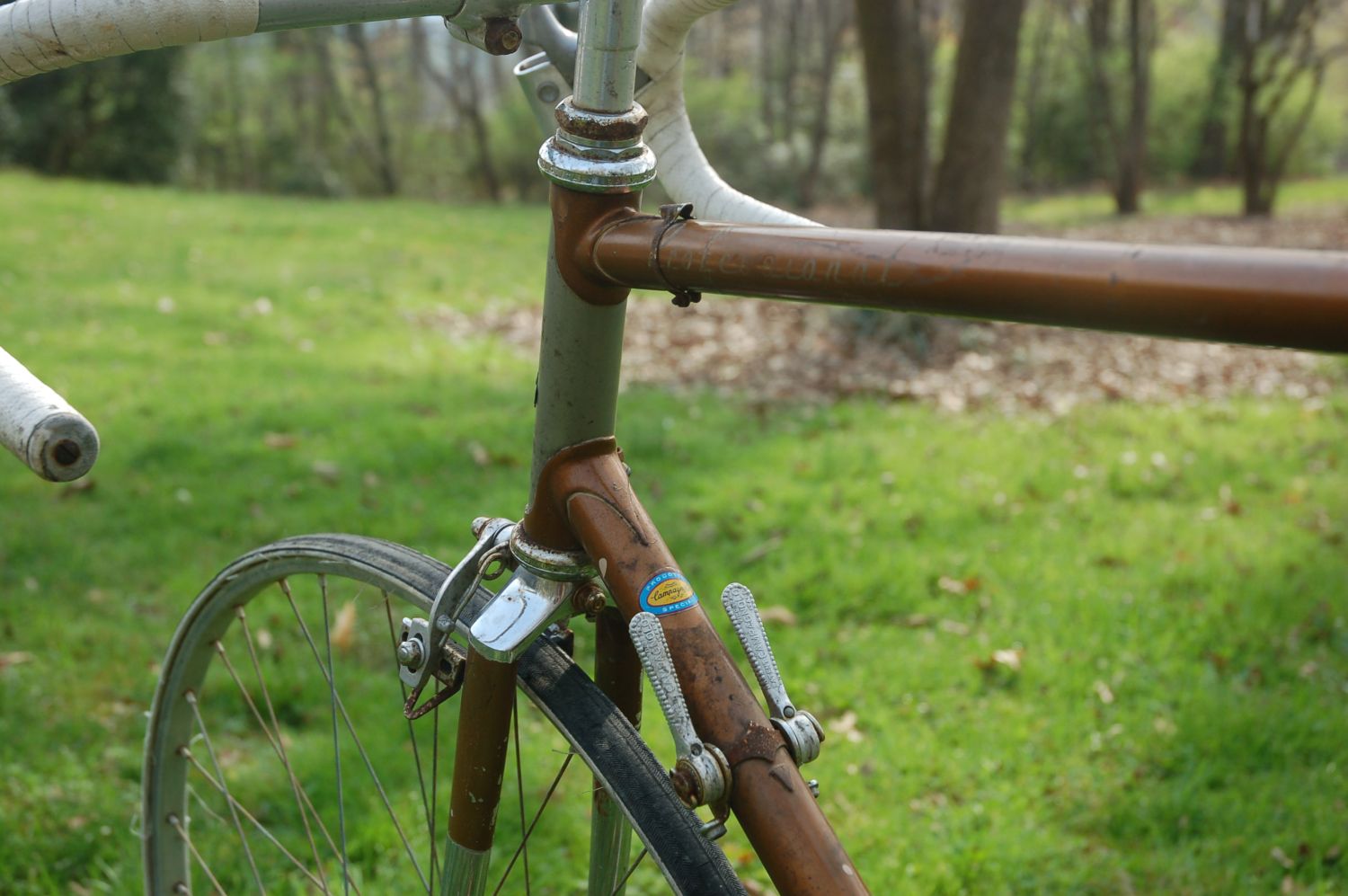
Never having been a huge enthusiast to British machinery it has occurred to me that having an interesting Raleigh road bike in the museum would be nice. A week does not go by that I don't see a Grand Prix for premium money or some interesting looking Super Course or even, most recently, a very nice looking Gran Course for sale. Then, this one came along and looked very interesting (on a lot of levels). The Professional was described as Raleigh's nod to Italian bike design and the construction, group selection (Campagnolo Nuovo Record) and aesthetics reflect this. Unlike it's Italian counter-parts, it is constructed using Reynolds 531 double butted tubing. As with most things bicycle, Sheldon Brown compiled some excellent starter resources to learn about these bikes and they can be found here. I like a good challenge, and contrary to the typical fare of bikes in this condition that float around waiting to be turned into recycled steel, this one looks like it may be worth the effort to bring back to life - and it's exactly my size! For now, here it is in it's "as rescued" condition. It appears to be complete less a few cables, hoods, for the brake levers (should it have hoods?), one cable fastener for the brakes and the front derailleur. So, I guess that means I should add here that I'm looking for an early '70s Campagnolo Nuovo Record front derailleur and possibly some brake hardware for Campagnolo of the same vintage. The serial number on the bike (stamped on the bottom of the bottom bracket) is F5598 and I am under the impression it is a 1970 model.


So, what to do with a bike that comes in as a basket case and - without a sentimental attachment to make it original? A lot of choices came to mind, but this time for me it was time to rob the parts bin of some kinda cool stuff I had scrounged and build a modern-esque bike on the very nice lugged steel Puch frame. So, a few months later, it came out pretty much looking like this:
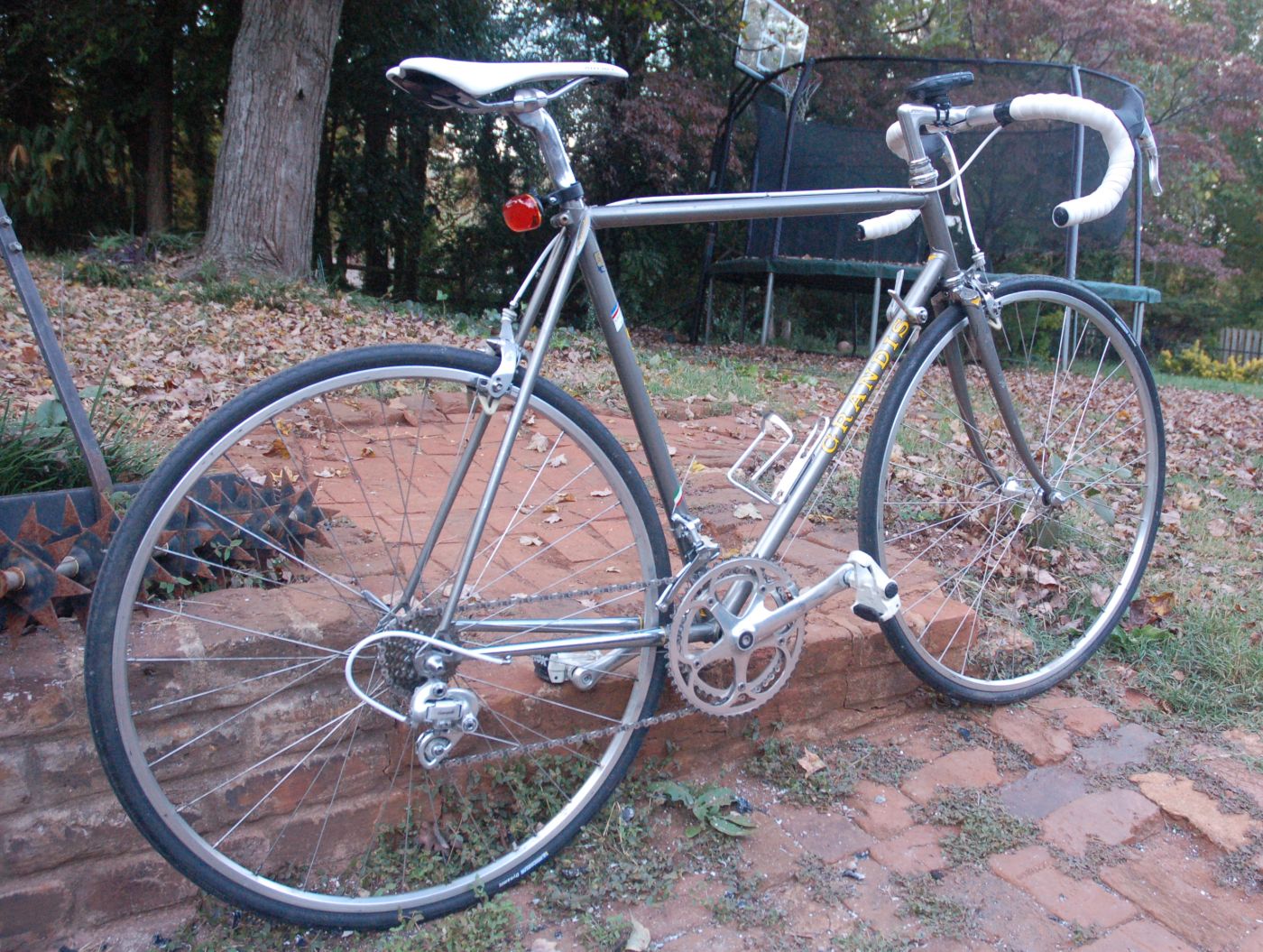
October 2010 UPDATE: The Grandis has finally been (sort of) brought back to it's (mostly) Italian glory with a rebuild using late '80s Campy drivetrain and brakes and a somewhat nicer wheelset laced to Shimano 600 hubs. Here are some photos taken right after a hilly 16 mile test ride where I decided I much prefer 39/53 chainring sets to the 42/53 that I have here. Whatever the case, it is smooth, fits nicely and I believe will work it's way into my rotation of riders quite nicely. For now, here are some pictures of how it sits at the moment:

Below is the original post. Since the frame is the same as below, check out the beautiful construction of this Grandis frame in the photos below....
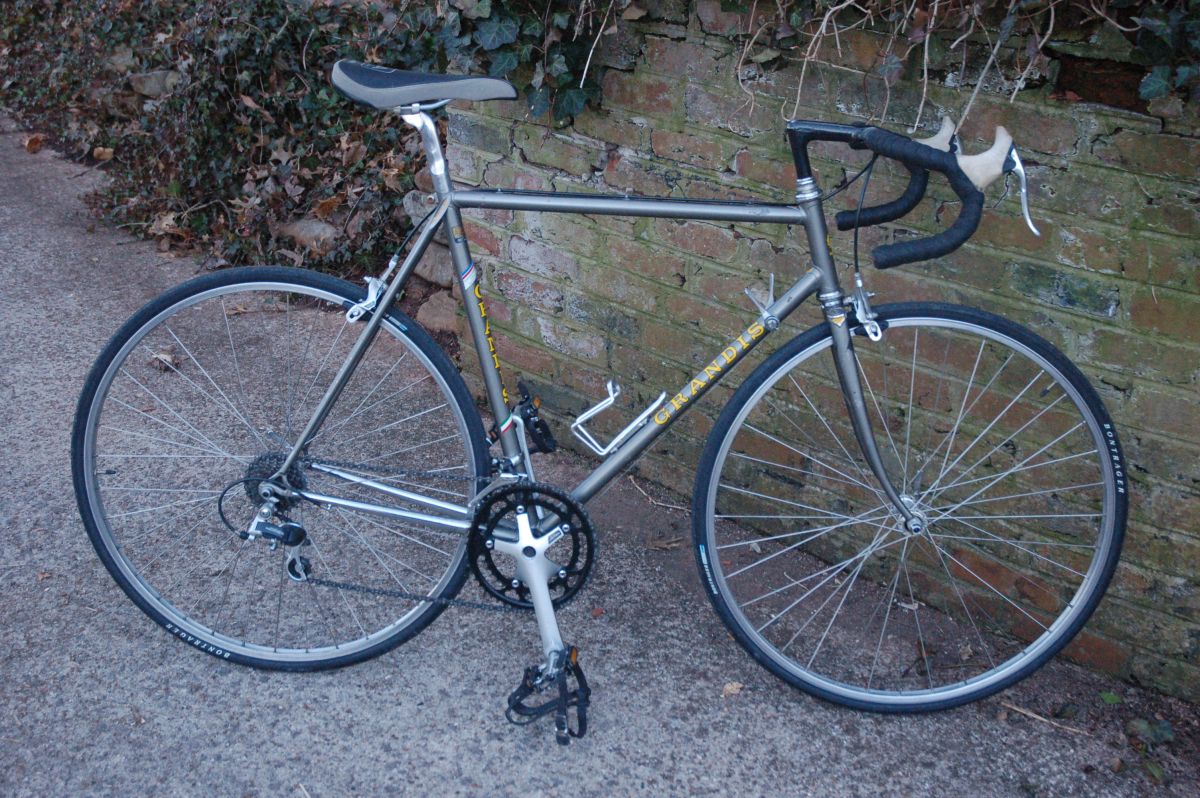
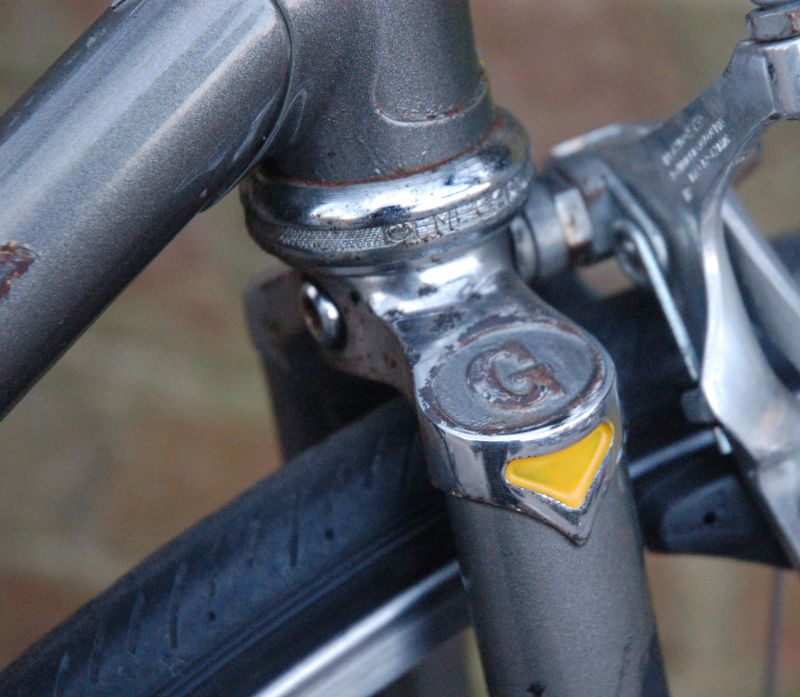
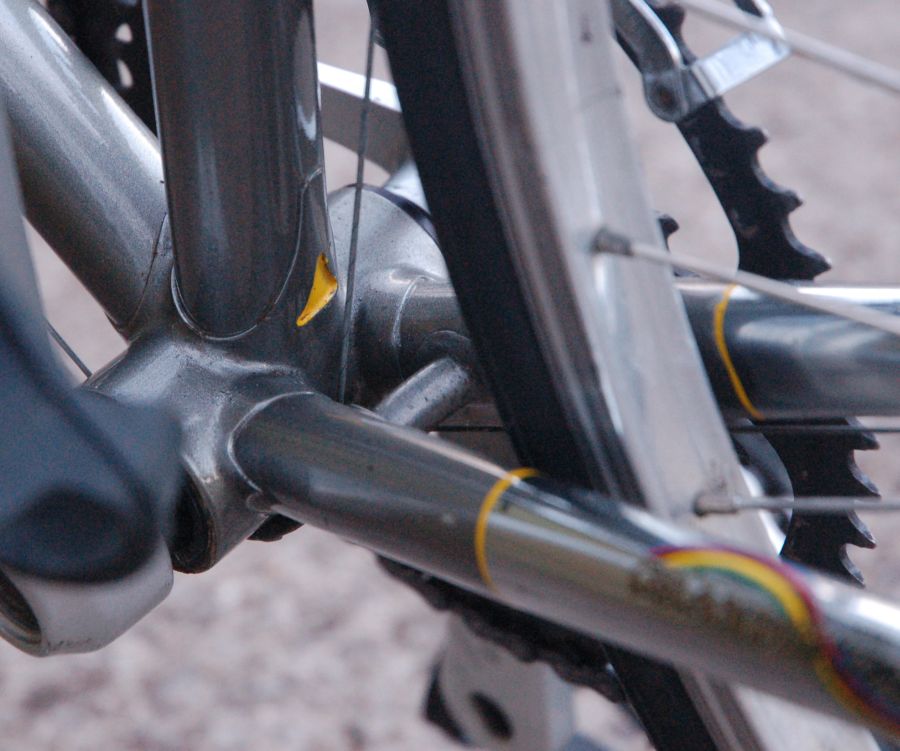
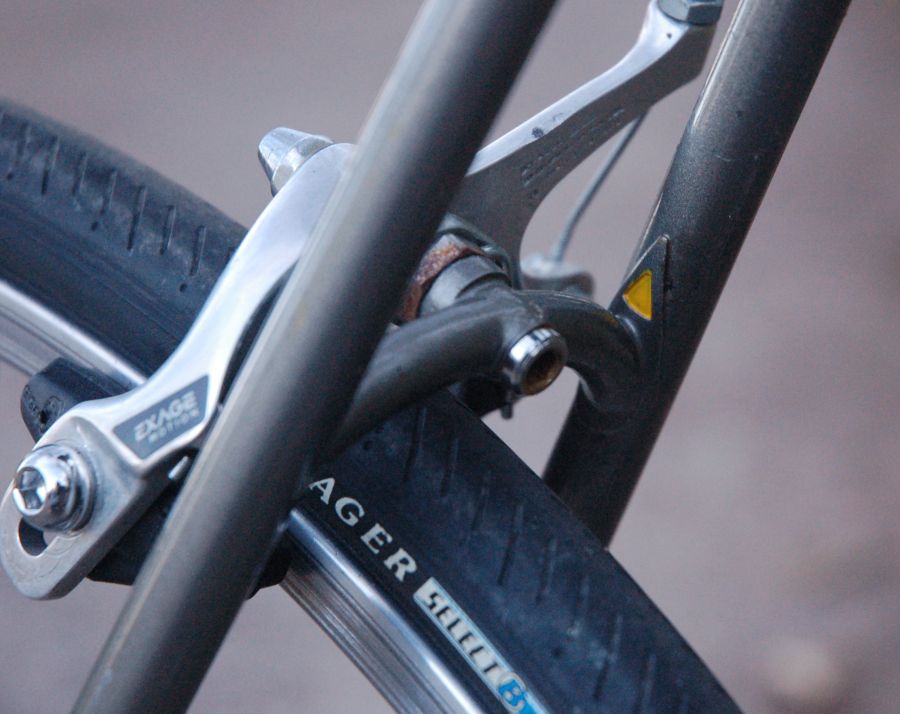
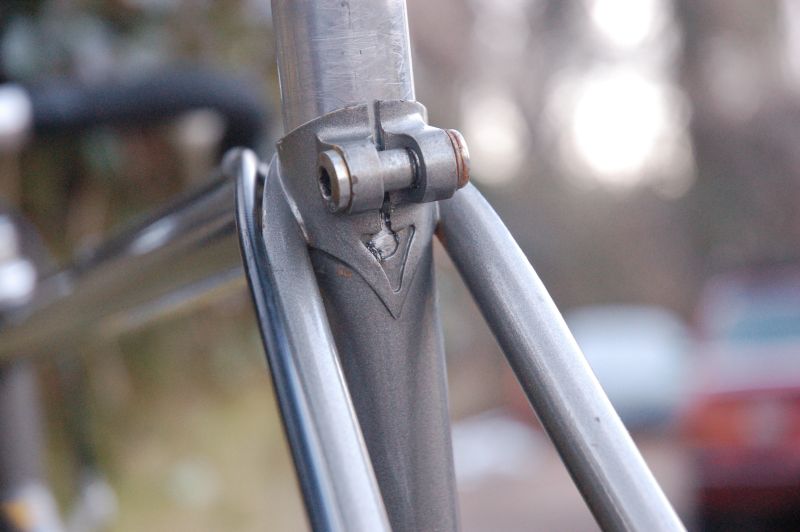
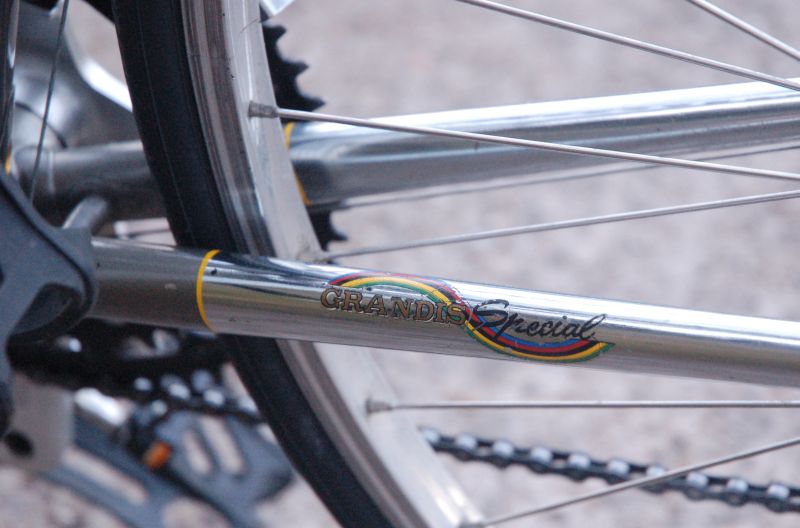
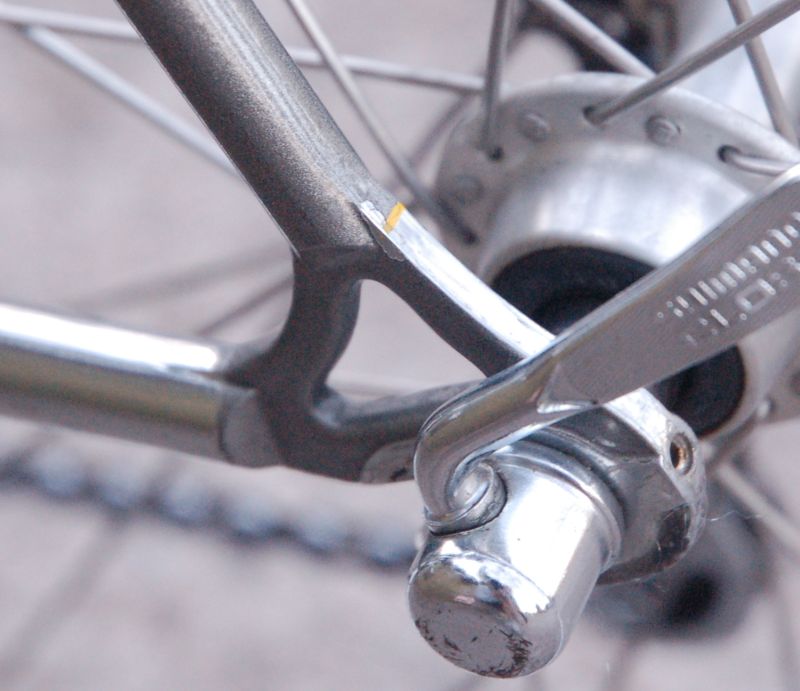
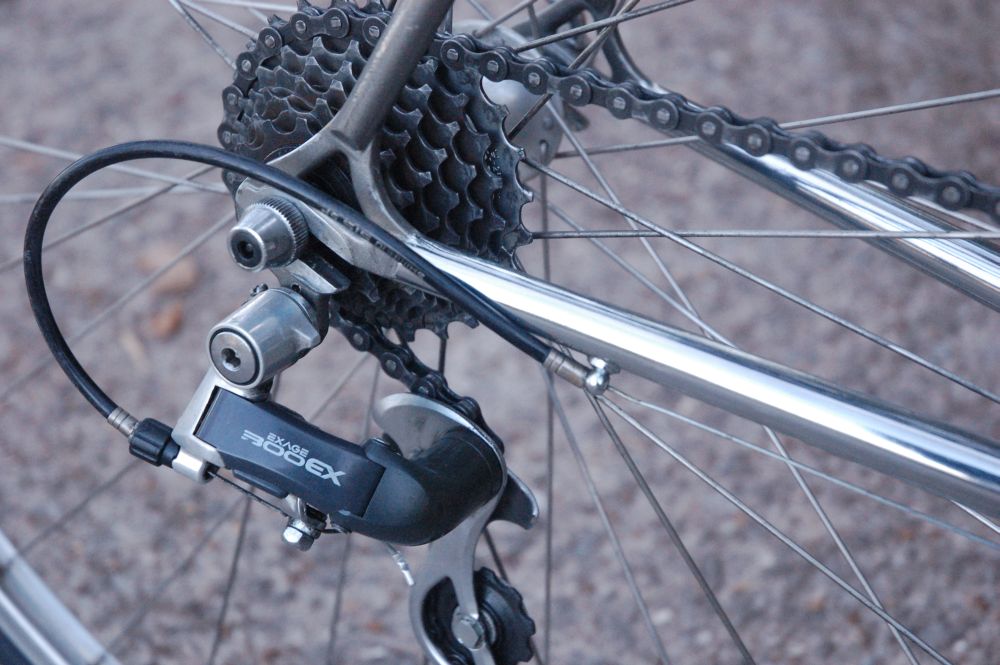
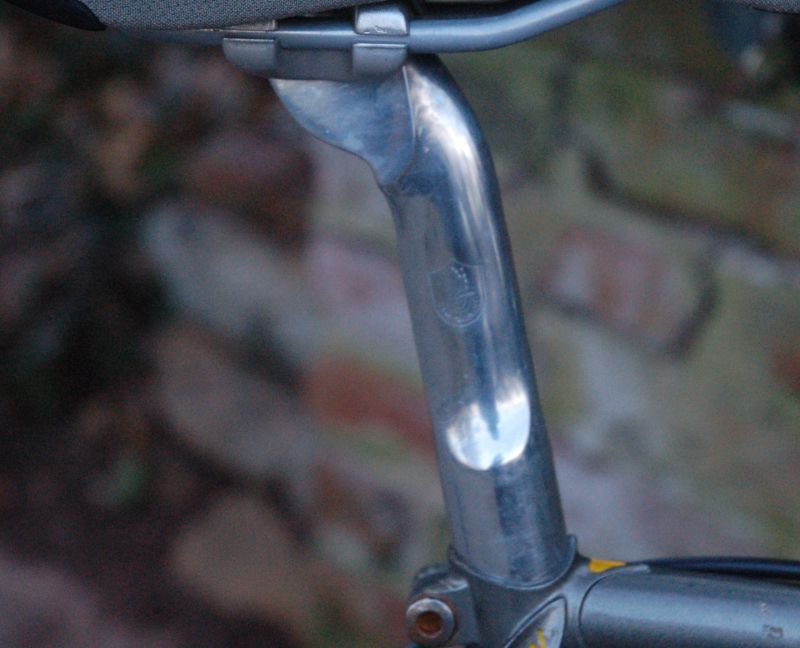
This is the latest museum addition. This is what i believe is an early 1980s Grandis road bike. Grandis is an Italian bike maker who only imported to the US in relatively small numbers, apparently during the late '70s and early '80s. The company is still alive and well, but is no longer importing to the US. The bike was originally a completely Campagnolo-clad machine built on a highly detailed (but tastefully done) lugged Columbus steel frame. Almost all the Campy was gone by the time this fine machine was added. Currently, it has it's fair share of scratches and general "patina" - which is fine, but all the components except the seatpost have been replaced some time in the past with a Shimano Exage group. The upshot is that the bike arrived in the condition shown, with new tires, new bar tape, and mechanically ready to ride. I hope for this to be a slow, period-correct and tasteful (er, as opposed to some of my other works) restoration to the Italian glory this bike was built for.


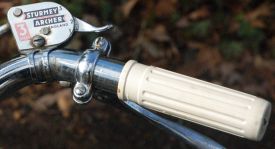
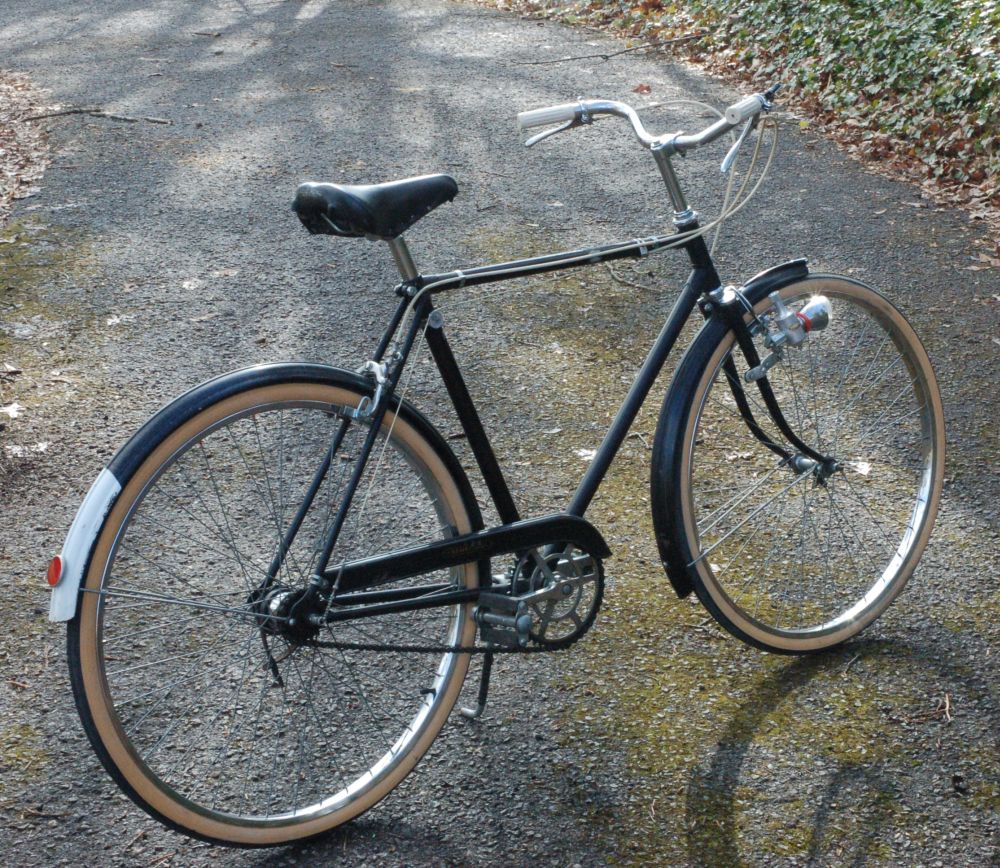
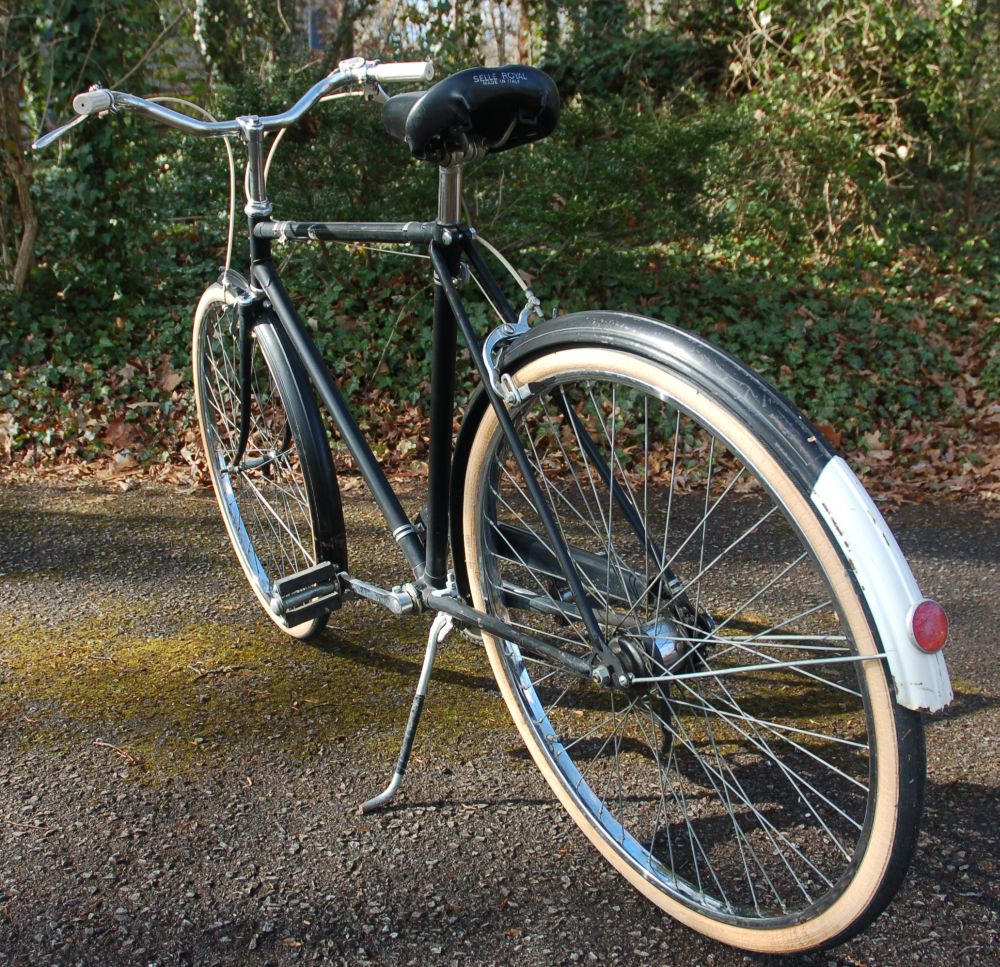
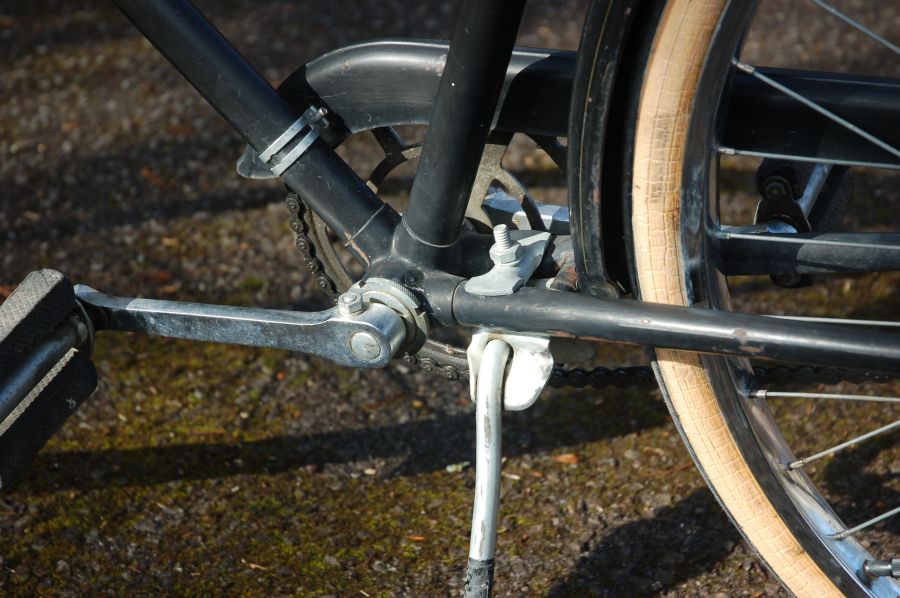
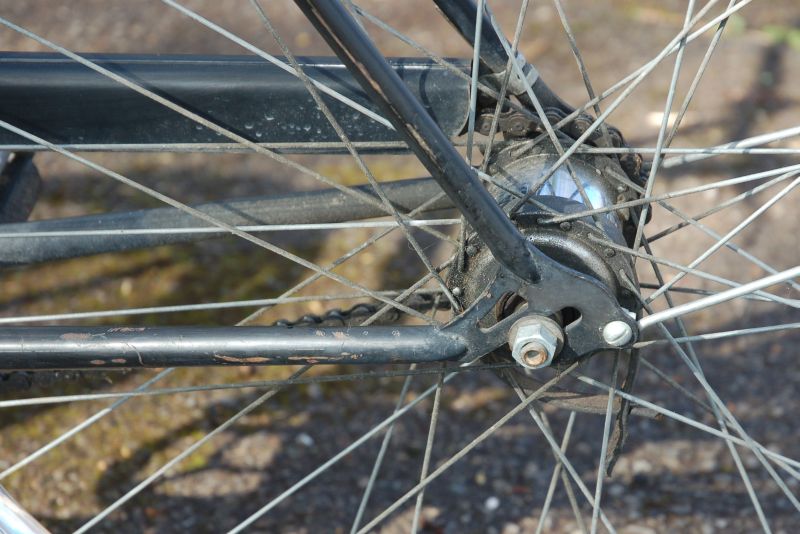
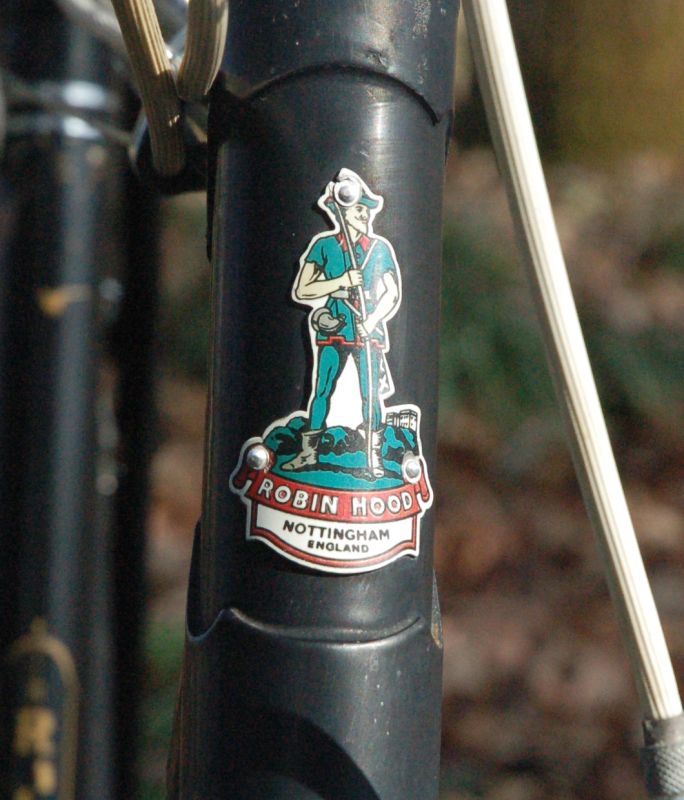
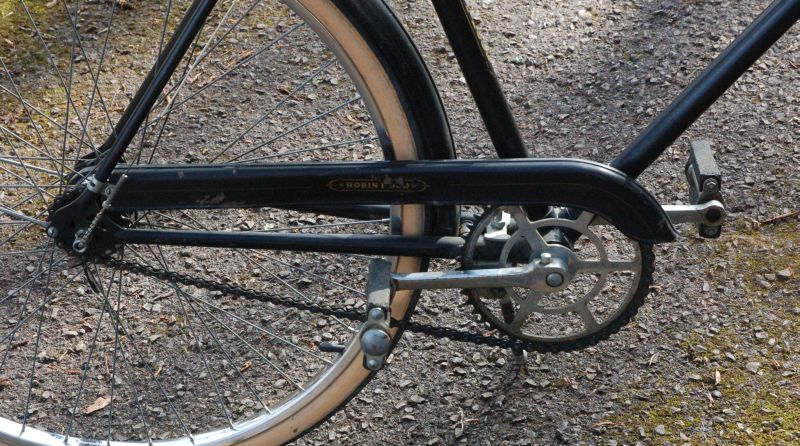
I guess you can say that one has reached the full depths of bicycle-induced dementia when the idea of one of these clunky, heavy-looking, fendered, upright, and usually black painted bikes looks cool. I mean, these things don't even have gears, right? Well, actually they do, they just use internal gearing in the rear hub. And, while the Robin Hood is certainly painted black, it's not nearly as heavy as it looks like it would be. And, besides, fenders are kinda handy if you're trying to stay clean when you're riding. So, rationalizations aside, one of the most recent additions to the museum is this 1965 Robin Hood. Robin Hood was apparently a company bought and owned by Raleigh in the early 1960s and this bicycle is basically the classic English 3-Speed, featuring the well-revered Sturmey-Archer 3 speed freewheel hub. The bike has been with it's mate, a step-over framed model of the same bike in the same color, but with a hub that indicates it is a 1966 model. Both are as-found and in remarkably good, functional condition. The only thing that does not work are the generator headlights, but I'm hopeful that some tinkering will get those 6 volt beauties to come to life.
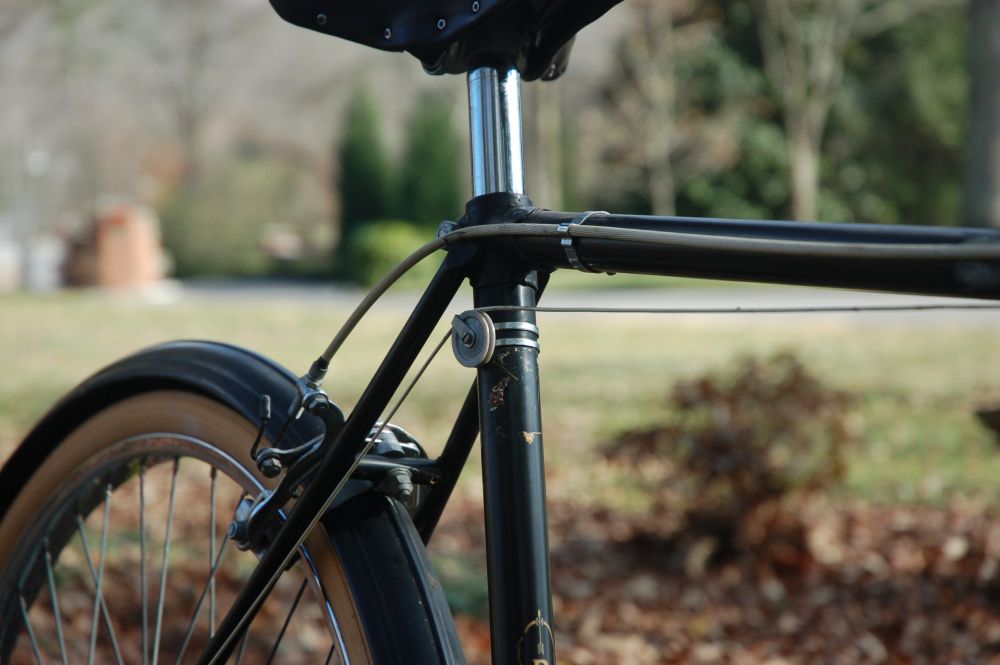
These have been interesting to learn about. They use 26" x 1-3/8" wheels, so there's nothing exotic about that. The 3 speed hub is fairly indestructible and not terribly difficult to adjust. At best the gearing on the bike (combined with the very upright riding position) is not ideal for east Tennessee, but I have read that changing the gearing is a very do-able prospect if desired. This bike, like most British machinery produced up through the late 1960s uses Whitworth hardware, so there will be a few new wrenches added to my toolbox to keep these bikes healthy. Here are some more pictures.
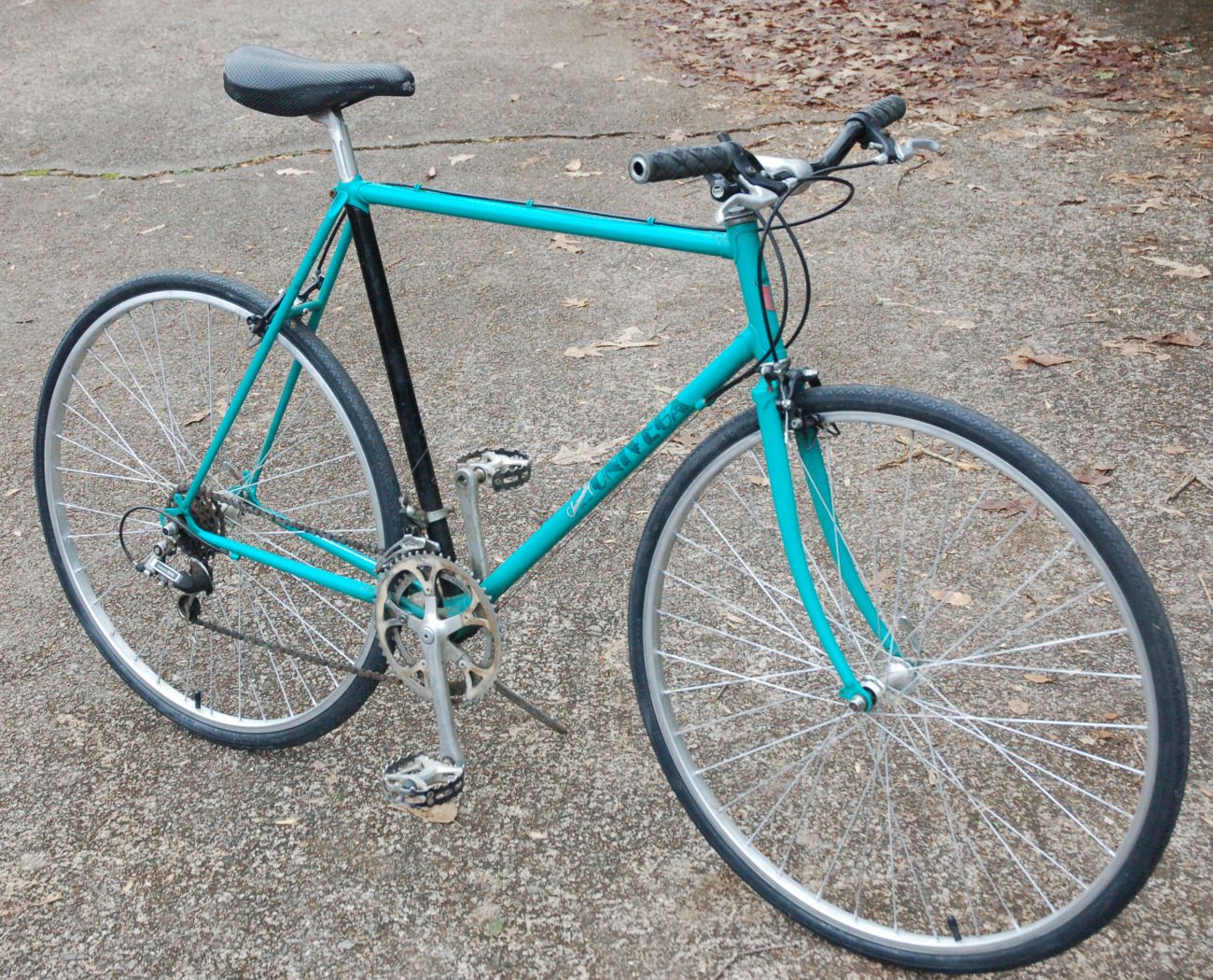
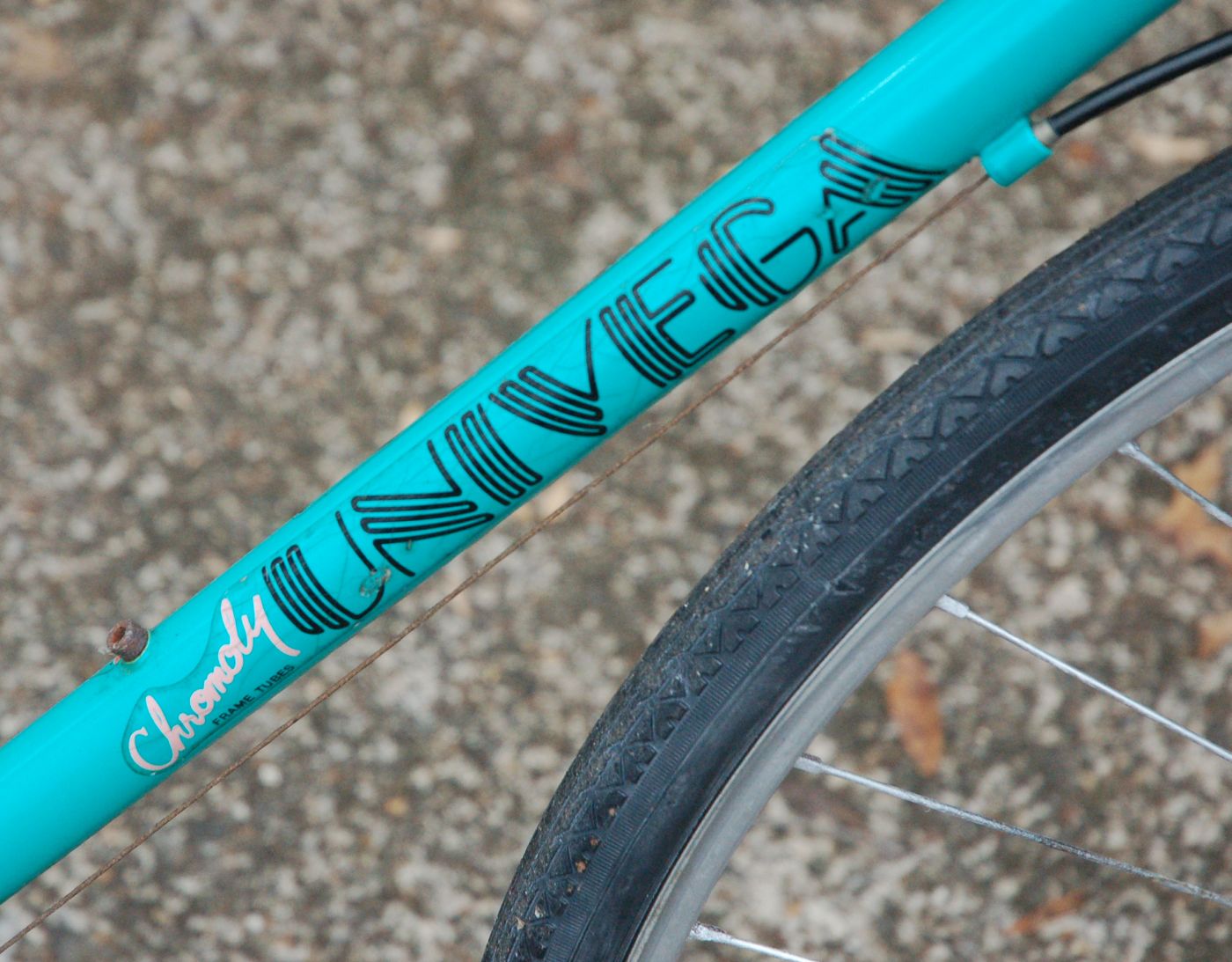
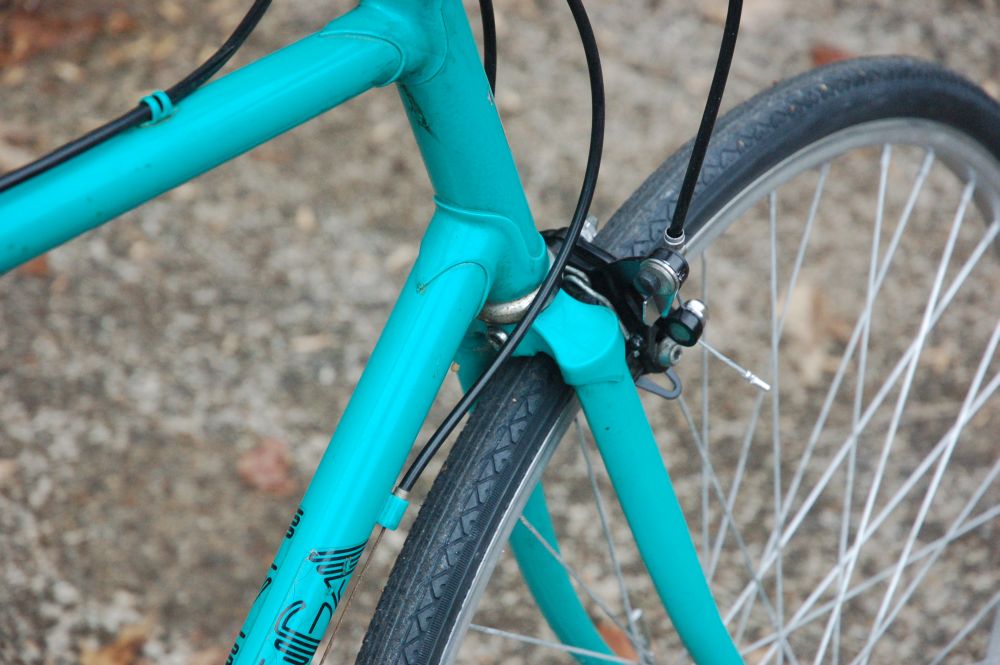
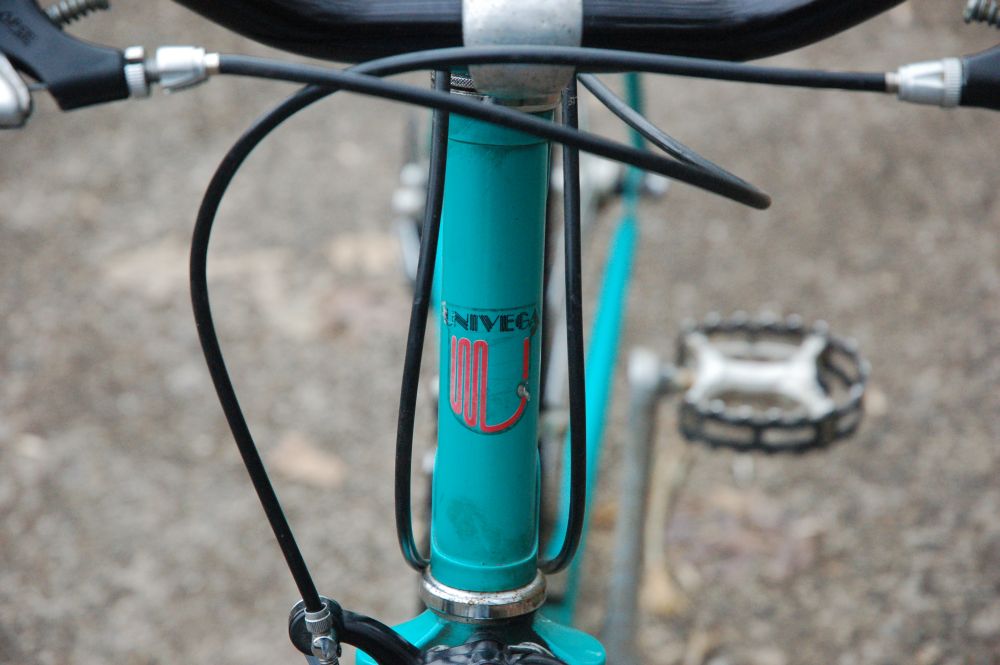
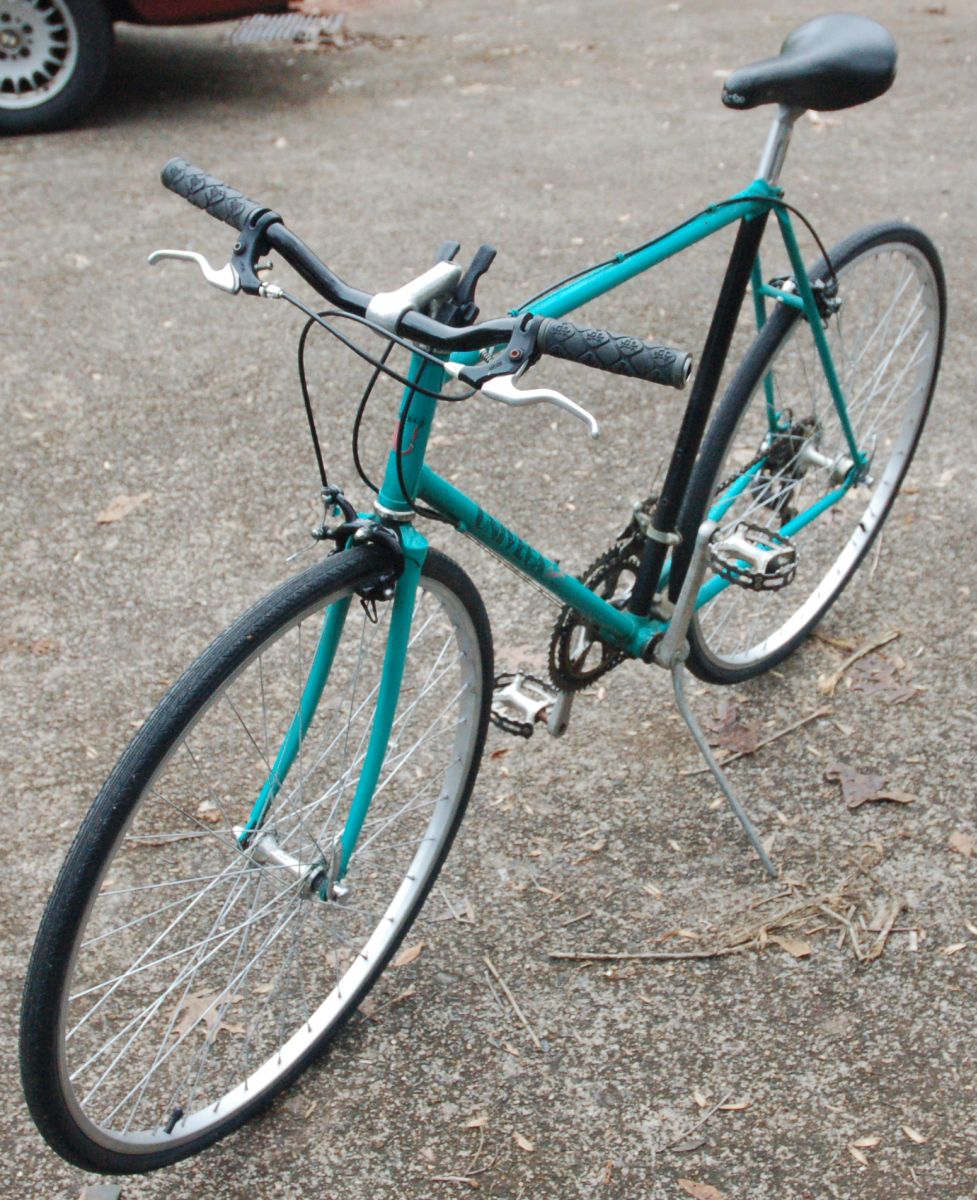
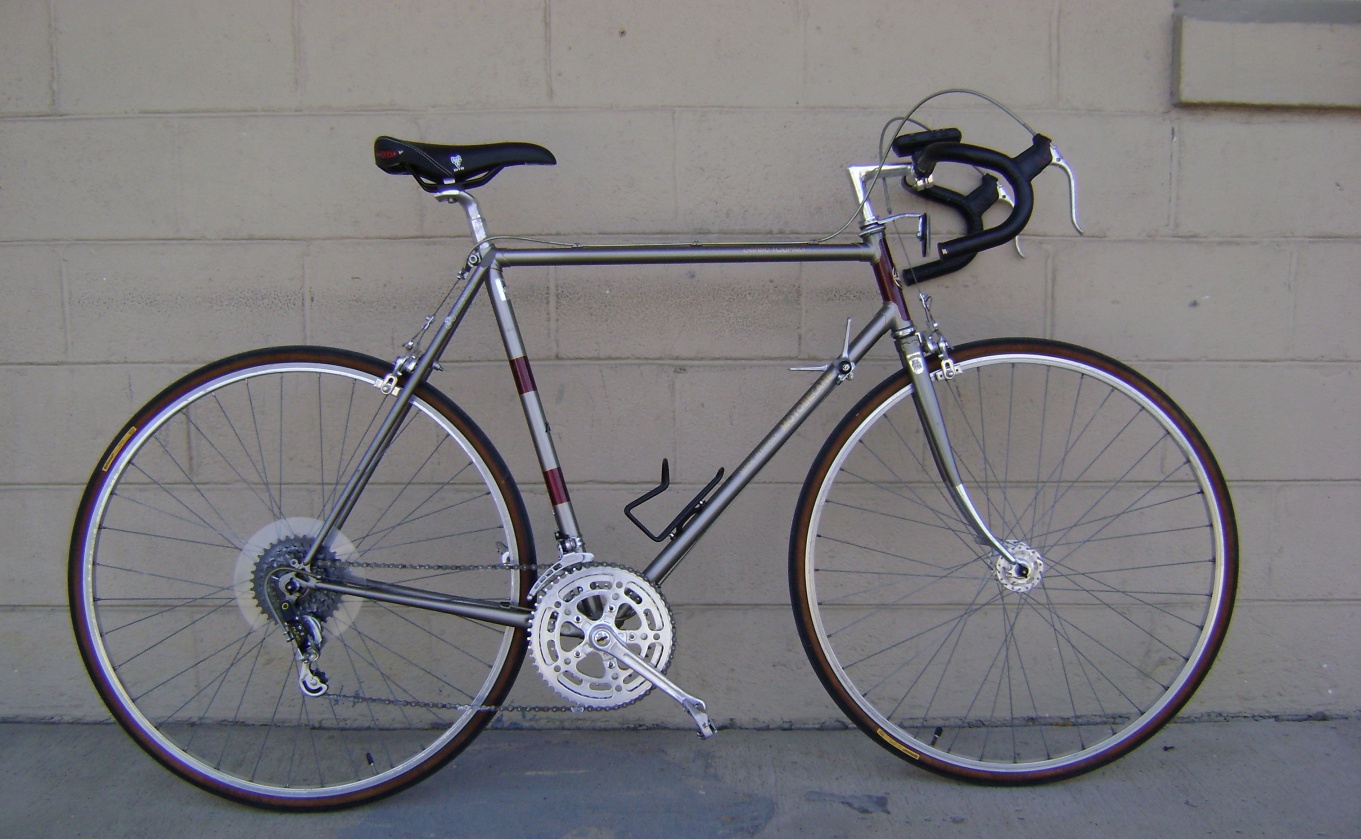
This is one to file under the "fixie style" category. Oh, wait, there isn't a category named that here....well, anyway, I answered an ad for a Univega with no photo. I've always found Univegas to be nicely made (for mass produced) bikes, so I figured it would be worth adding to the collection. At first, it looked like this:
It had been stored in a van and was generally grimey and smelled like an old basement. The tires were trash and I didn't even want to imagine what was the liquid that half filled the water bottle. Somewhat surprisingly, the gears all worked very nicely and were adjusted correctly. The brakes even worked.
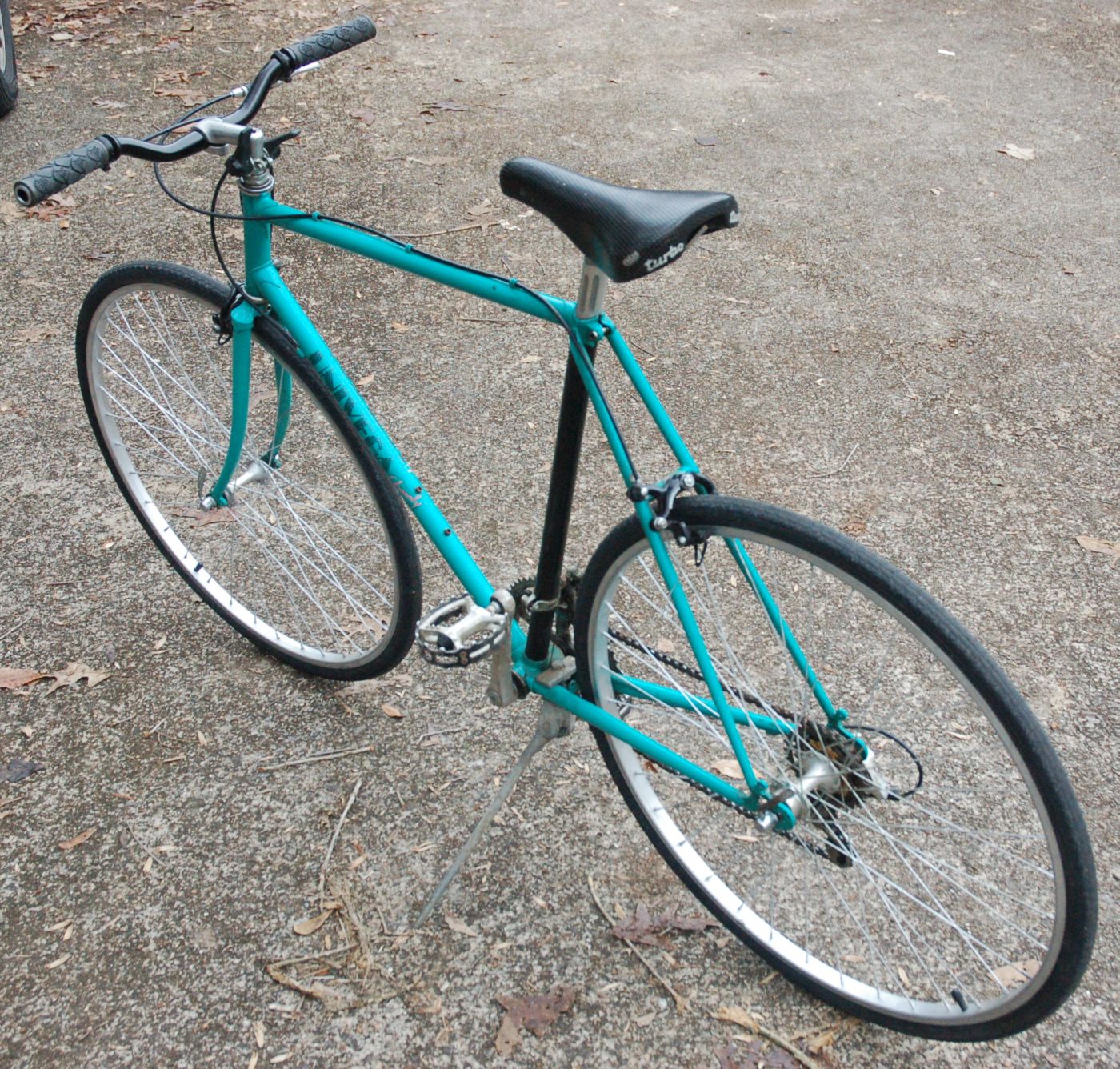
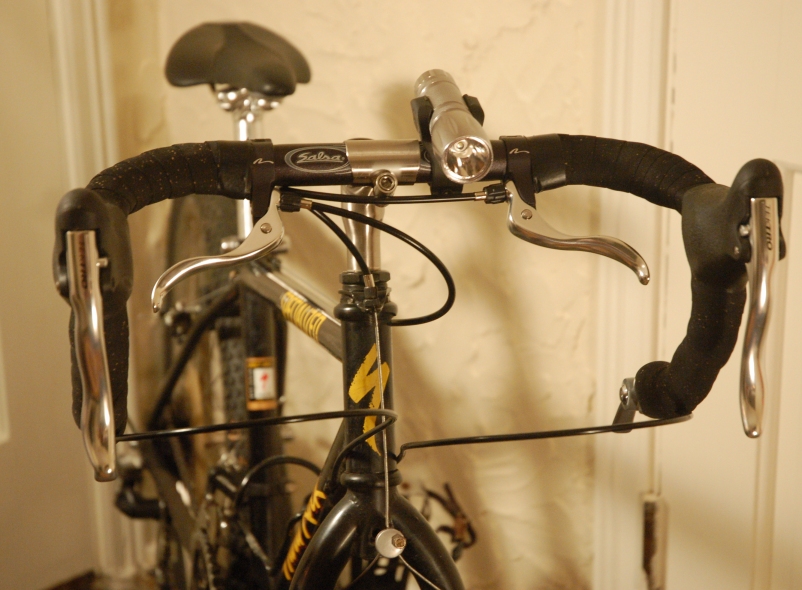
But, alas, I don't know if was the seriously Miami Vice color scheme, the shear brilliance of the "SIS" Shimano 5 speed indexed rear freewheel or what, but I decided this bike needed a quick and simple facelift and then to be drafted into a fun bike for short trips....maybe one to keep at the office for errands or lunchtime riding. I replaced the seat and post with a spare Turbo saddle and a nicer post I had in my workshop. I replaced the heavy steel drop bars and levers with a slightly chopped riser bar and some old mountain bike brake levers that were on a set of bars I was already harvesting grip shifters for another bike from. Keeping with the theme of total recycling, I used best used cables and housings I had laying around for the brake setup. I'm not sure where the grips came from, but they were in the workshop too.
The rack came off and was hung on a hook. I believe I know just the right Robin Hood 3-speed bike that could use the rack as long as it cleans up nicely.
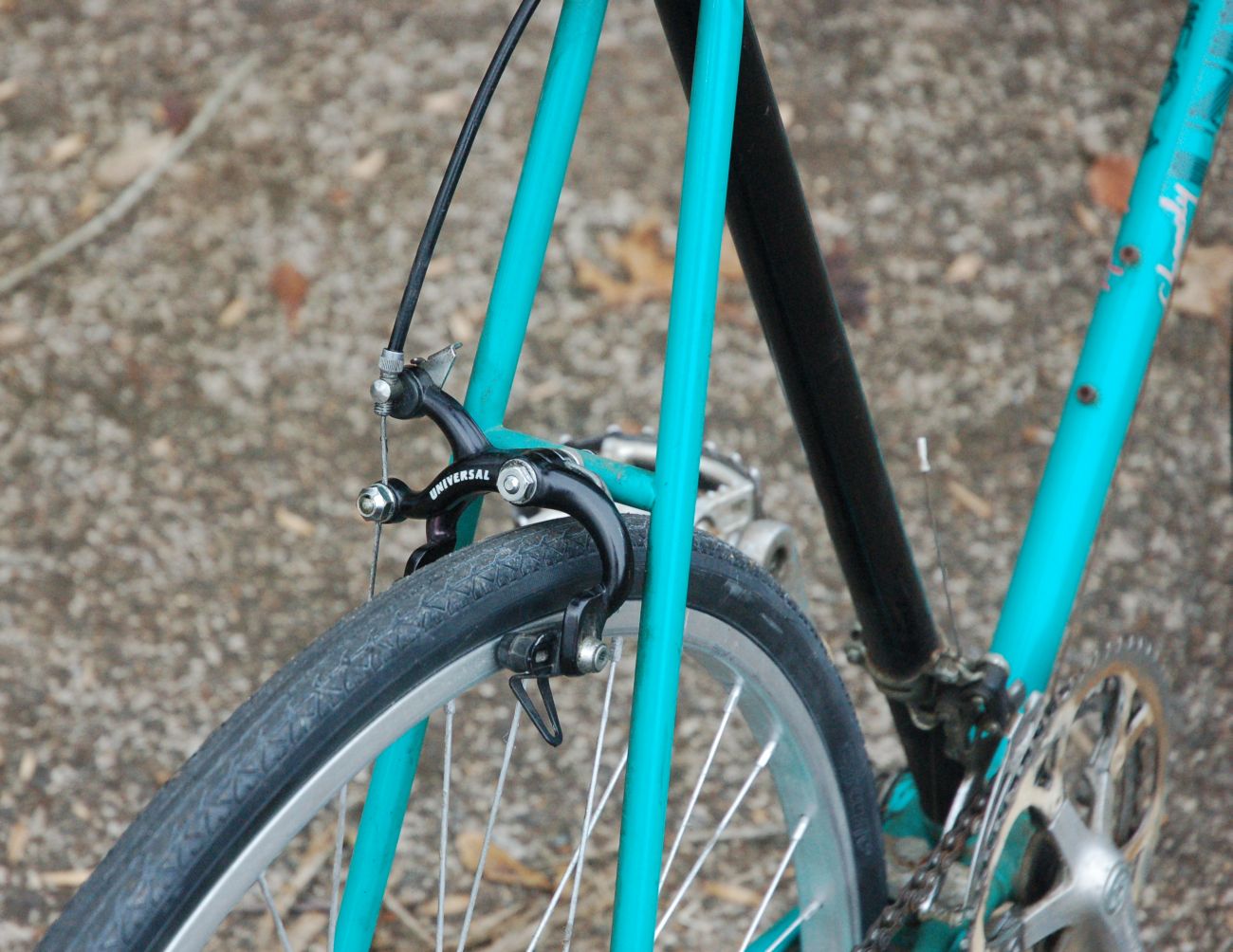
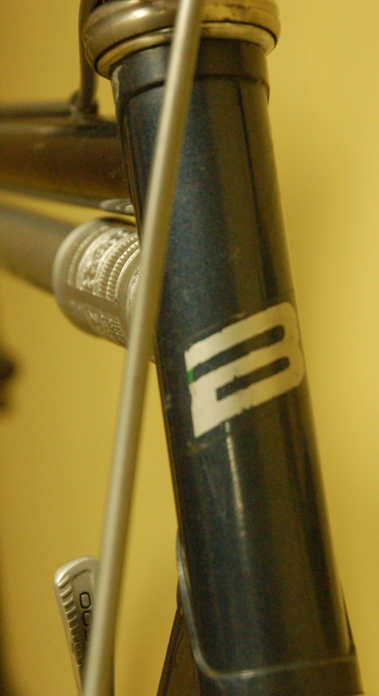
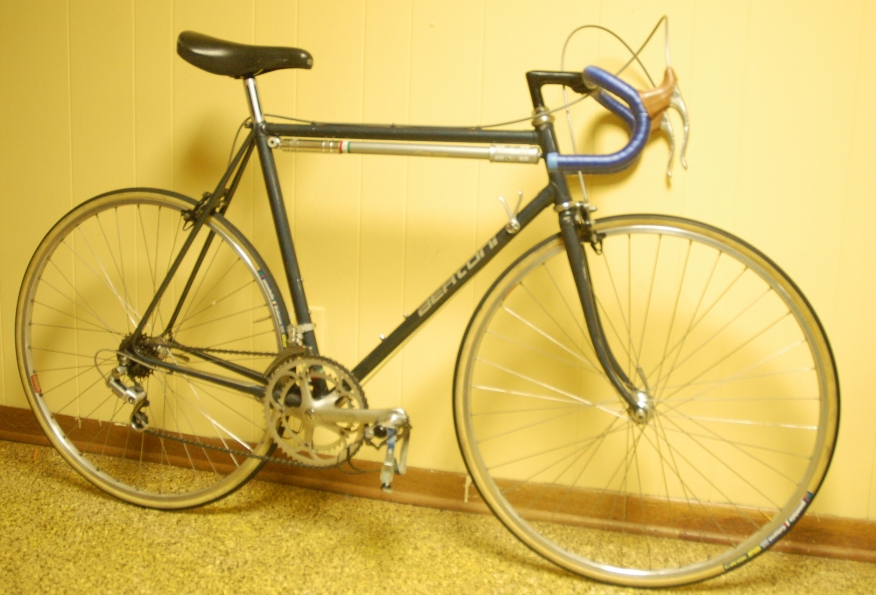
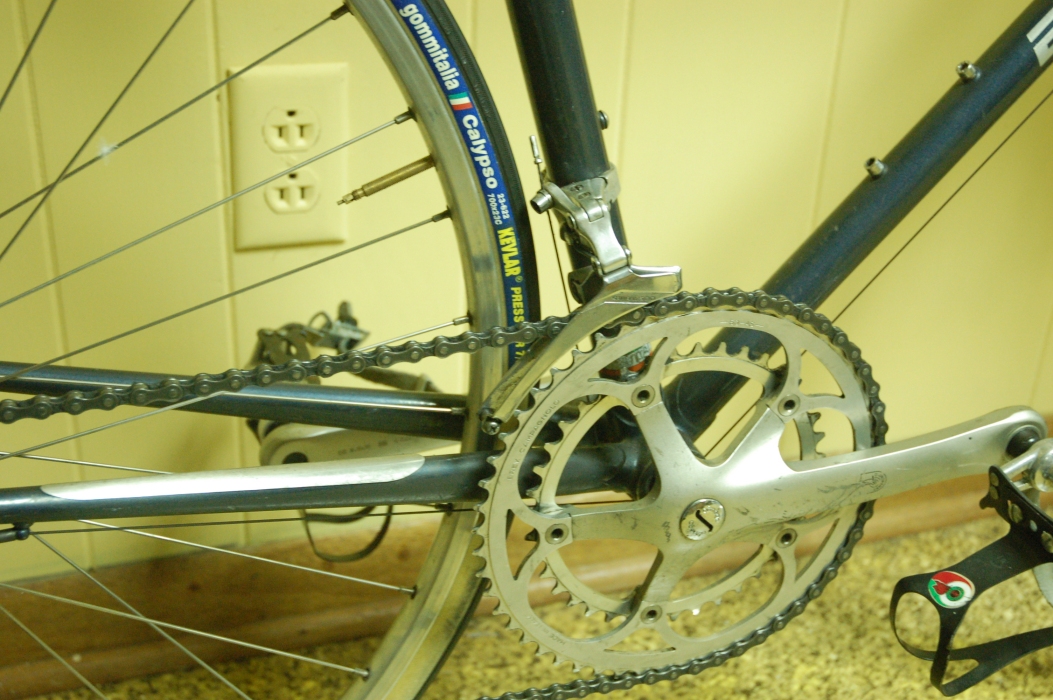
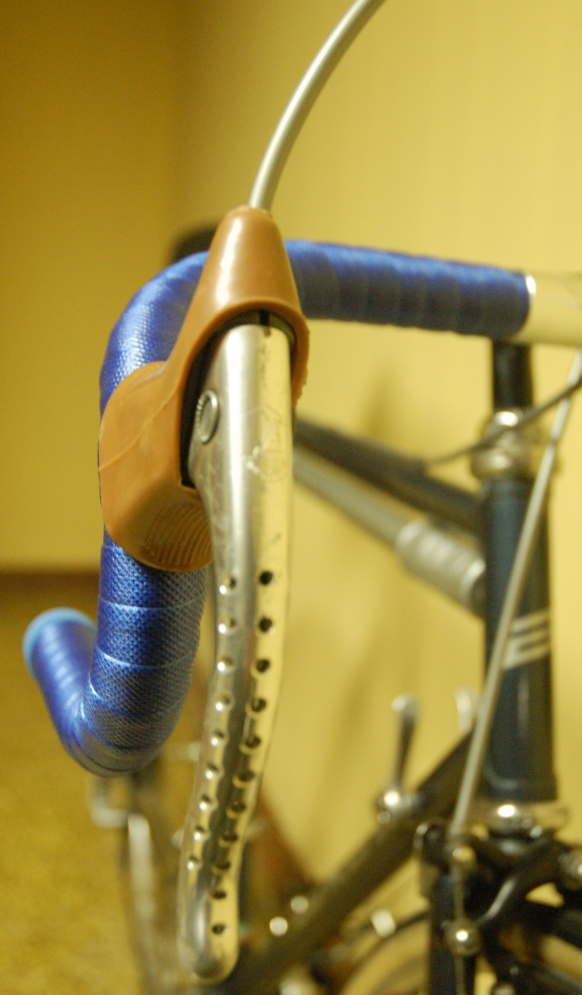
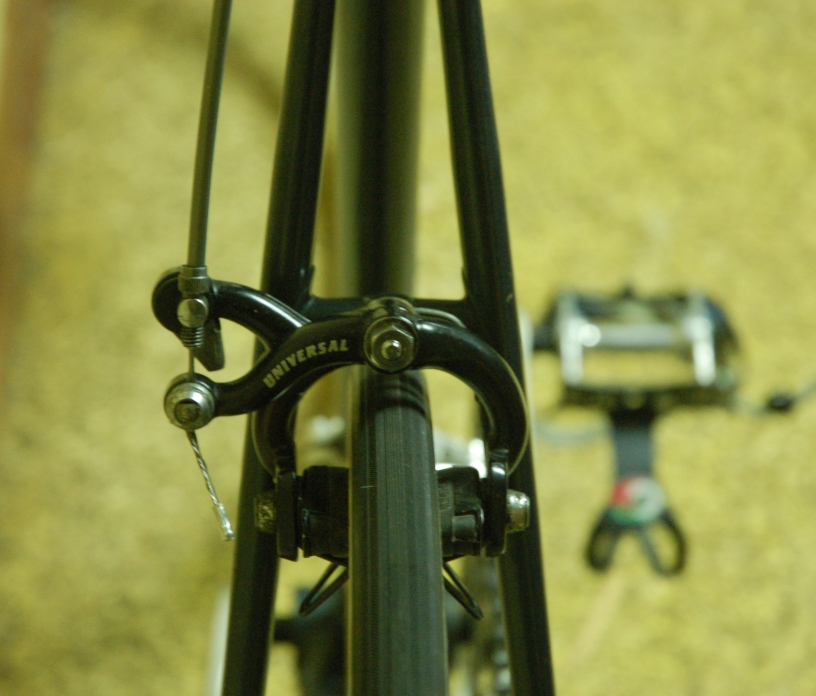
I replaced the brake calipers with a set of black Universal single pivot calipers that were original to my mid-late 80s Bertoni Nouvitalia.
The wheels were true and the bearings felt good, but there was rust on about a third of the spokes. Again, in keeping with the theme for this bike, aluminum engine spray paint came in quite handy after a quick scuff-down with some 100 grit sandpaper on the spokes. I wouldn't recommend this for anything but a project like this, but then again painting the aluminum silver on the old wheels does give me some sort of inner anti bike snobbery pleasure. For proper bicycle karma and inner balance, I used new tires and tubes (some sort of self-sealing or puncture proof tubes I had bought for another project a long time ago, no less!).
So, with all that description, here is the final product. I haven't had a chance to put many miles on this bike yet, but I have to say it's just fun to ride. I don't know if it's the position, the luck of a perfect fit or what, but it just puts a smile on my face...and kinda makes me want to pop a wheelie or something!

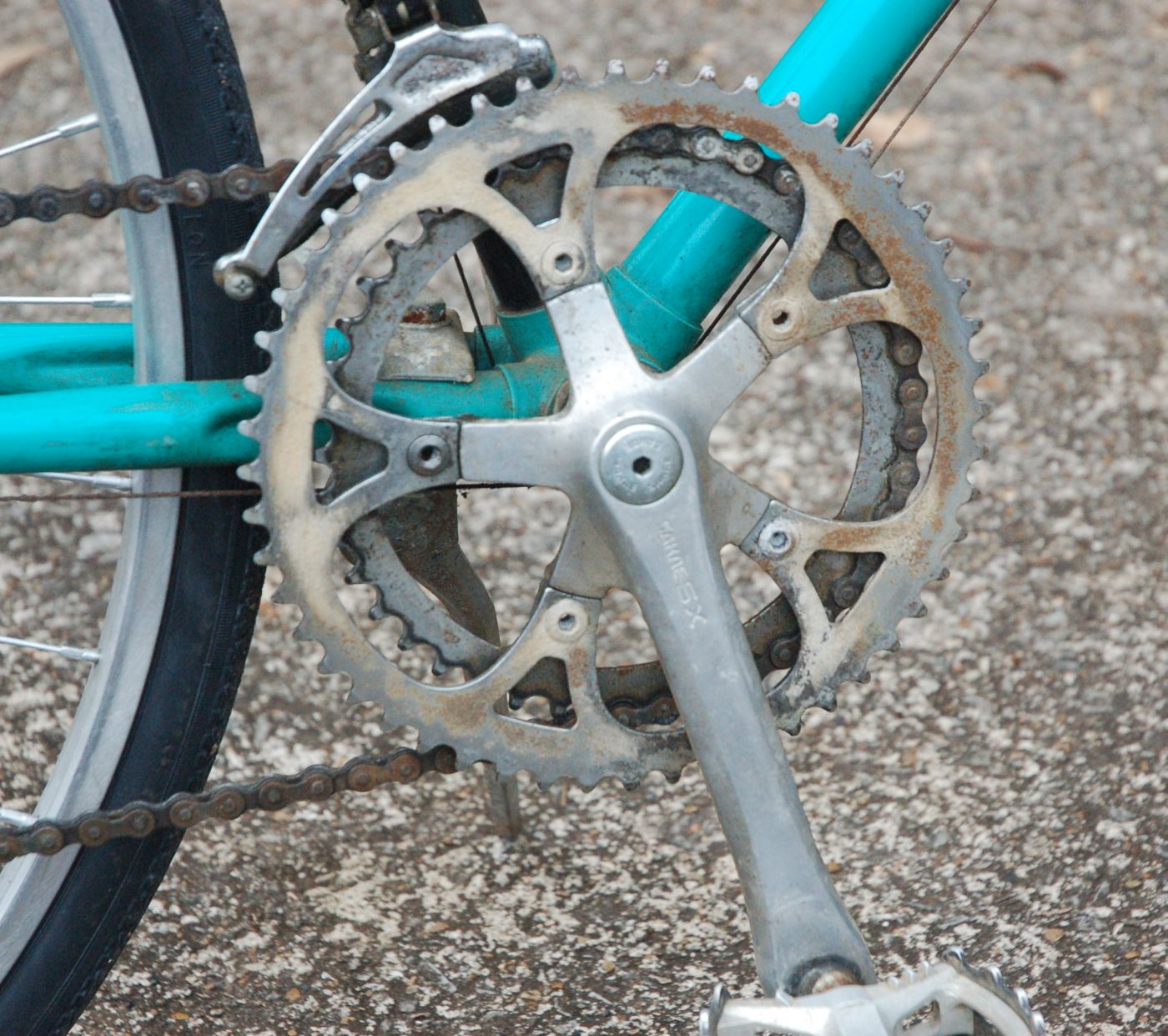
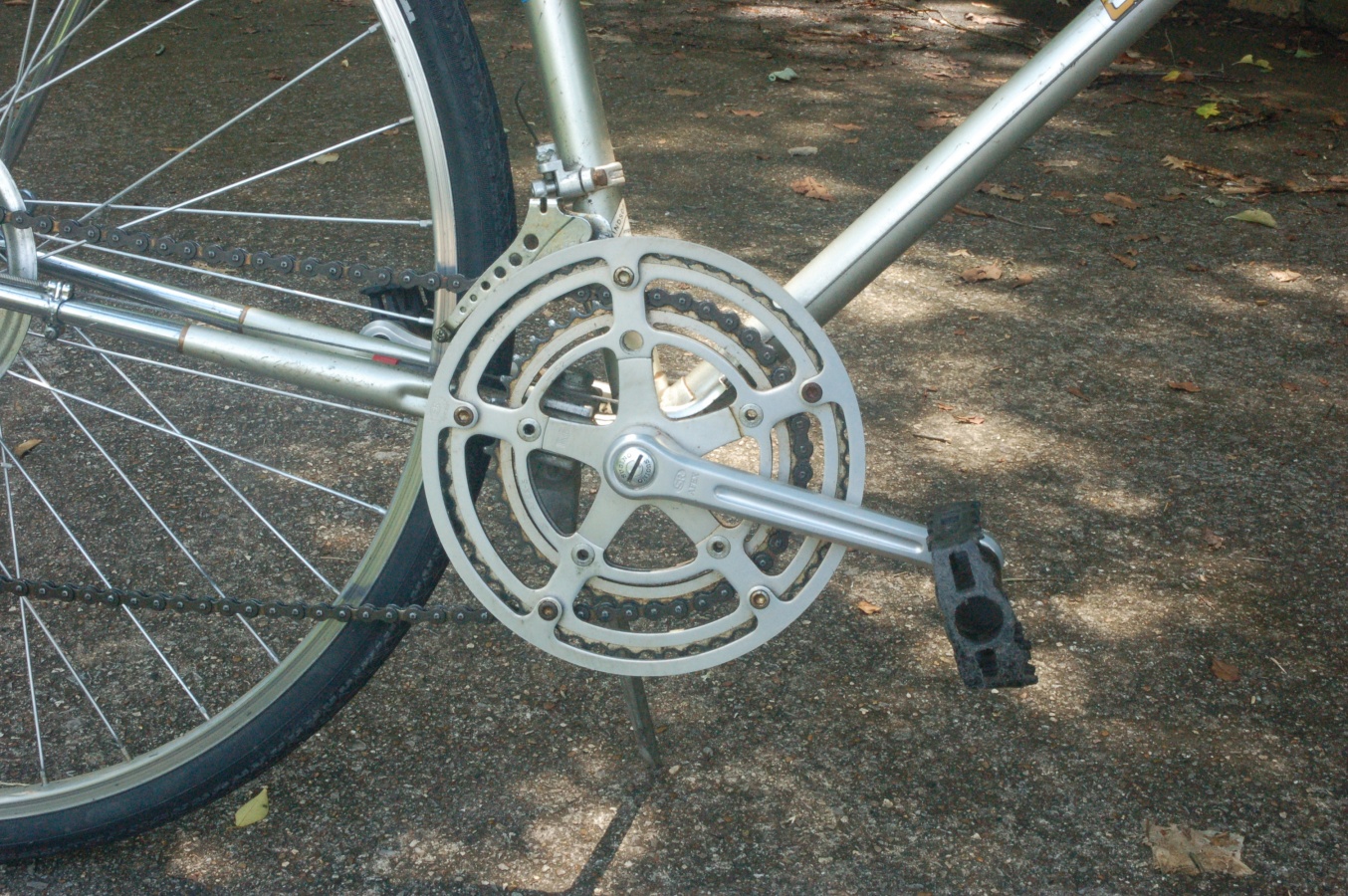
And, for the sake of providing some halfway decent photo documentation, here are some detail shots of the bike. Oh, by the way, the steel chainrings still have a residue from the rust jelly i used on them...so, there's a bit more sanding and detailing to do.
But, alas, I don't know if was the seriously Miami Vice color scheme, the shear brilliance of the "SIS" Shimano 5 speed indexed rear freewheel or what, but I decided this bike needed a quick and simple facelift and then to be drafted into a fun bike for short trips....maybe one to keep at the office for errands or lunchtime riding. I replaced the seat and post with a spare Turbo saddle and a nicer post I had in my workshop. I replaced the heavy steel drop bars and levers with a slightly chopped riser bar and some old mountain bike brake levers that were on a set of bars I was already harvesting grip shifters for another bike from. Keeping with the theme of total recycling, I used best used cables and housings I had laying around for the brake setup. I'm not sure where the grips came from, but they were in the workshop too.
The rack came off and was hung on a hook. I believe I know just the right Robin Hood 3-speed bike that could use the rack as long as it cleans up nicely.
I replaced the brake calipers with a set of black Universal single pivot calipers that were original to my mid-late 80s Bertoni Nouvitalia.
The wheels were true and the bearings felt good, but there was rust on about a third of the spokes. Again, in keeping with the theme for this bike, aluminum engine spray paint came in quite handy after a quick scuff-down with some 100 grit sandpaper on the spokes. I wouldn't recommend this for anything but a project like this, but then again painting the aluminum silver on the old wheels does give me some sort of inner anti bike snobbery pleasure. For proper bicycle karma and inner balance, I used new tires and tubes (some sort of self-sealing or puncture proof tubes I had bought for another project a long time ago, no less!).
So, with all that description, here is the final product. I haven't had a chance to put many miles on this bike yet, but I have to say it's just fun to ride. I don't know if it's the position, the luck of a perfect fit or what, but it just puts a smile on my face...and kinda makes me want to pop a wheelie or something!
And, for the sake of providing some halfway decent photo documentation, here are some detail shots of the bike. Oh, by the way, the steel chainrings still have a residue from the rust jelly i used on them...so, there's a bit more sanding and detailing to do.
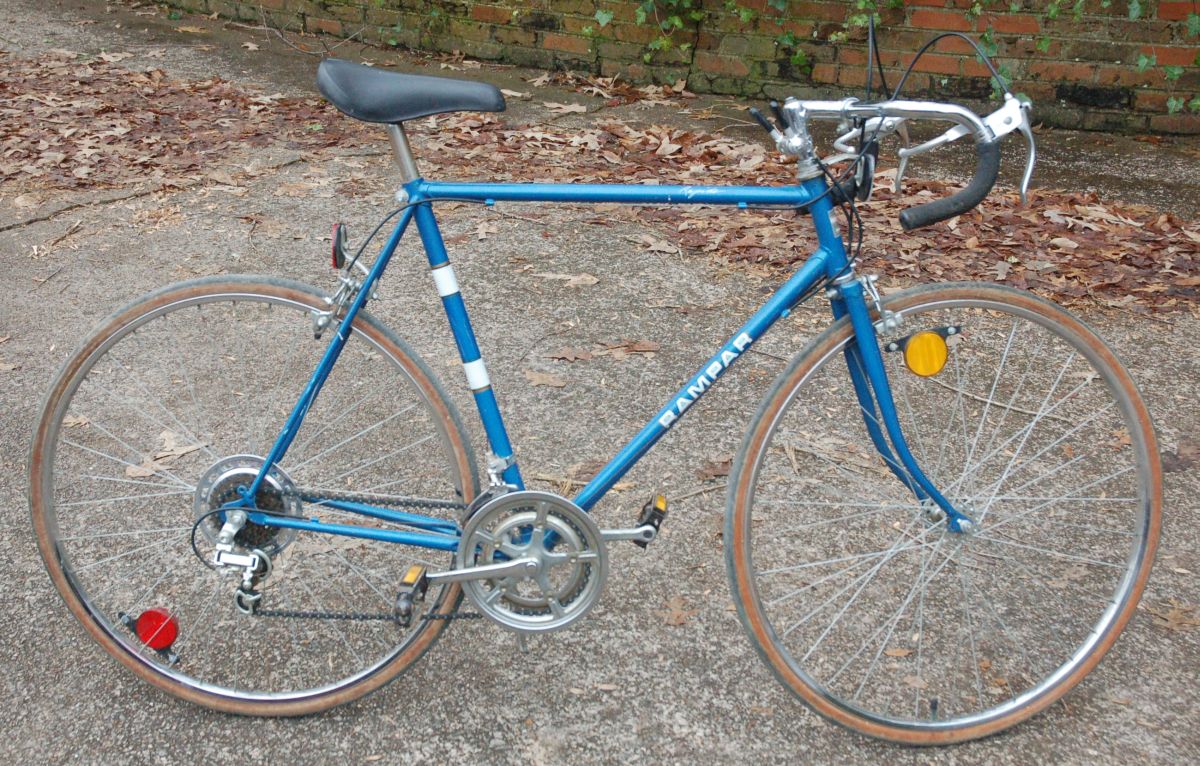
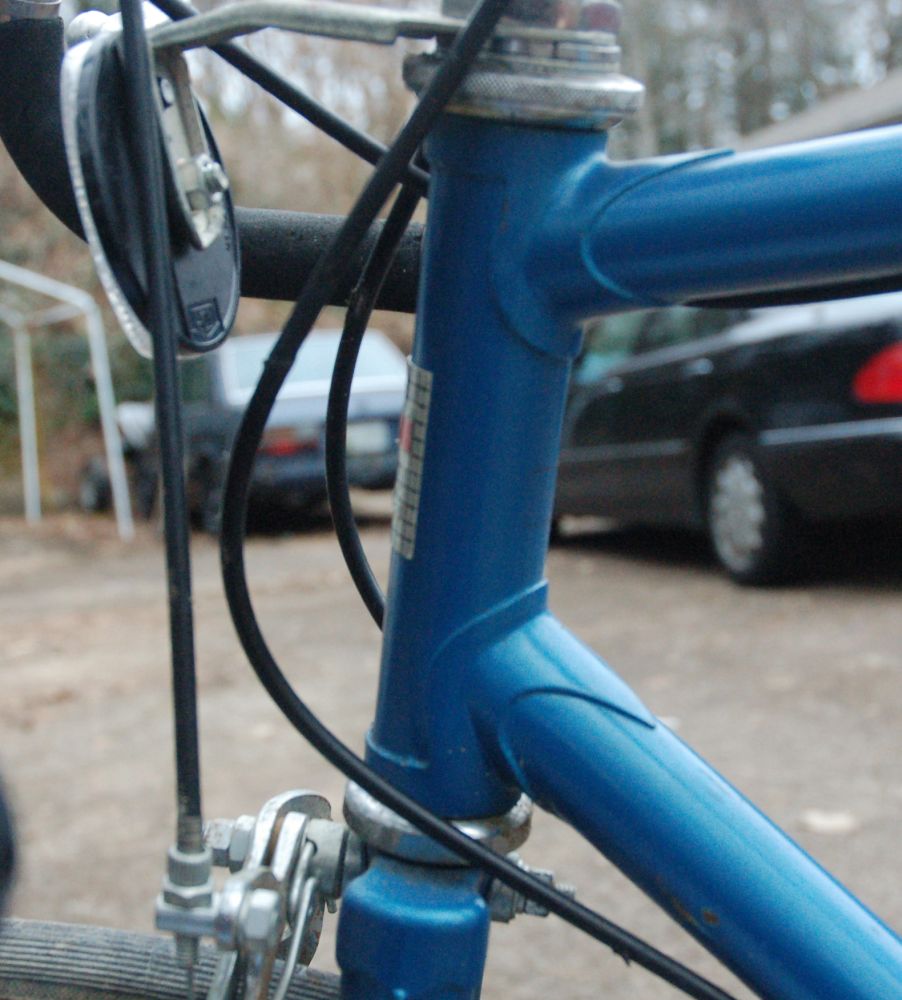
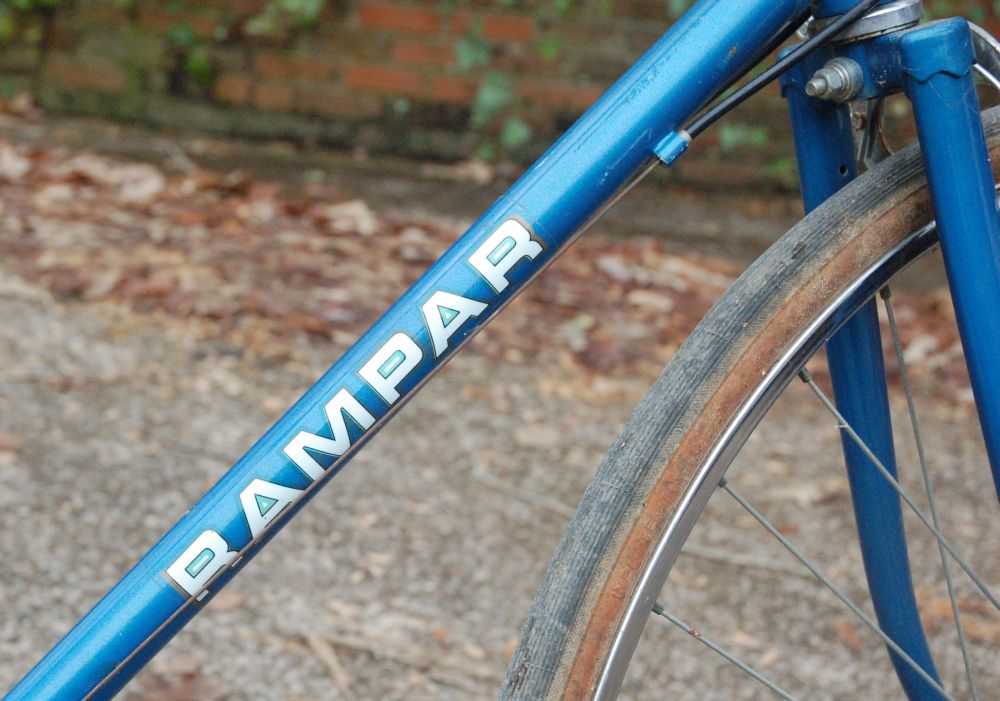
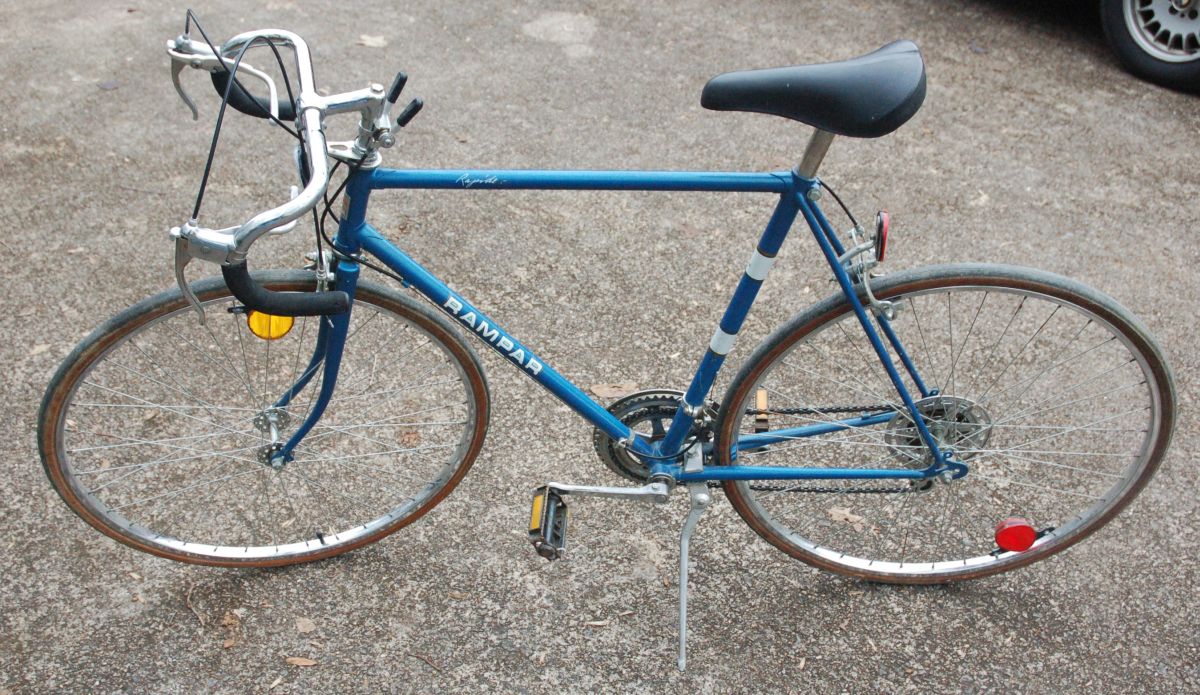
if nothing else on this site is indication enough, here is tangible proof that the bike museum does not practice bike snobbery. This is a nearly all original, pretty decent condition Rampar Rapide 10-speed road bike. Apparently Rampar was a division or Raleigh bicycles and this bike probably comes from the late 70s-early 80s. The frame and paint are nearly perfect and other than some random rusting on a couple spokes, some of the typical grime on the drivetrain, deteriorated bar foam and old, discolored tires I'd say it's probably in better shape than a lot of bikes people are out riding. As you would guess, it has 27" wheels. The derailleurs are Suntour, with a front derailleur that works the opposite of most...in other words, the 'rest' position for the cable is at the large chainring. The rims and handlebar are chromed steel, so it's not a lightweight bike. The construction of the frame is nice, and clean with the typical classic lugwork you would expect to see from a bike from that era.
With a nod to the recognition that you can't have it all, the Rampar is currently for sale on the local Craigslist. I hope it will find an owner who will use it and enjoy it. This bike could make an excellent, sturdy, almost theft-proof urban commuter or be simply transformed into a clean single speed or fixed gear machine with the addition of new wheels and shedding some weight elsewhere on the bike.
Since I didn't find a lot about these bikes on the 'net, I figured I could do a modest service to other bike enthusiasts by providing some photo documentation of what these bikes look like in what is apparently their original form. Hope you enjoy them!
UPDATE: This lovely time capsule of 10 speed splendor was sold to a gentleman from Texas very shortly after it was added to the museum. I'd love to hear from him and see how the Rampar has turned out. For now, it's just nice to know it's gone somewhere where it can be appreciated.
With a nod to the recognition that you can't have it all, the Rampar is currently for sale on the local Craigslist. I hope it will find an owner who will use it and enjoy it. This bike could make an excellent, sturdy, almost theft-proof urban commuter or be simply transformed into a clean single speed or fixed gear machine with the addition of new wheels and shedding some weight elsewhere on the bike.
Since I didn't find a lot about these bikes on the 'net, I figured I could do a modest service to other bike enthusiasts by providing some photo documentation of what these bikes look like in what is apparently their original form. Hope you enjoy them!
I have found very little documentation online on these bikes. I picked this up earlier this year as a literal basket case. It was advertised as a small frame I thought would be good for my son, but alas it really isn't a small frame, but it is a 650c wheeled time trial bike. So, it's time finally came up in the queue and I put it all back together with freshly packed bearings, new cables, an new chain, and new tires (basic, cheap 650c tires). All it needs is bar tape. The weather has been bad and I have been busy, so I haven't had a chance to do anything more than ride it up and down the street. With as little documentation I've found on these bikes, I was hoping that putting some pictures and information up here might spark some interest and surface some information that may be useful to others. Then again, I don't know what else anyone may need in terms of information. The bike has the basic 7 speed Shimano 105 road group components, 650c wheels and you can find the basic as-new specs at bikepedia. So, for now, here is what the bike looks like:

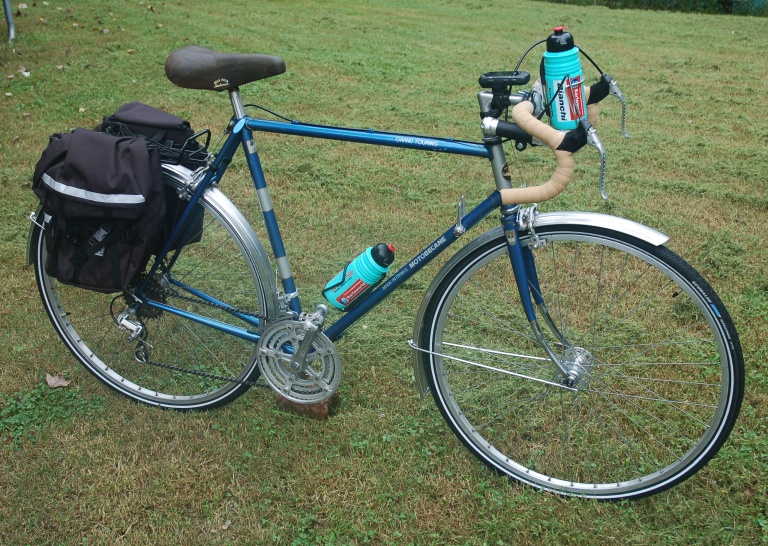
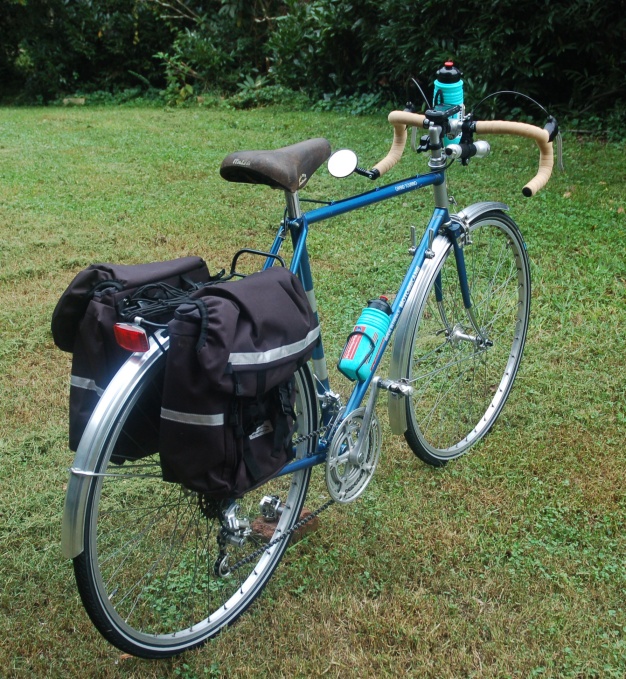
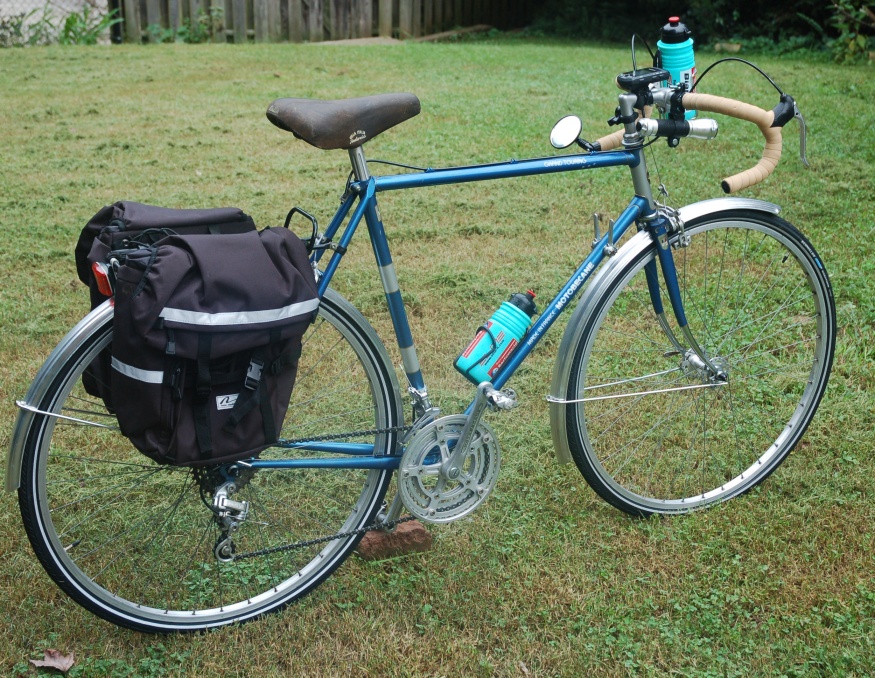
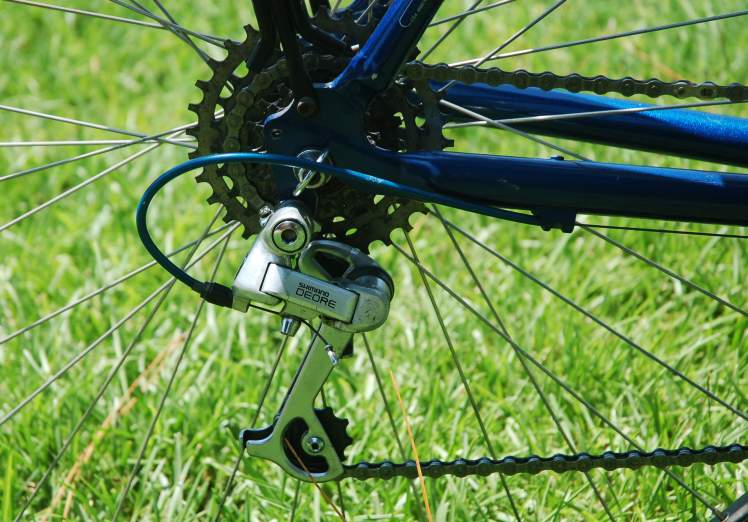
I think this is the most recent addition to the museum. This is a 1981 (or so) Motobecane Grand Touring. The bottom bracket to seat tube measures around 58cm, but it seems to fit more like a 56cm. This bike belonged to a family member and until a couple months ago spent the previous 15 or 20 years sitting in a shed collecting dirt, dust and generally starting to look like a hunk of junk. Luckily, it was complete, original, and actually still in mechanically (well, almost) functional condition. Being the family member with the greatest love of old road bikes, I was gifted the bike. So, this became a bit of a 'rescue' job. I completely disassembled the bike and rebuilt it, replacing the lower headset bearings with some new, loose bearings but otherwise the original bearings were great. The only 'new' mechanical parts on the bike are the tires, tubes and chain. It took a good bit of time with varying grades of steel wools to get the bike to shine again, but now it's fully functional, sporting some new Velo-Orange fenders, some lights, some bags and new bar tape. I've put about 65 miles on the bike so far and it's very nice to ride. In fact, it's not necessarily slow either. The gearing is interesting with a very small step between the middle and large chainring and a wide range of five gears on the rear freewheel.
For now, this is the 2009 incarnation of the bike - enjoy!
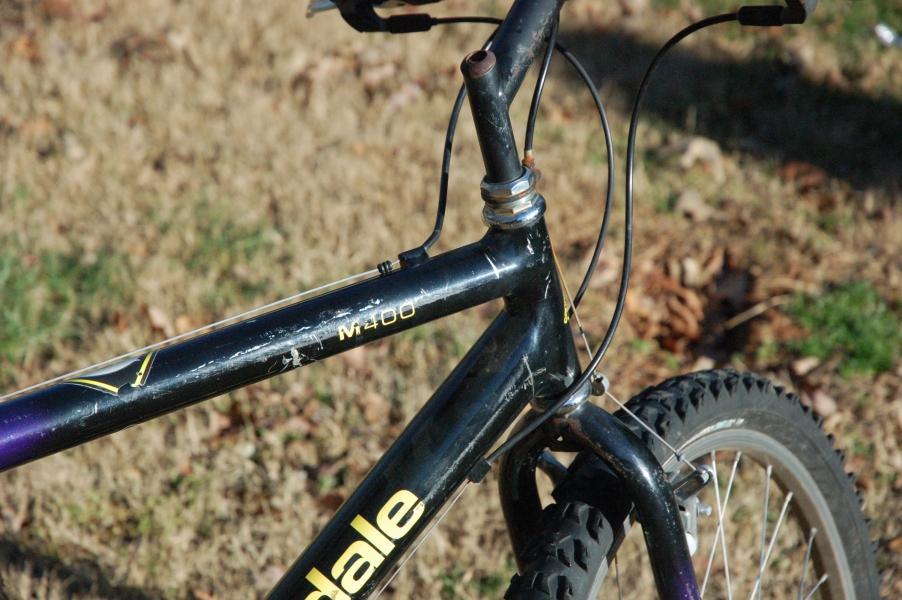
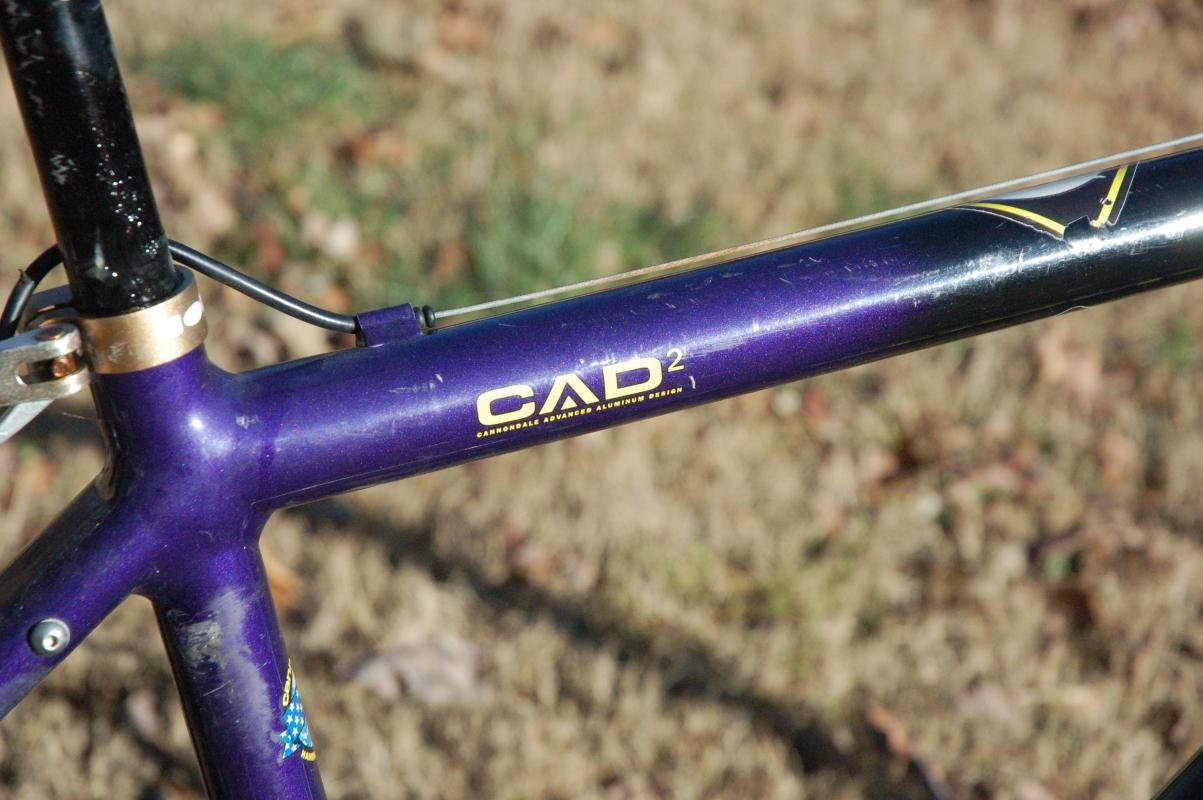
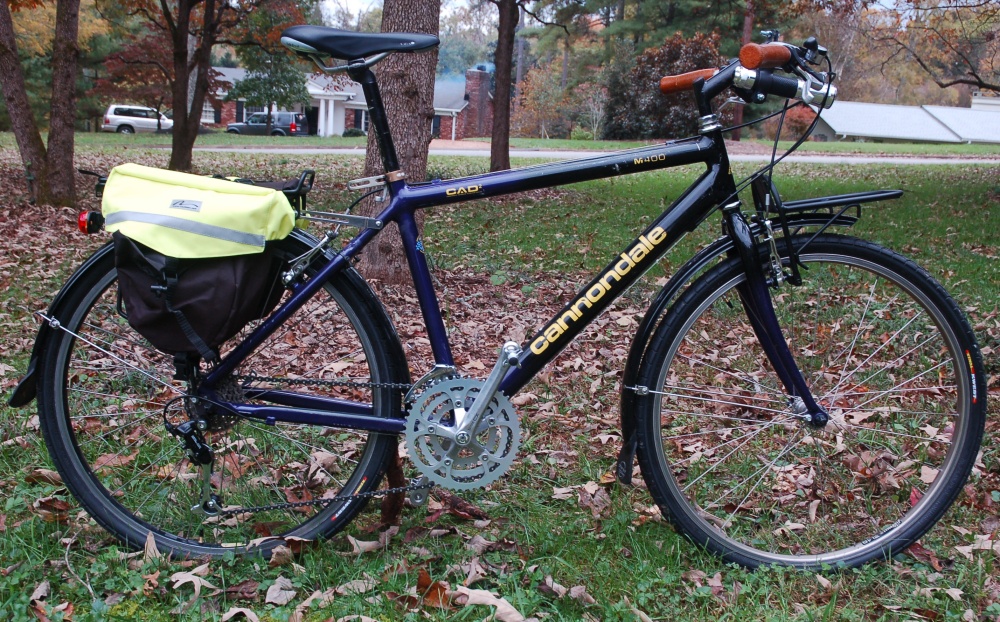
This was a very nice surprise I stumbled onto via a Craigslist ad. With this picture:
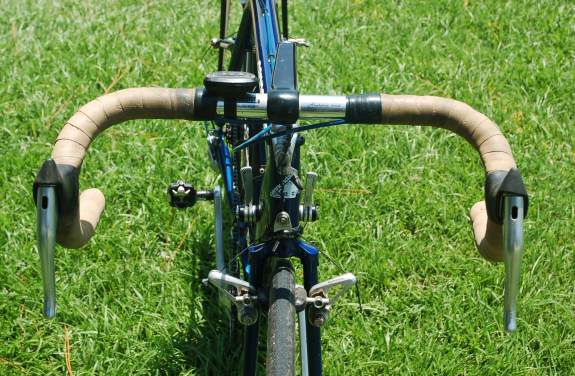
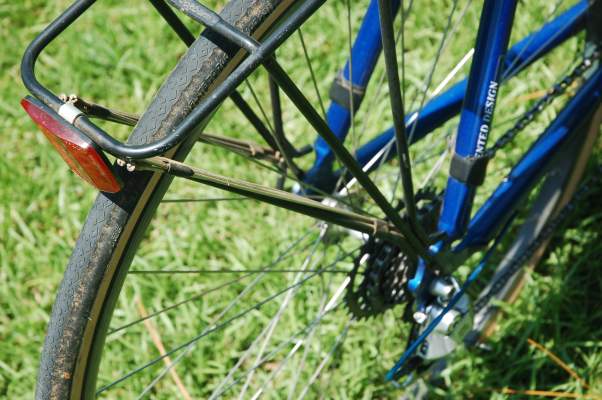
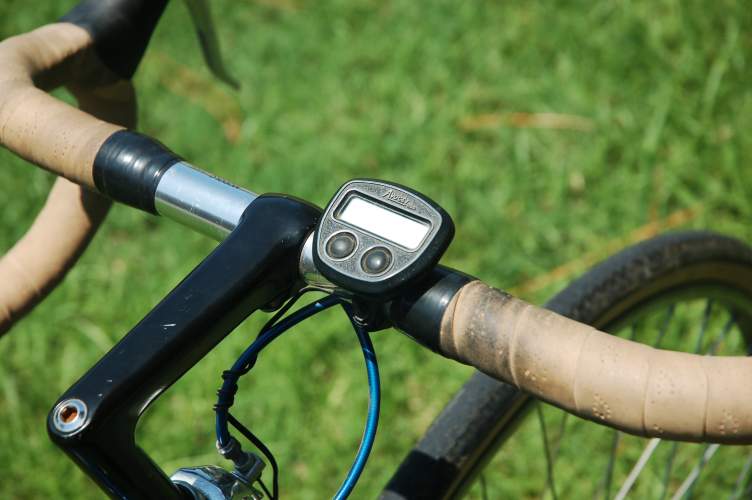
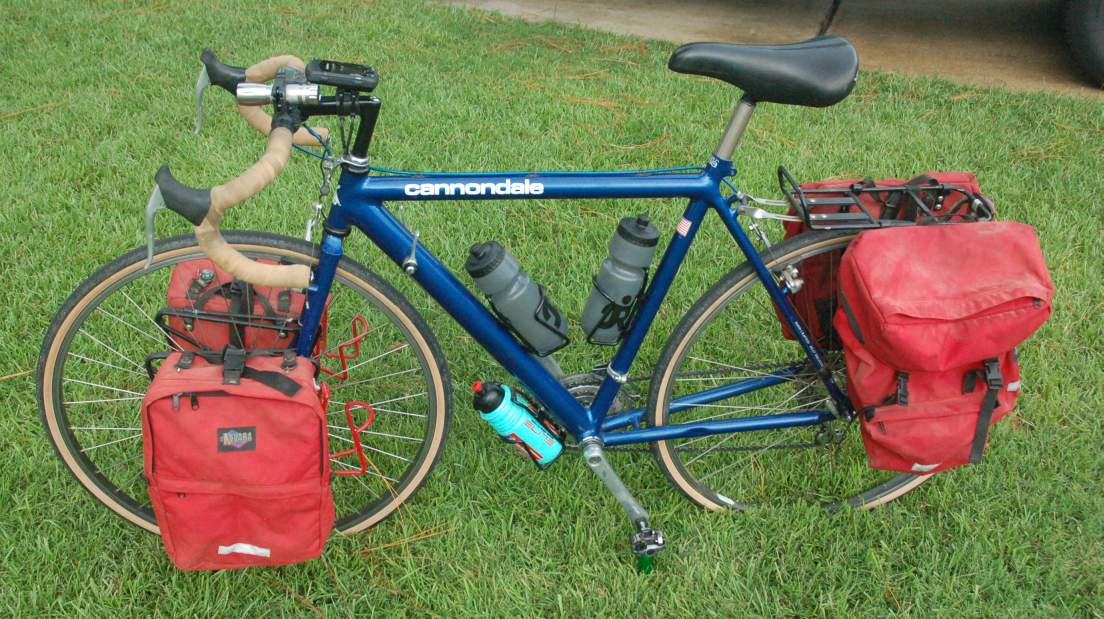
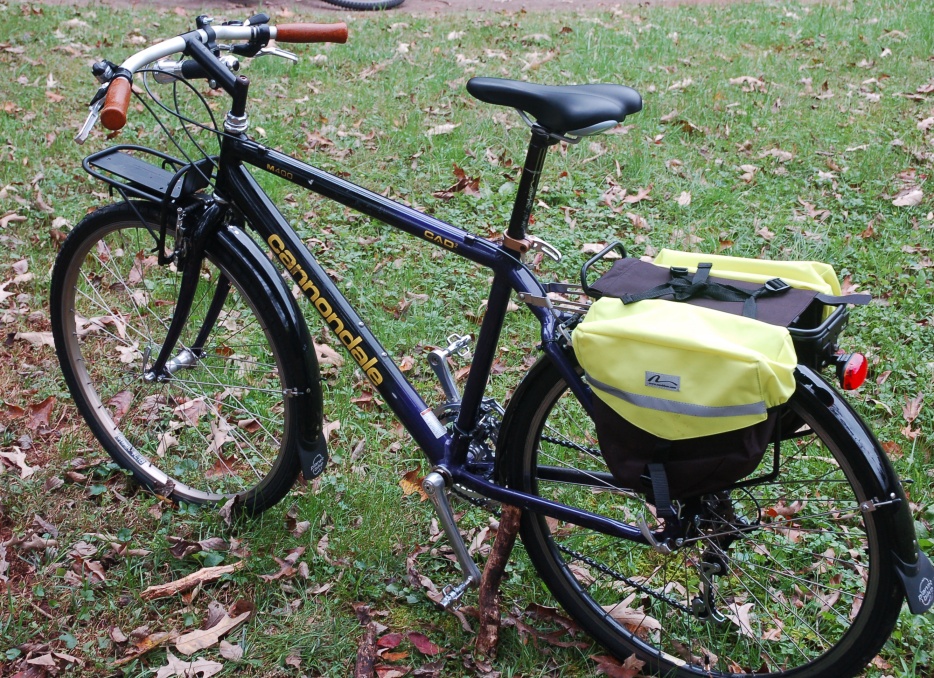
...and the words Cannondale loaded touring bicycle. It turns out the bike was not only my size, but in remarkably great condition with complete upgrades of all running components (Deore, etc.) and a full set of racks, panniers, a couple alternate-gearing rear gear sets, a 6-speed era shimano freewheel tool and a new chain. I will update this with more information as I gather it, but I'm looking foward to putting this bike through its intended paces doing some light touring this fall.
I believe this bike started out as a 1990 T400, but with virtually all the components being changed, it's hard to tell for certain. As photographed, it's geared like a goat; it was set up for some serious loaded touring in the Colorado Rockies and parts of Canada.

I believe this bike started out as a 1990 T400, but with virtually all the components being changed, it's hard to tell for certain. As photographed, it's geared like a goat; it was set up for some serious loaded touring in the Colorado Rockies and parts of Canada.
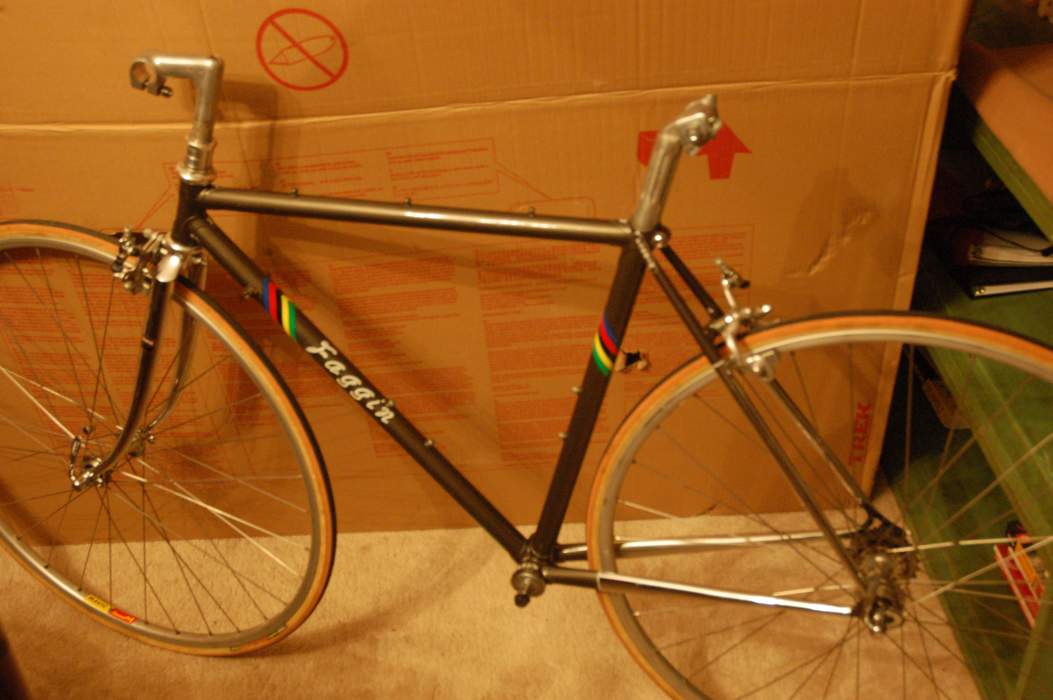
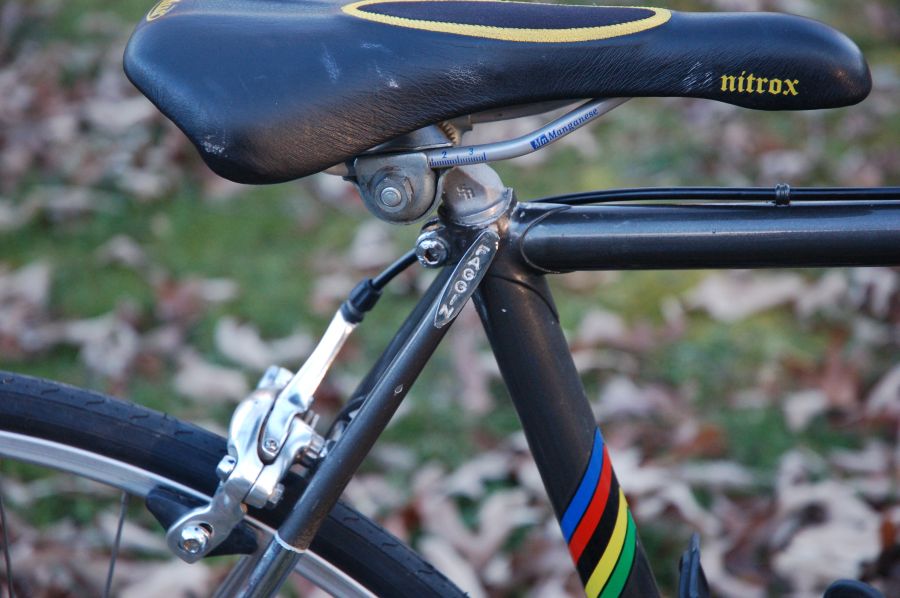
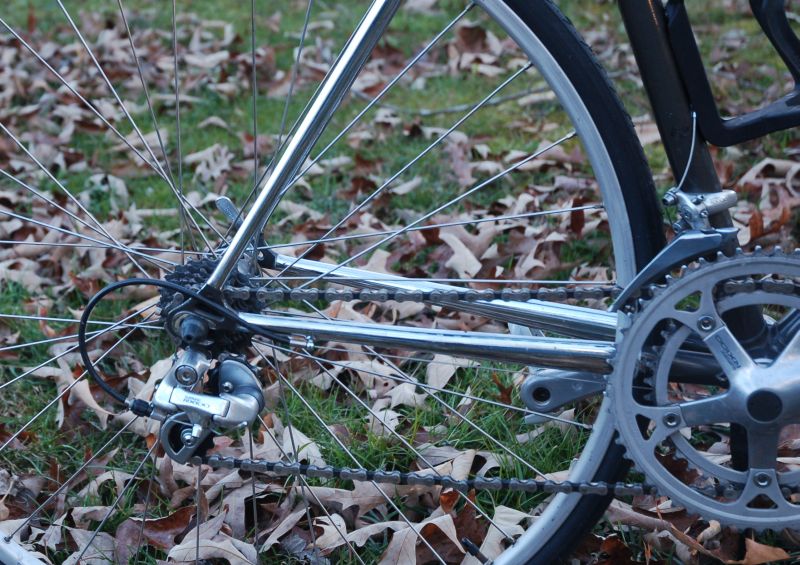
Finding a road bike for someone who is 5' or under is not necessarily a simple task. The task is even further complicated when one doesn't really want to plop down $600 or whatever on one of the nice,new 24" wheel junior road bikes made by Trek, Felt and whoever else. I was delighted when a 47cm classic, lugged steel Faggin frame showed up on the local Craigslist. Well, to be fair, it was a frame, fork, seat post, brakes and bottom bracket. Since the bottom bracket is Italian threaded, having a nice one there to simply rebuild was handy. The fork had been replaced due to a mishap with the previous owner. So, the fork it came with (which is the one on it now) is a little goofy since it's cut long for the headset. It's also made for 27" wheels, so I figure for now I will leave it as it is and wait to find a nice chrome 700c fork that I can cut to fit properly if need be. The fork does not accomodate recessed brake mounting nuts. When I brought the bike home, I stuck the wheels it was going to use on it and it looked like this:
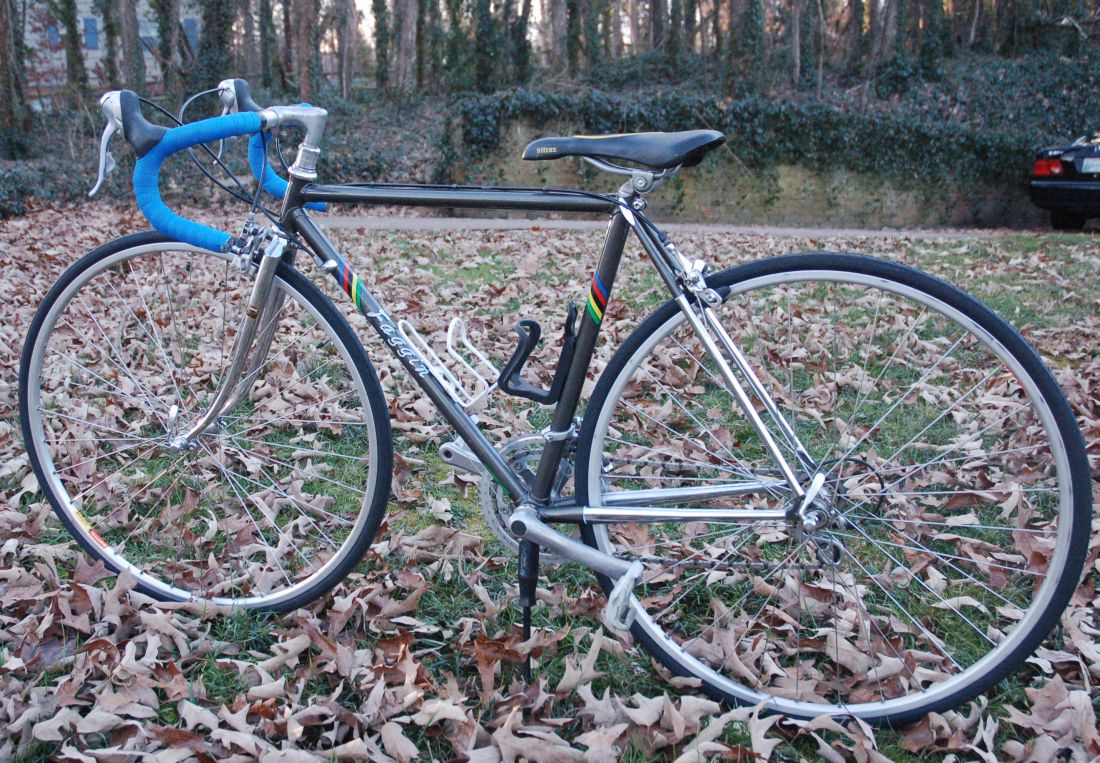
After patiently waiting its turn in the project queue, the Faggin re-emerged looking like this:
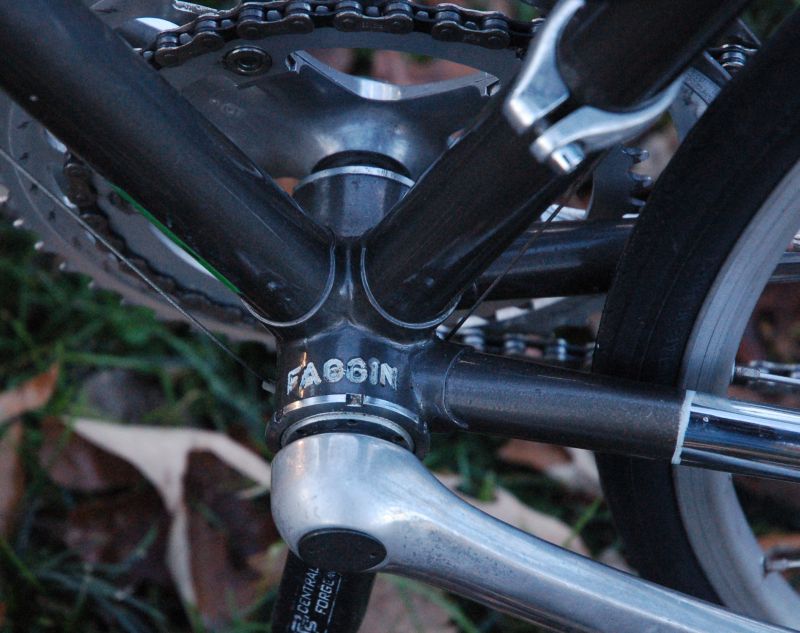
I had a 1993 Specialized Allez with a full RSX100 group to donate the wheelset and running gear. The appropriately narrow handlebar came from a 1976 Fuji (which was a 58cm bike, oddly enough). The seat was my son's selection and, obviously I suppose, the fit is still "just barely" there and thus the low seatpost. Here are some detail shots of the frame. This is a really beautifully constructed frame and it is fully chromed beneath the paint. I do not know what kind of steel tubing it has, but there is no doubting the quality.
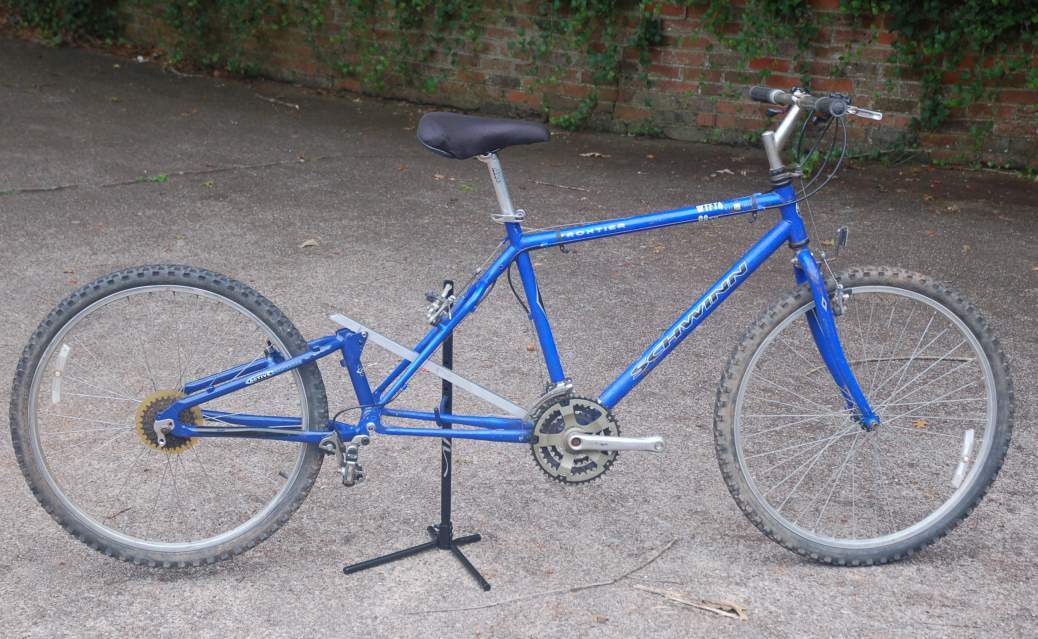
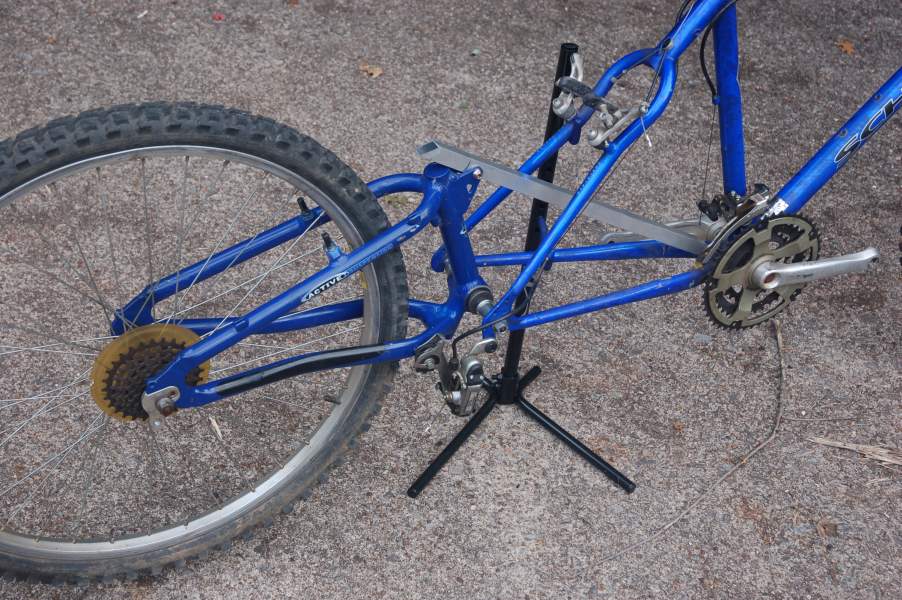
I've been collecting the parts to build this for a while. Not so much out of necessity, but rather out of curiosity, I decided I wanted to build an "XtraCycle" or utility cycle out of an old mountain bike...or two, that is. So, over the last several months, I've kept my eyes opened for the right frames or bikes to build one with. I wanted an old, chromoly mountain bike as the main frame and I was looking for a dual suspension mountain bike to use the rear triangle as the frame extension. I happened on a straight, decent Schwinn Frontier for the main bike. It has cantilever brakes and no suspension, so it's a nice, solid ride. The rear triangle came from a Univega DS300. The cost for each donor bike was zero. As an extra bonus in the build, both sections were blue, so the extension will blend in a little better...well, sort of. The wheels are random spares, but ultimately it will have the best of the spares lying around.
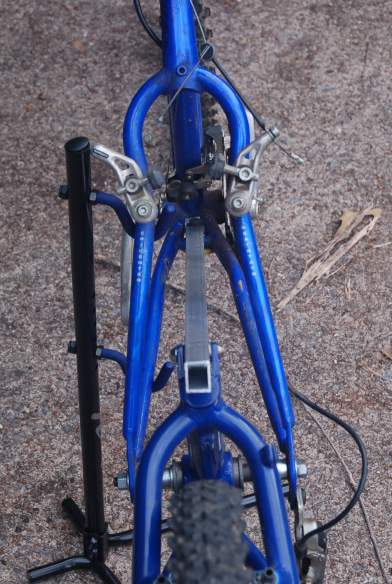
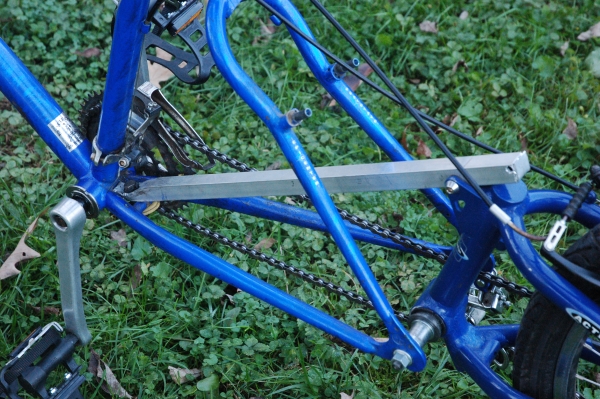
This is the first 'stage' of the development of the bike. I used a section of square aluminum to make a connection between the point where the rear shock was attached to the rear triangle and the bottom bracket of the main bike. I used some simple measurements to make sure the bottom bracket height was close to (or even slightly lower, since that would afford better stability loaded) the original height with the extension mounted.
and some other photos showing the initial 'fit'.....
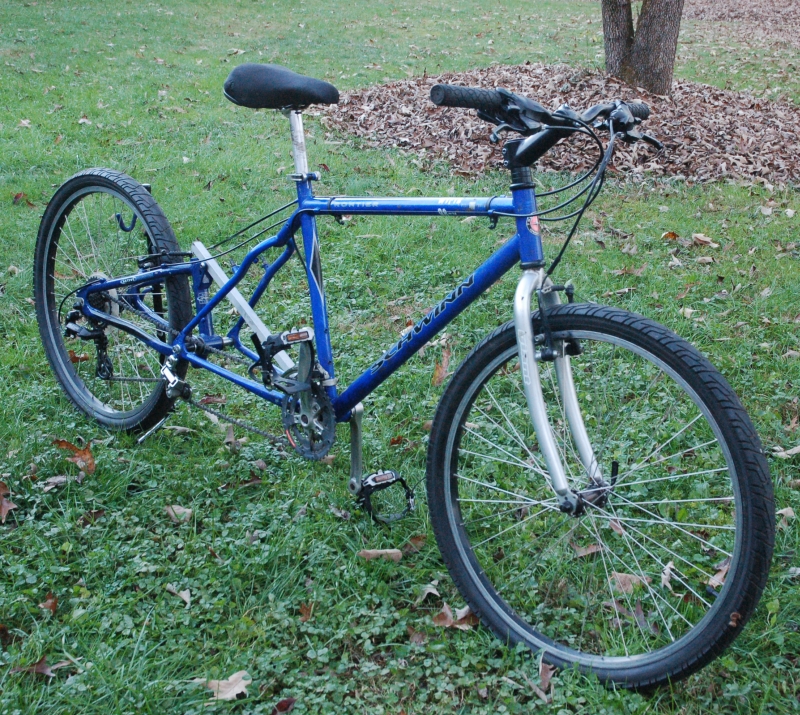
Several months after these test fit pictures, I made the decision to cannibalize a perfectly good Giant mountain bike for this project. (Actually, the Giant will survive, rebuilt with the throw-aways from this project and it will remain in its place as a perfectly good guest spare.) with the addition of a sturdy wheelset, V-brakes, and the fork with all of its threadless headset simplicty, the project came together nicely. The apparently color-coordination was not planned, but I guess it's a nice bonus. So, here it is in November 2009:
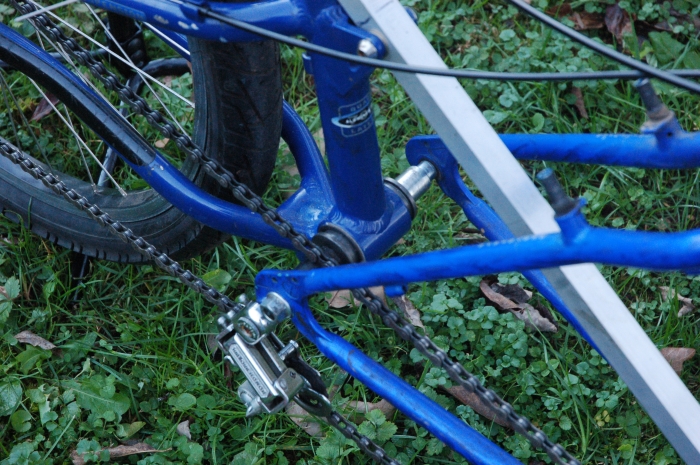
I used an old road bike rear derailleur as a tensioner. The first test ride seemed promising. It was stable, felt firm and seemed ready to start loading it up. I didn't try any wheelies!
Here's a close-up of the driveline:
This is the first 'stage' of the development of the bike. I used a section of square aluminum to make a connection between the point where the rear shock was attached to the rear triangle and the bottom bracket of the main bike. I used some simple measurements to make sure the bottom bracket height was close to (or even slightly lower, since that would afford better stability loaded) the original height with the extension mounted.
Several months after these test fit pictures, I made the decision to cannibalize a perfectly good Giant mountain bike for this project. (Actually, the Giant will survive, rebuilt with the throw-aways from this project and it will remain in its place as a perfectly good guest spare.) with the addition of a sturdy wheelset, V-brakes, and the fork with all of its threadless headset simplicty, the project came together nicely. The apparently color-coordination was not planned, but I guess it's a nice bonus. So, here it is in November 2009:
Here's a close-up of the driveline:
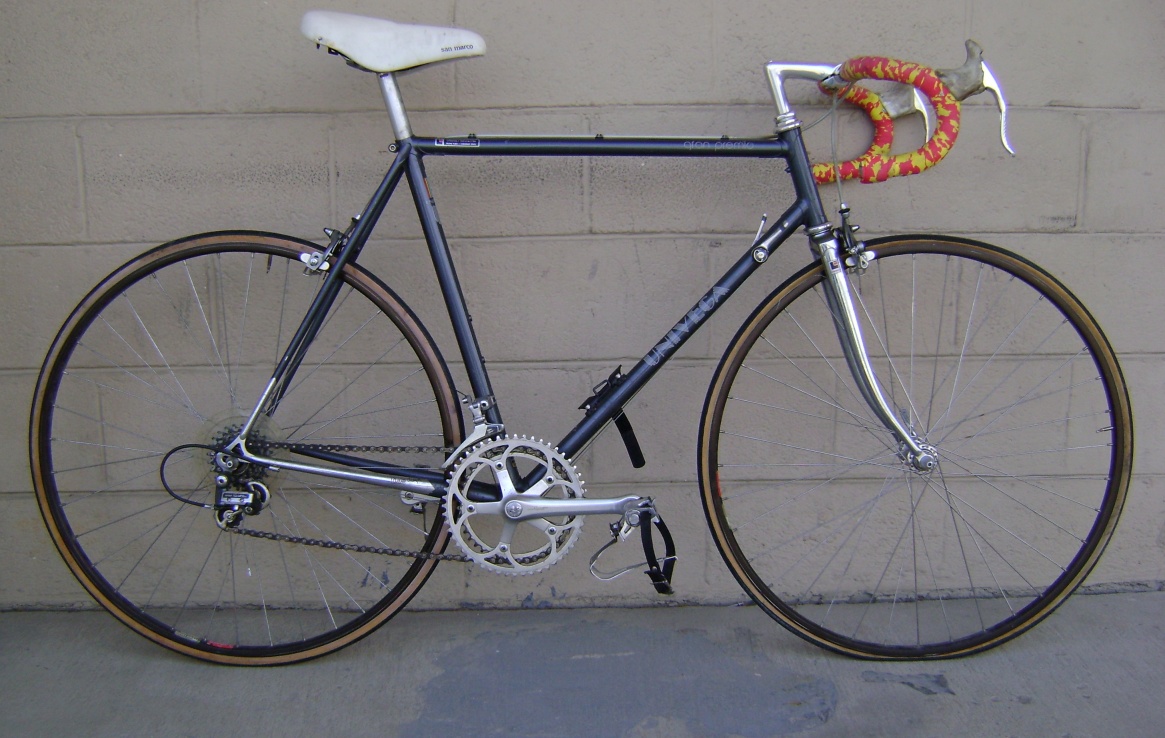
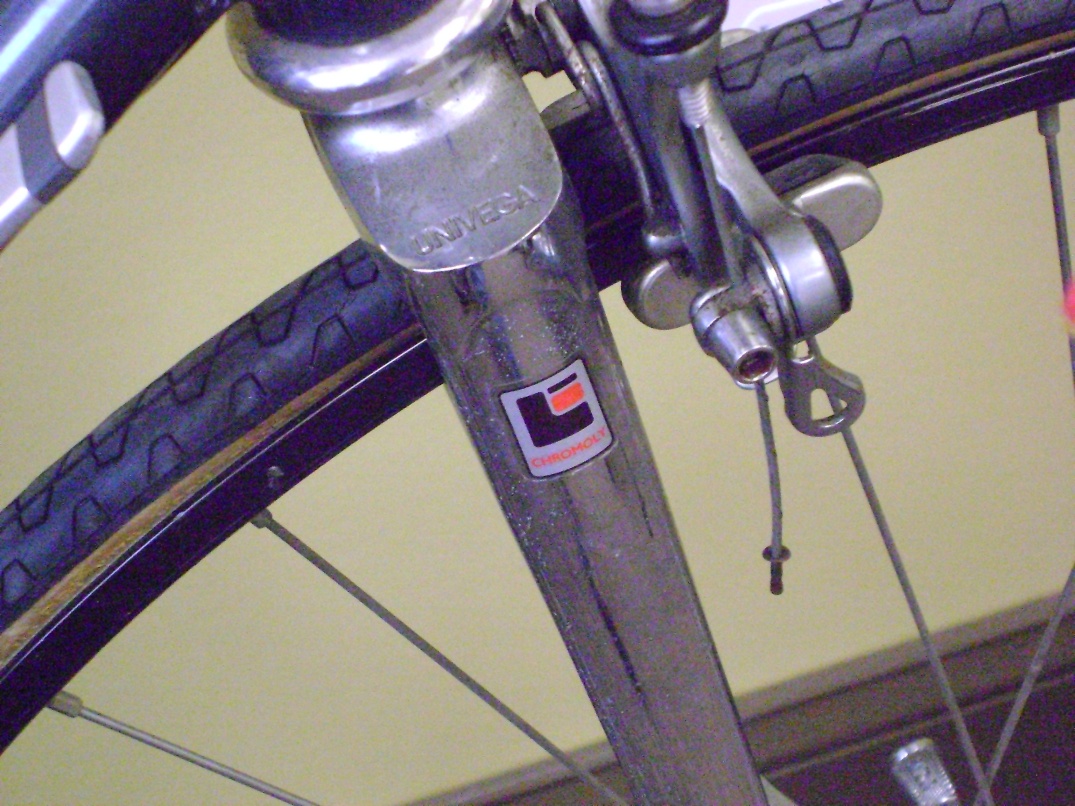
Having two Bertoni bikes that I love and learning some of the history behind the development of Italvega, Univega & Bertoni, this was a logical addition in the "UJB" category. In truth, I thought this was going to simply be a frame donor to install a pretty nice modern 9 Speed Shimano 105 group I have, but it turned out the frame is quite nice - actually chrome plated below the paint! - and it's in remarkably good shape. It has all of its original Suntour Sprint 9000 group (even the pedals) and the rims haven't even seen enough miles to have the annodizing worn off. It needed a new front tube and a minor seat adjustment & bar adjustment for it to fit "just right" on the test ride...that ended up a little longer than I'd planned...which is a good thing, by the way.

Univega Gran Premio
56cm
Chromoly Triple Butted Lugged Frame
700c Wheels
Suntour Sprint 9000 component group
Univega Gran Premio
56cm
Chromoly Triple Butted Lugged Frame
700c Wheels
Suntour Sprint 9000 component group
A new addition to the museum here, this bike was bought new at a Interwheel, a local bike shop circa mid-1980s and evolved to be the single speed machine pictured here. All of the original components (an early Shimano 105 group) came with the bike as dowry upon entry to the museum. Here it as as it sits now. Note the internal cable routing on the bars. The frame is Reynolds 501 and (obviously) not lugged.

An UPDATE: This bike has really become one of my favorite to ride. I had to replace the headset a month or so ago, but otherwise, it's been smooth, quick (well, fast at least), and a real pleasure to ride. Here is a picture of it in it's Winter 2009/2010 incarnation right before the first ride of 2010:
A set of full length Planet Bike fenders with rubber flaps were mounted on the bike to give it some all-weather utility. Aero spokes with fenders is a goofy combination, but cleaner gears and a dry back when I have to ride through puddles isn't too bad at all.
and, of course, the rest of the 105 group and the original saddle...

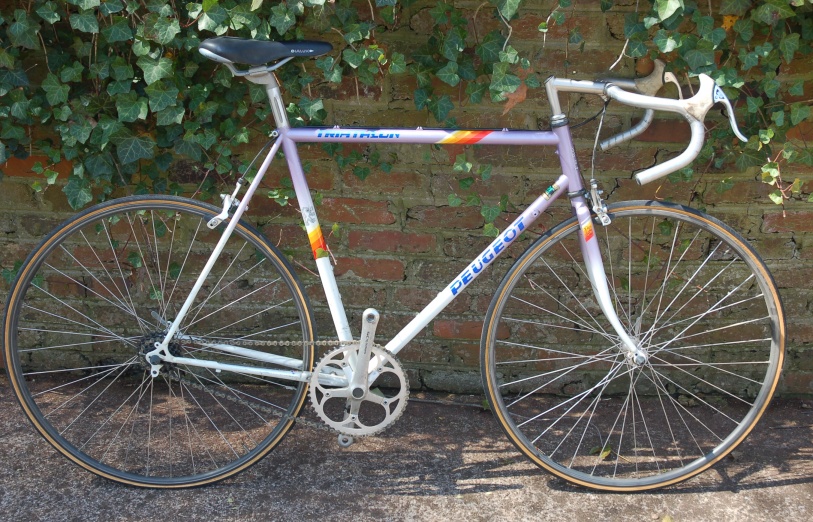
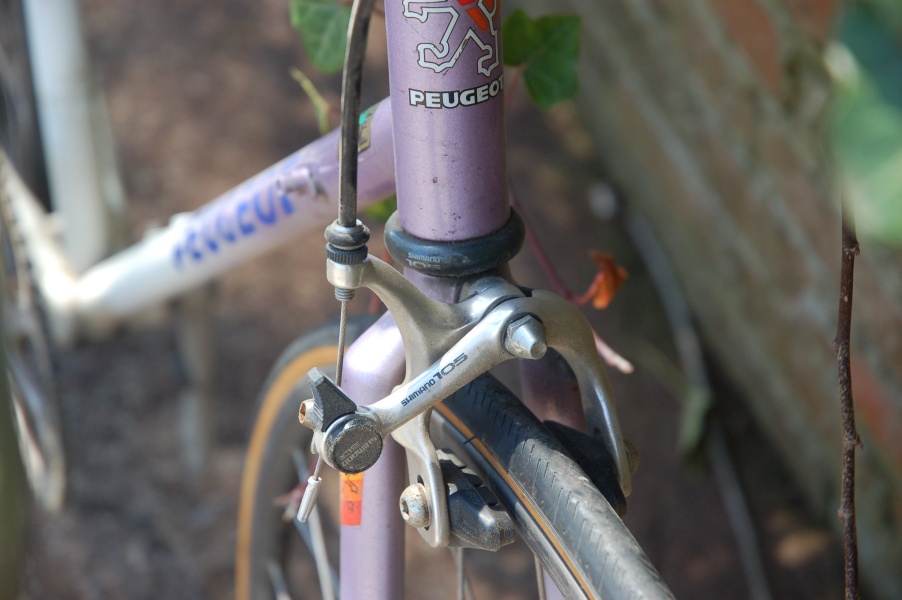
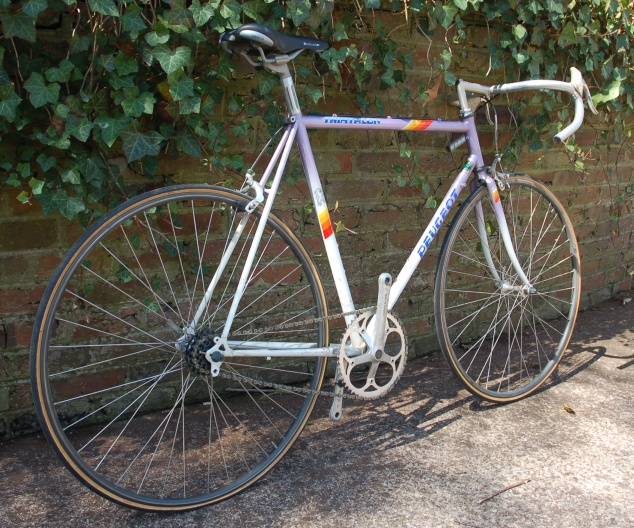
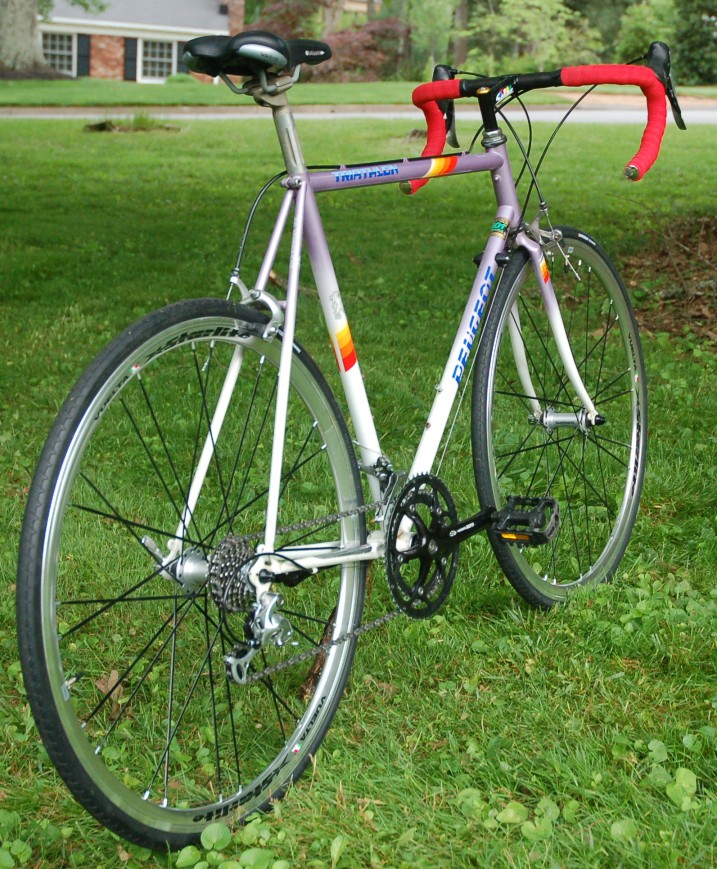
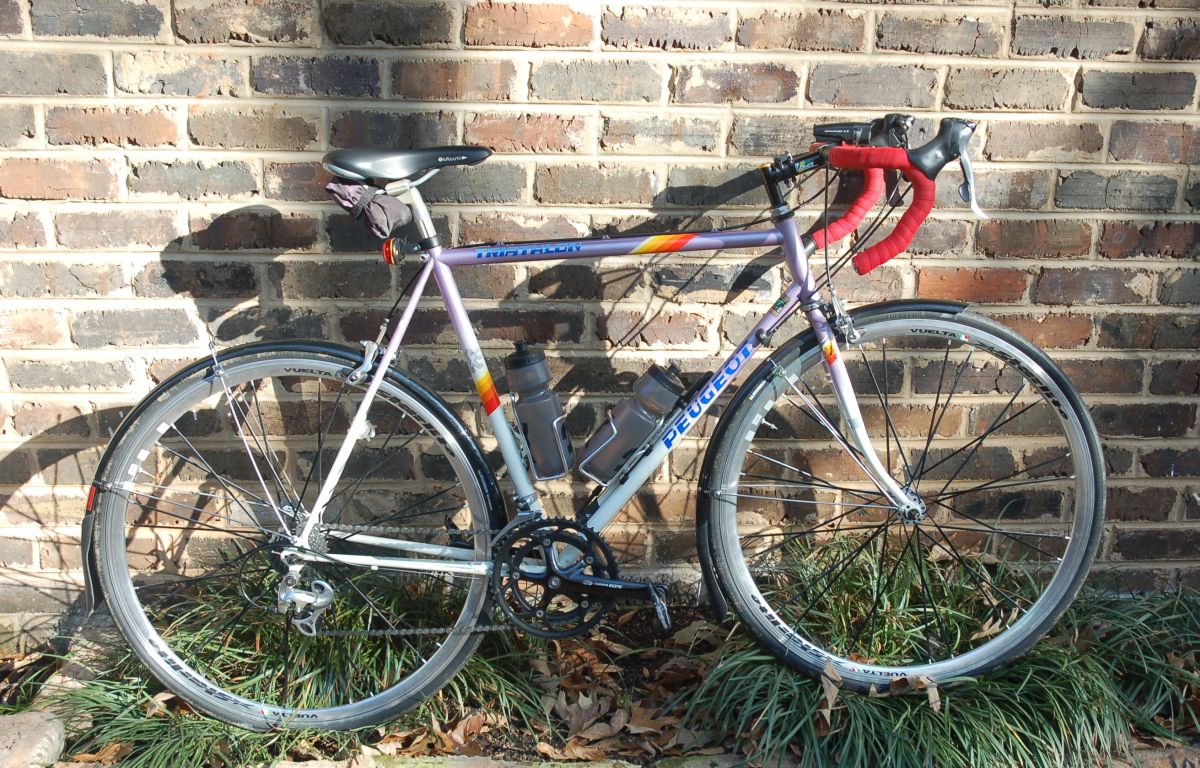
The Triathlon is now reborn sporting some inexpensive new road wheels, 2x9 Shimano 105 fairly new drivetrain and shifters, and a Salsa stem + bar. I've only had a chance to give it one real good test ride and I was pleased to find the bike rides nicely, has a solid, but not too heavy feel and generally was much faster/quicker than I anticipated. There is still some tweaking and adjusting to go. Not sure what the cause is, but I was getting a lazy shifting resonse in the larger cogs on the rear. Style-wise, I went with the "if you can't beat 'em, join 'em" philosophy with the purple-to-white fade paint and added bright red bar tape. I guess the wheels are blingy looking too....maybe the road bike equivalent of a nice set of 22" spinners on a 1987 Honda, eh? What the heck, I enjoy riding it!


The Triathlon is now reborn sporting some inexpensive new road wheels, 2x9 Shimano 105 fairly new drivetrain and shifters, and a Salsa stem + bar. I've only had a chance to give it one real good test ride and I was pleased to find the bike rides nicely, has a solid, but not too heavy feel and generally was much faster/quicker than I anticipated. There is still some tweaking and adjusting to go. Not sure what the cause is, but I was getting a lazy shifting resonse in the larger cogs on the rear. Style-wise, I went with the "if you can't beat 'em, join 'em" philosophy with the purple-to-white fade paint and added bright red bar tape. I guess the wheels are blingy looking too....maybe the road bike equivalent of a nice set of 22" spinners on a 1987 Honda, eh? What the heck, I enjoy riding it!
An UPDATE: This bike has really become one of my favorite to ride. I had to replace the headset a month or so ago, but otherwise, it's been smooth, quick (well, fast at least), and a real pleasure to ride. Here is a picture of it in it's Winter 2009/2010 incarnation right before the first ride of 2010:
Along with photos of the other bikes, I wanted to add one more photo of the 56cm Bertoni Professionale. This is Columbus SLX tubing with a mix of the original Campy Record rotating parts (ie, headset, bottom bracket, hubs) and new Campy Veloce drivetrain. I bought the bike in this build...at the time not realizing there were folks who were marketing this sort of retro/modern bike build. That said, I can see why. This bike rides like a dream & is very comfortable in every way...including being easy on the eyes, in my opinion.

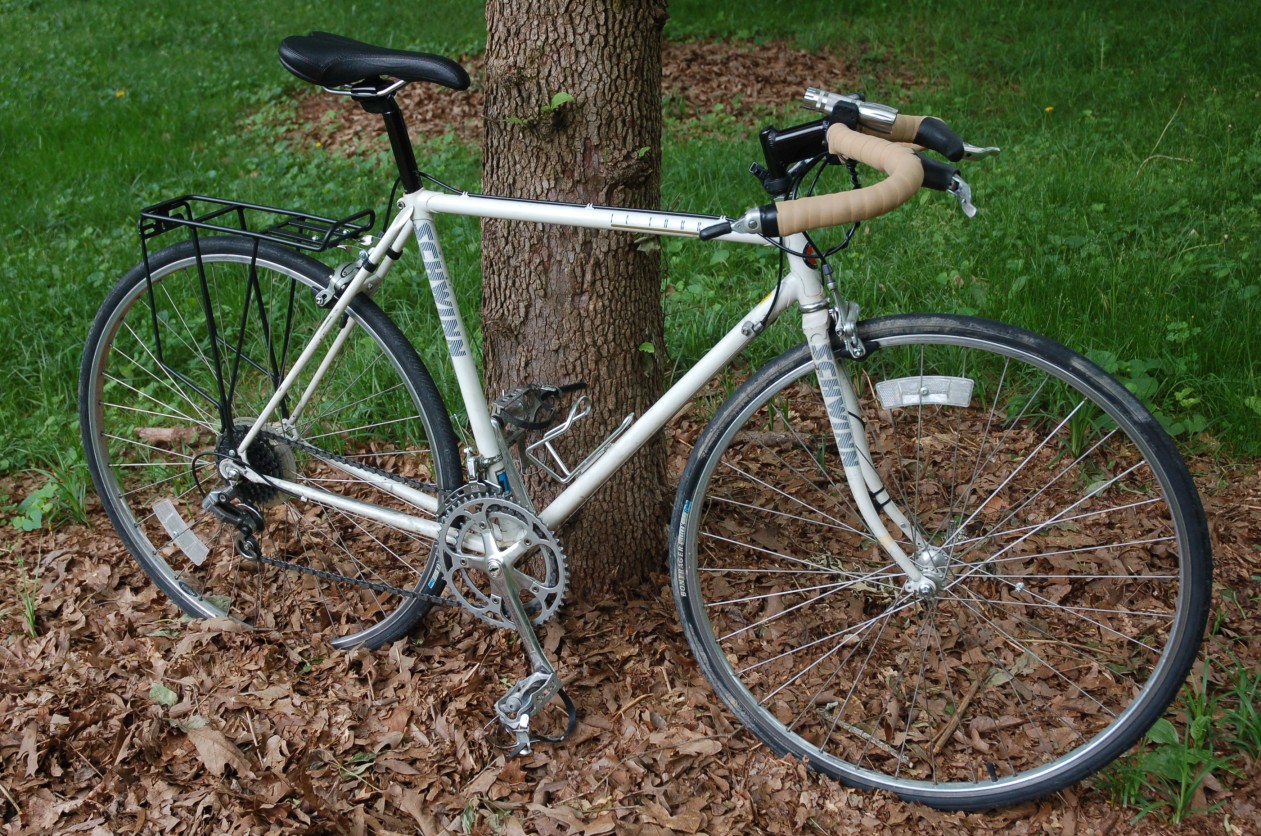
I thought I'd put some photos up of the Le Tour. This is a nice, simple US-made Schwinn that I am tempted to build a cool, "city bike" style bike out of. The running gear is all good. I have a feeling that some of this bike was grafted with a Peugeot at some point in time because it has Hueret detrailleurs (as opposed to SIS Shimano, which I believe would have been correct for '87), a Stronglight crankset and French Rigida 27" aluminum rims. In it's current state, it's a few cm too small for me, but I am thinking with stem, bar and seatpost changes it could be a great upright greenway cruiser.
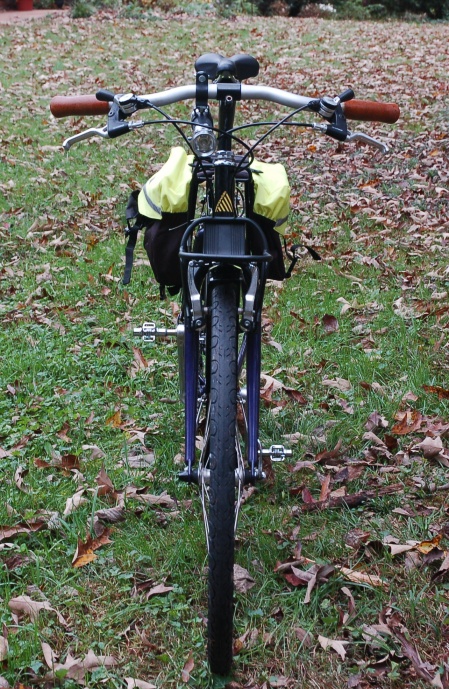
This bike has been leaning on various walls around the house since some time during the summer of 2009, but I just got around to getting it out on some test rides. There are some tweaks left in store for it and some minor tuning to do here and there, but basically, this is it:
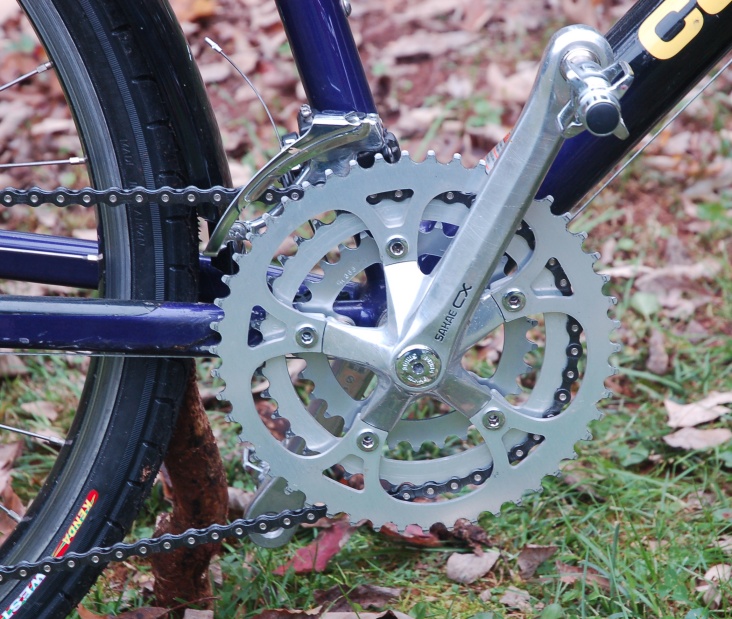
- Replaced crank with Sakae (traditional) touring triple crankset (170mm)
- Replaced cantilever brakes with Tektro V-brakes and levers
- Replaced rear derailleur with Shimano Deore LX 7-speed
- Replaced front derailleur with Shimano Deore ("9 speed)
- Replaced shifters with Deore LX 3x7 thumb shifters
- Replaced handlebar and grips (inverted 'city/touring' bar and cork grips sealed with shellac)
- Replaced rear wheel with complete, built used wheel
- Planet Bike fenders with mudflaps
- Front rack
- Rear light
- Front Taskforce Cree LED light
- Nashbar mini-panniers
- Crank Brothers Eggbeater pedals
- Kenda 1.5" urban tires
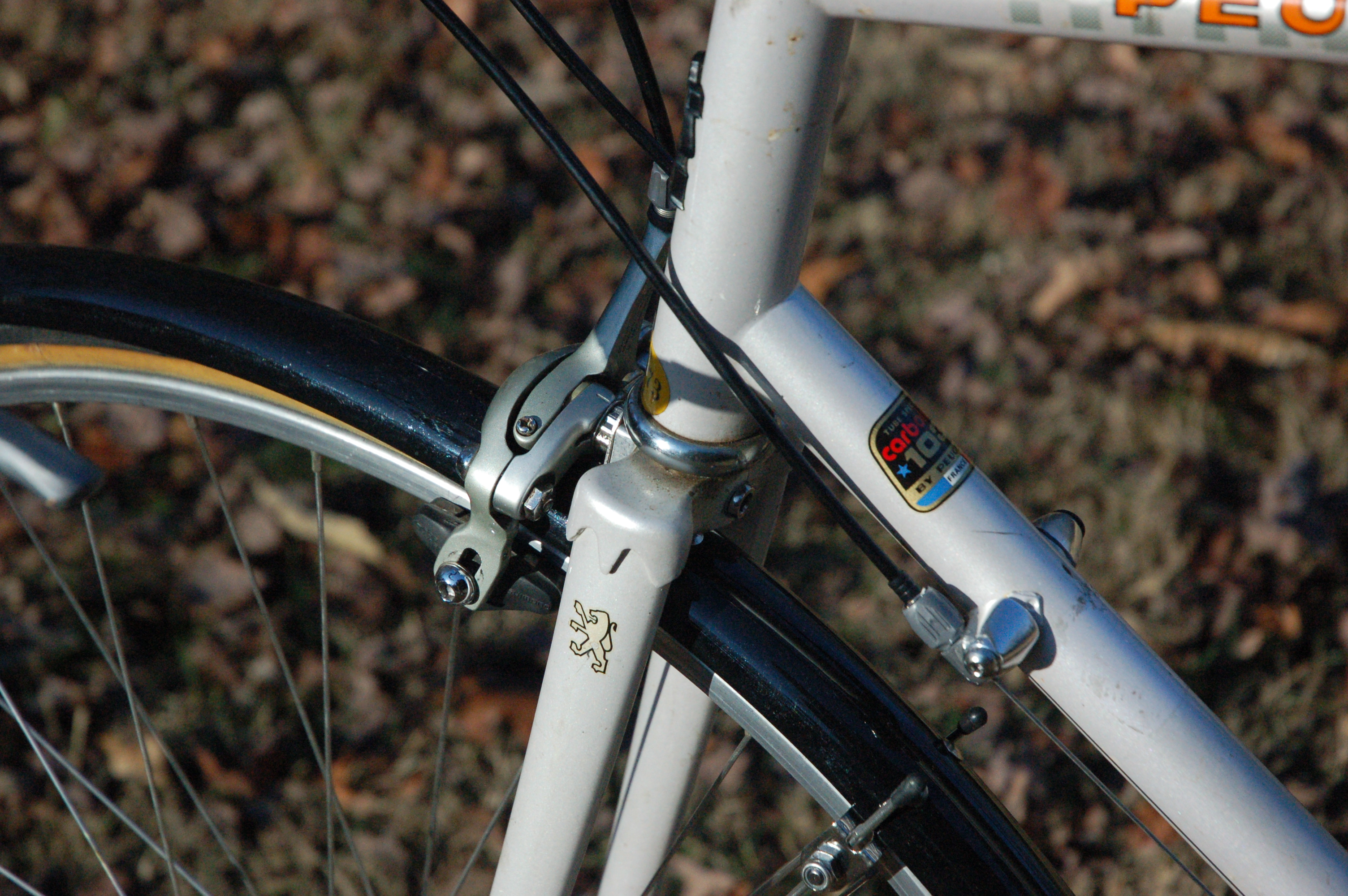
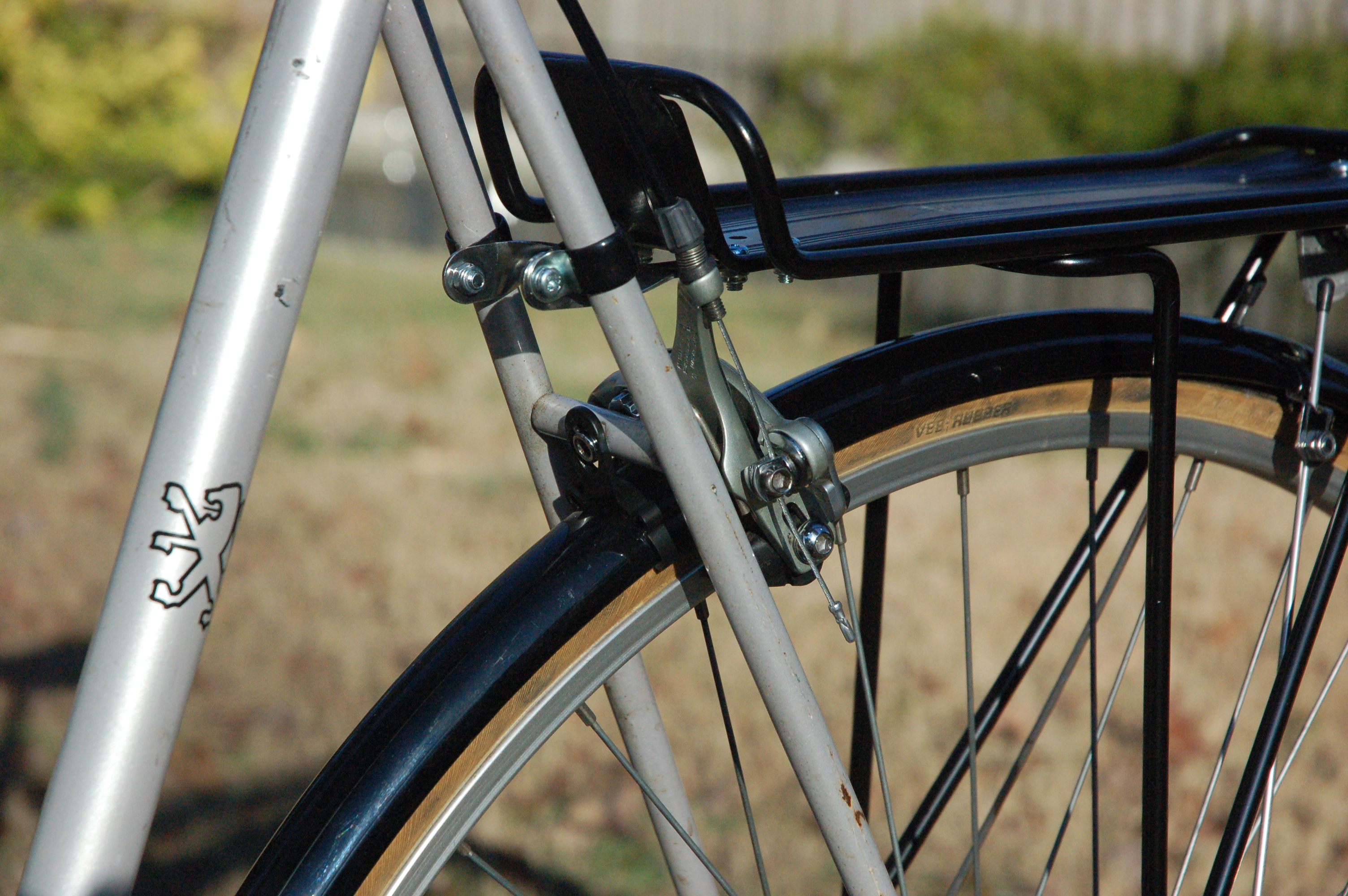
This Carbolite 103 frame is not the finest piece of craftsmanship to ever leave Europe, but on the other hand the geometry is great and it's probably unbreakable to the same extent as you'd imagine a 1965 Schwinn! The frame originally did not have a rear derailleur mounting tab, but rather incorporated an adaptor as part of the original derailleur. I modified this adaptor by tapping it to fit the 105 derailleur and grinding/welding the metal to mate correctly to the tensioner mechanism. Ultimately, this turned out nicely, though having to do such work may be the first clue to move to another frame for someone who doesn't have access to basic machining tools & a welder.
The brake levers are Shimano 105 and the bar end shifters are Shimano ultegra (currently set on friction). I have not tried the light out in truly dark situations, but this is the Cree LED Lowe's Task Force flashlight that was recently highly acclaimed as the best bargain on a bright bike light. The saddle is a vintage suede Turbo saddle from the 1980s.
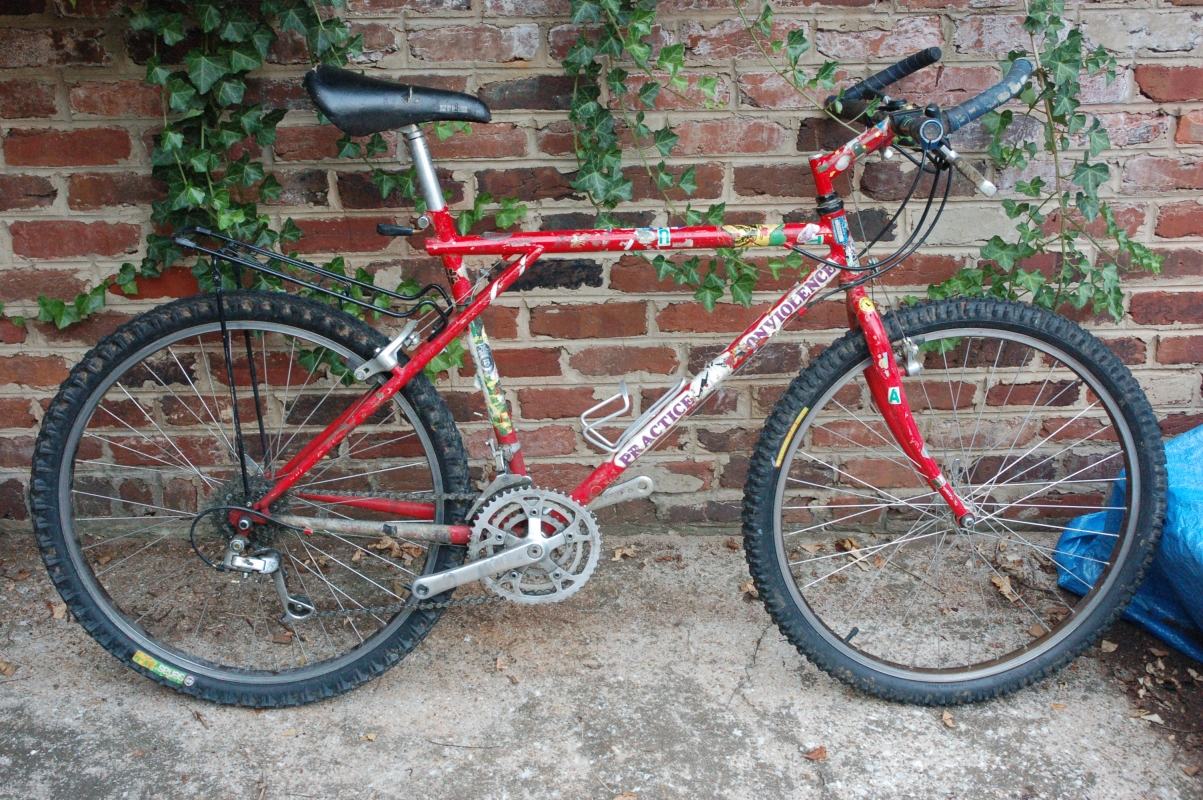
This bike started out as a youth mountain bike - 21 speed, solid fork, 24" wheels. I should have taken a picture because I can't seem to find any photos of this particular model anywhere in the 'net. It looks like late '80s-early '90s vintage and the frame is chromoly. It's not the lightest frame known to mankind, but it's a cool design with lots of lugs and nice long horizontal dropouts to make any number of configurations do-able. My son wanted a road bike to ride with the family on some of our longer bike outings. So, the idea was conceived from there. He had been pedaling like mad on a nice similarly-sized Specialized Hotrock for a year or so. We had looked at some of the nice youth sized road bike offerings, the Trek KD1000, Felt 24 & some others online. Ultimately, this is a bike that will be outgrown in a couple of years so we wanted something that wasn't terribly expensive. This dusty Hardrock came along and fit the bill. Other than possibly finding some ISO 520 road bike rims, the 'build' is complete. We were lucky the donor bike had a good headset & bottom bracket. We changed the stem to an old Salsa stem & added 36cm Salsa drop bars, some Tektro brake levers, top interruper - or whatever you call them - levers, and some Shimano bar end shifters (currently using friction - old school!). I changed the chainring set from the original 1-piece steel rings to a 'real' 3 piece 34-42-52 alloy Sugino crankset. We may change the rear gearing as well, even if we do not end up changing wheels. After our first outing together left us riding home pretty much in the dark, I added a nice Cree LED mini-flashlight headlight & LED blinky tail light for low light riding.
On a side-note, I learned there are something like four different variations of what are commonly referred to as "24 inch" wheels. It seems the better rim sizes and tire selection (and better is quite relative here because basically there is not much other than BMX) is based on the ISO 520 rim size...which is slightly larger than the common youth mountain bike ISO 540 rim size. Sheldon Brown shed light on this confusing issue on his web site, but to be honest I still get confused! So, I have a great set of 1" high pressure 24" road tires, but no rims to match yet.
Still, the bike seems to be a hit & though we were looking for some more "high speed" tires for the bike, the tires & wheels on it not are not bad since they are relatively bullet-proof.


Still, the bike seems to be a hit & though we were looking for some more "high speed" tires for the bike, the tires & wheels on it not are not bad since they are relatively bullet-proof.
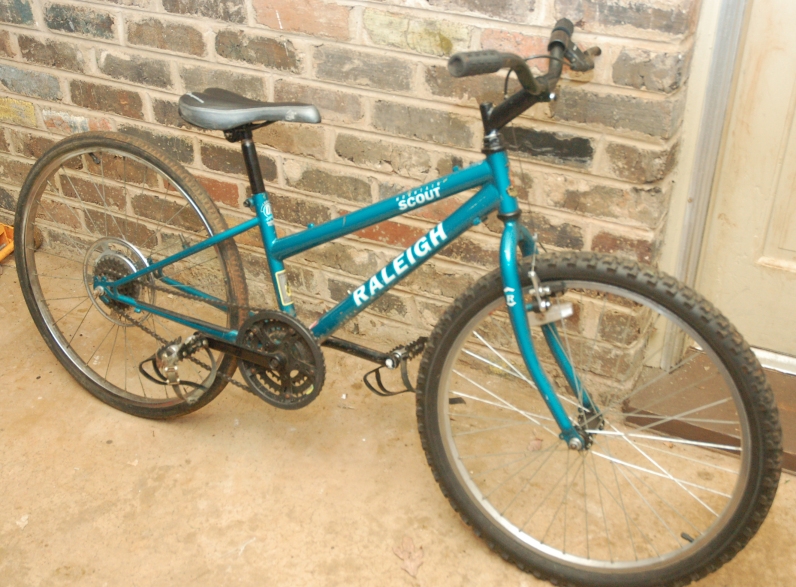
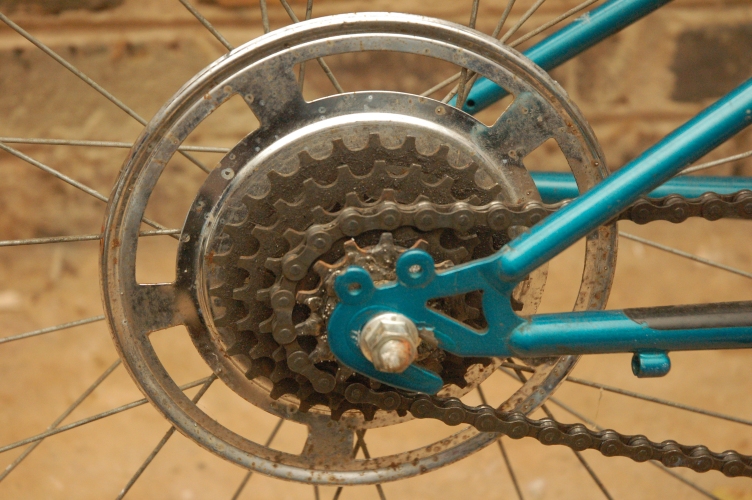
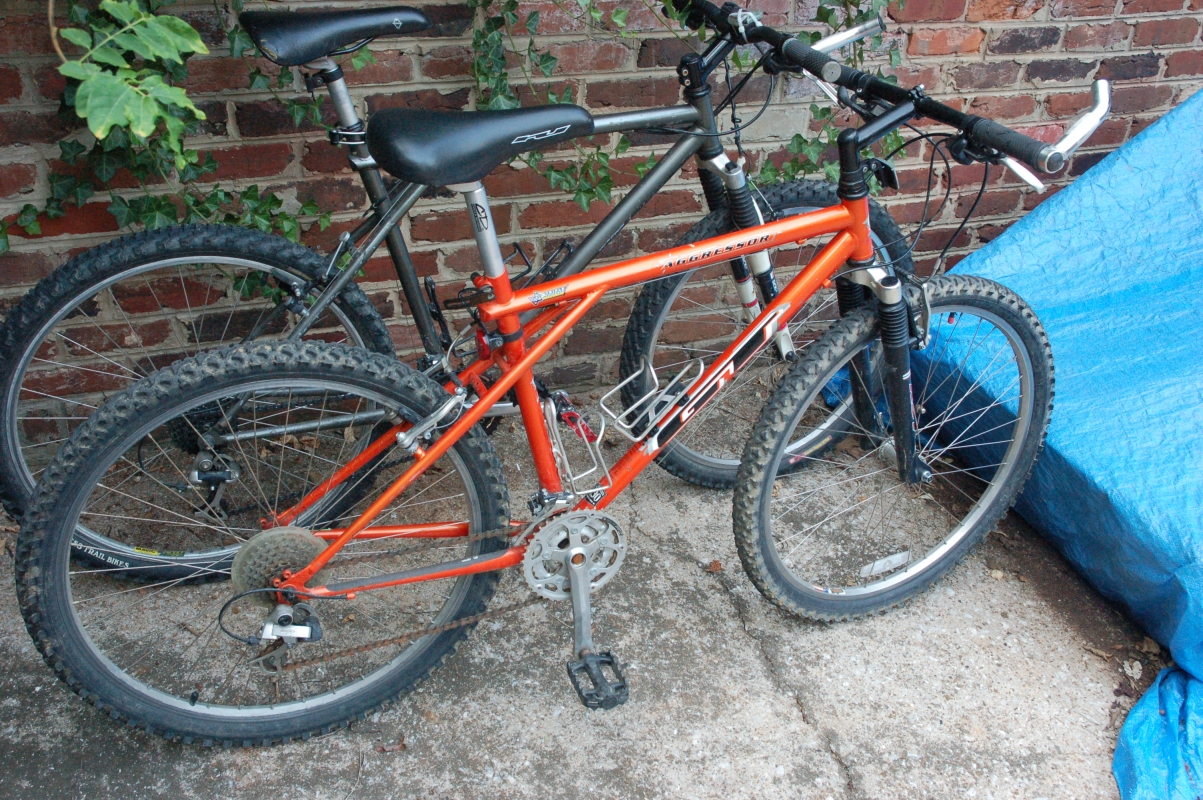
No, not talking about meth...this is an example of yet another fine fixed gear bike build. This started out as the benign 24" wheel youth Raleigh Scout 18 speed mountain bike. Bought for $25, we used it for a few years like that. Then, the bike became a parts donor for other bikes around the house after its main rider outgrew it. The front derailleur shifter, seat, tire, left brake lever, and a few cable guides were used on other bikes around the house....and then the frame sat looking rather forlorn. Since my son had been itching to have a fixed gear bike so he could do all those cool fixed gear tricks, a brainstorm struck. In probably a mere half hour, I had a 24" wheel from a JC Penney road bike welded securly to a fixed gear state, slapped an old Mongoose seat on & installed the stem & (chopped) handlebar leftover from the Cyclocross Hardrock project on it & here you have it! In true Appalachian redneck glory, the redneck fixed gear (sorry, can't bring myself to say "fixie"). It works. Hey, it still offers 12 gear ratio selections (the smallest cog was basically sacrificed in favor of a wide weld) & its rider is having great fun around the yard. It doesn't have all the trappings (bright colors, pads, hip geometry, cards in the spokes) of the real urban machines, but it does offer cool mis-matched wheels, chopped rise bars and some cool vintage cages.
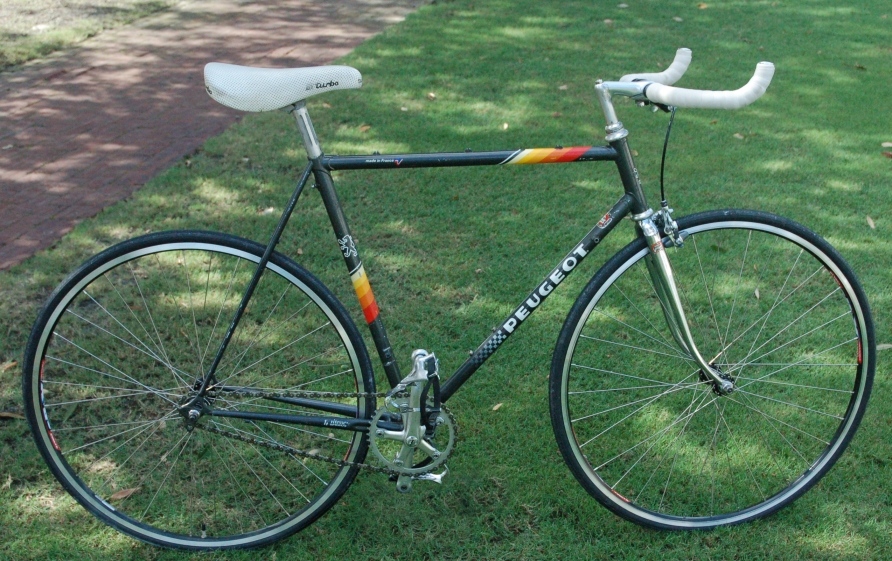
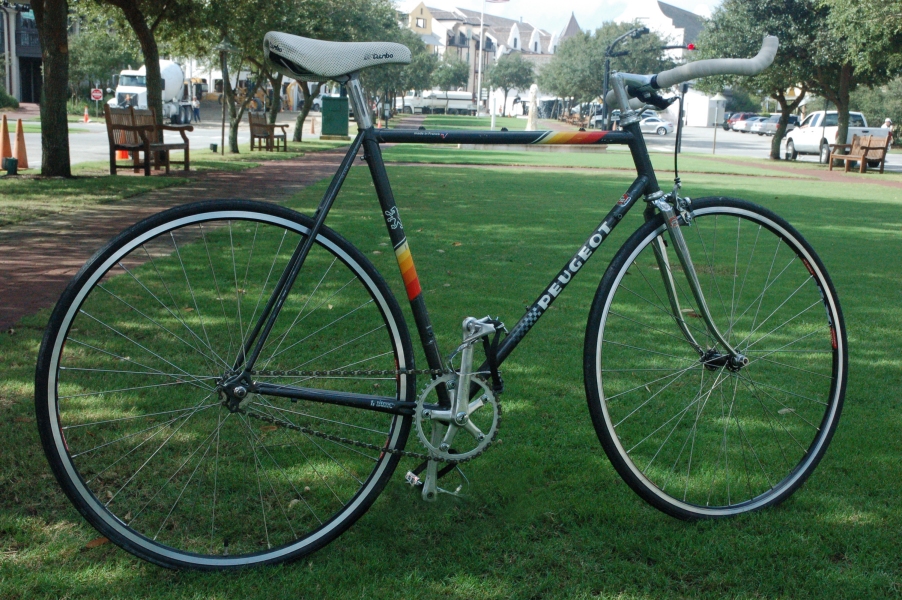
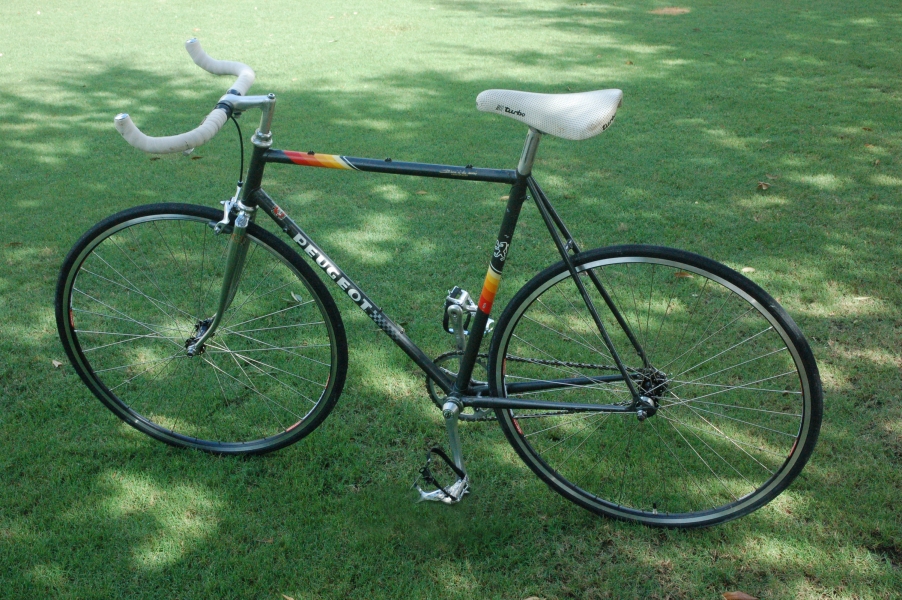
Well, not really, but this is the Super Vitus 980-framed 1984 Peugeot in its new incarnation: La Piste. If Bianchi can have a Pista, why can't Peugeot have a Piste, right? Well, seriously, this is just a fixed gear conversion of a nice classic road-framed bike that was in desperate need of "rescue" from its current state of being (see previous post). The frame is untouched in its '84 glory, wheels are Vuelta with a Formula track hub in the rear. None of the braze-ons will be removed. The saddle is actually the original seat to my Bertoni. The bars are the original Peugeot drop bars flipped and cut into bullhorn style bars. For a front brake, I used a spare Shimano 105 front brake with a MTB style lever from our parts-o-plenty Raleigh Scout that used (now, only rear) cantilever brakes. The chainring is the original Stronglight (BCD 122) 42t and the rear gear is 16t. Overall, the bike still need some cleanup and detail, but rides very nicely. Now, its the rider's turn for work...getting used to all the muscles fixed gear riding uses! Jeez!
Continue reading Peugeot Piste.
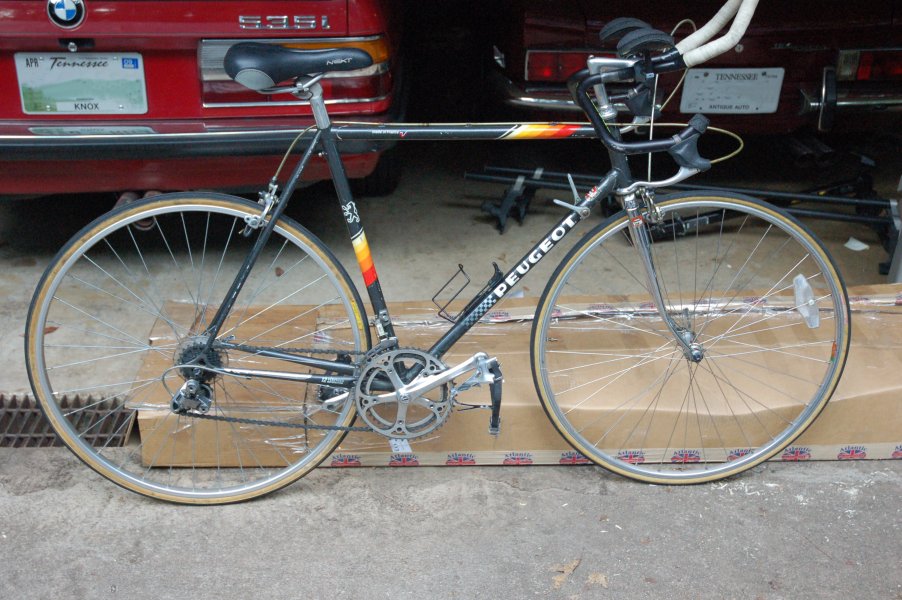
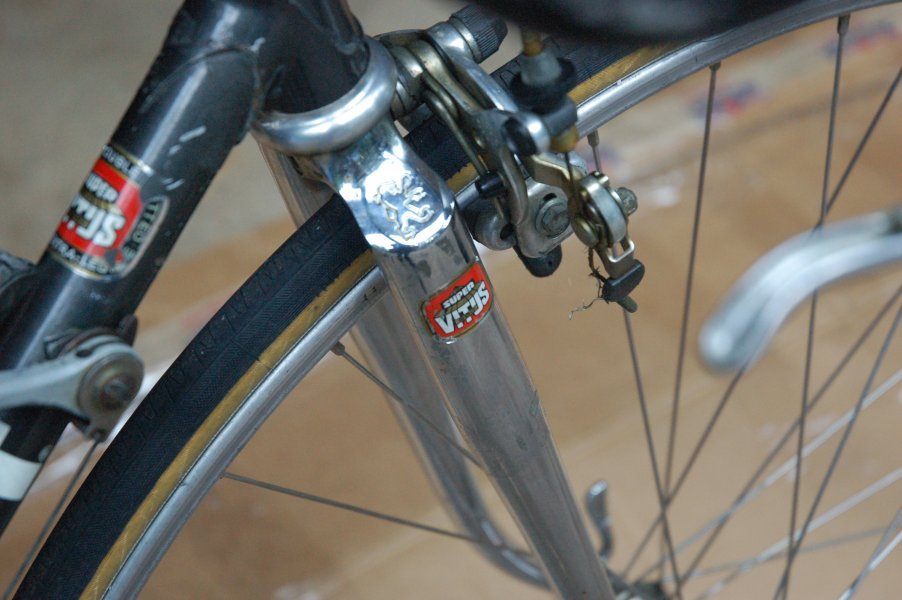
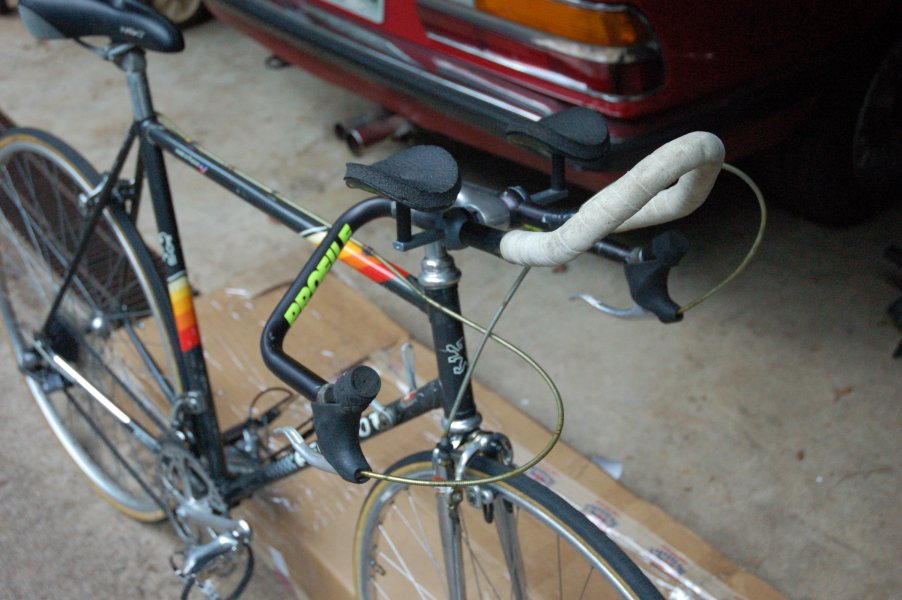
The components and condition if this bike are not remarkable. The frame is remarkable. This is the (Super) Vitus 980 Peugeot frame and it is noticeably light - for a steel frame, that is. As best my research shows, this is a 1984 model and most of the equipment is original. The previous owner installed the soft comfort seat, profile bars and a 7 speed rear gear set.
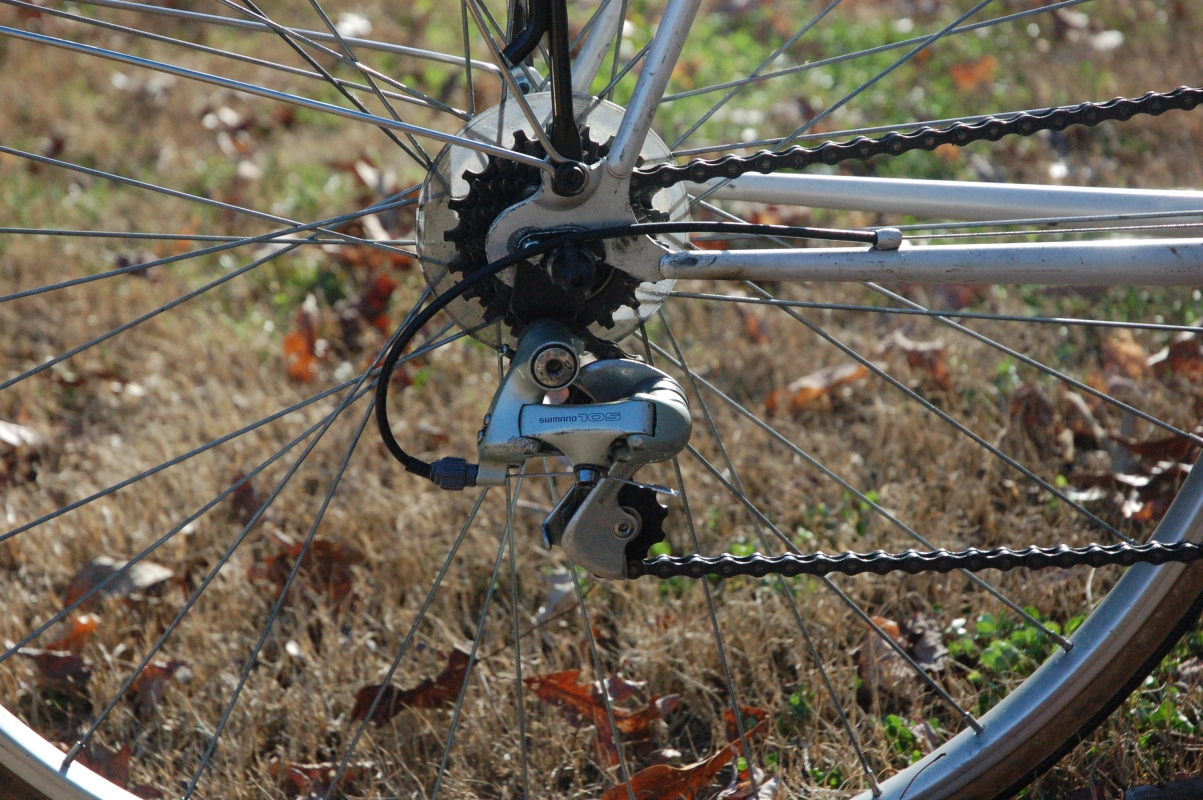
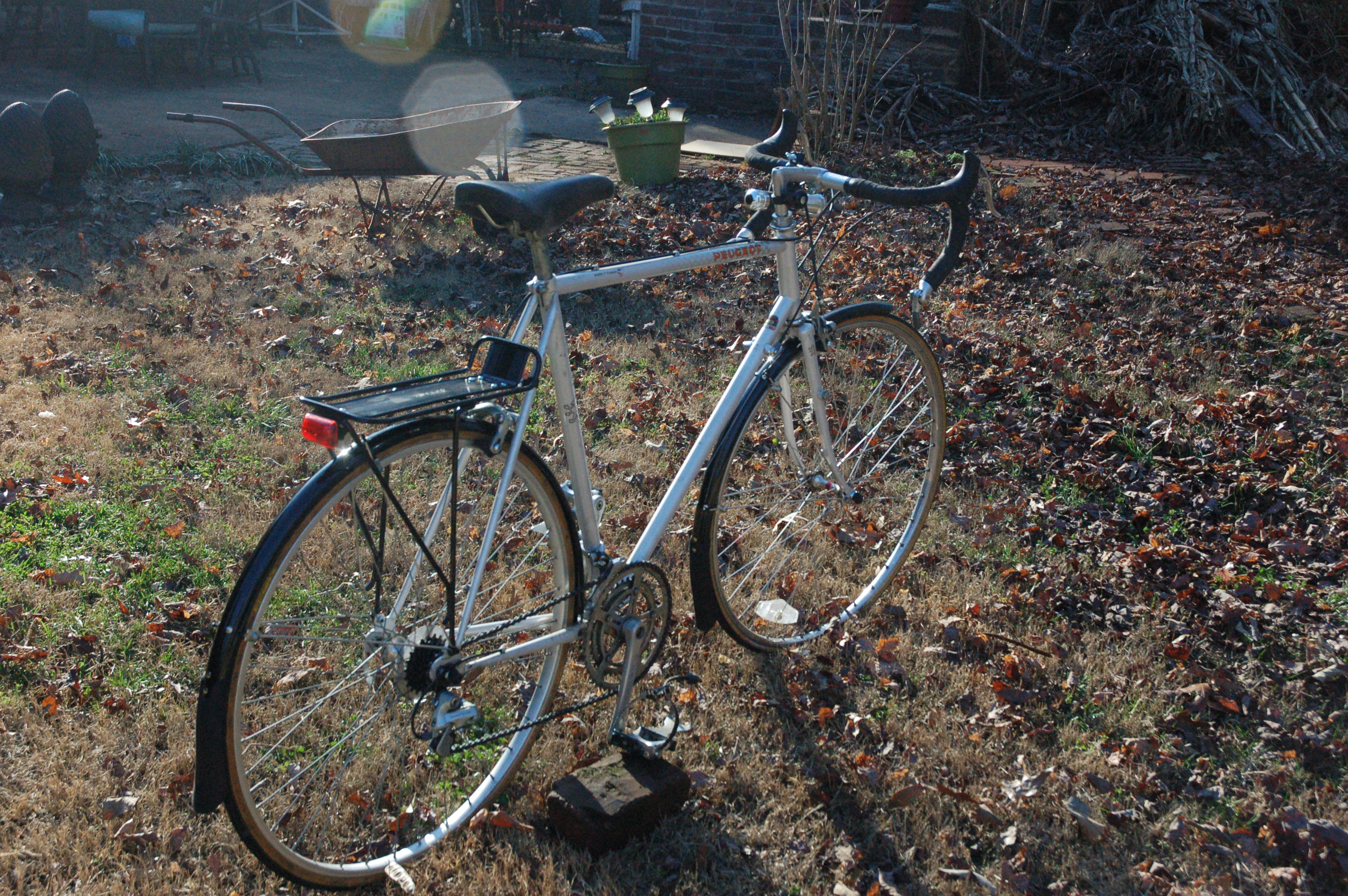
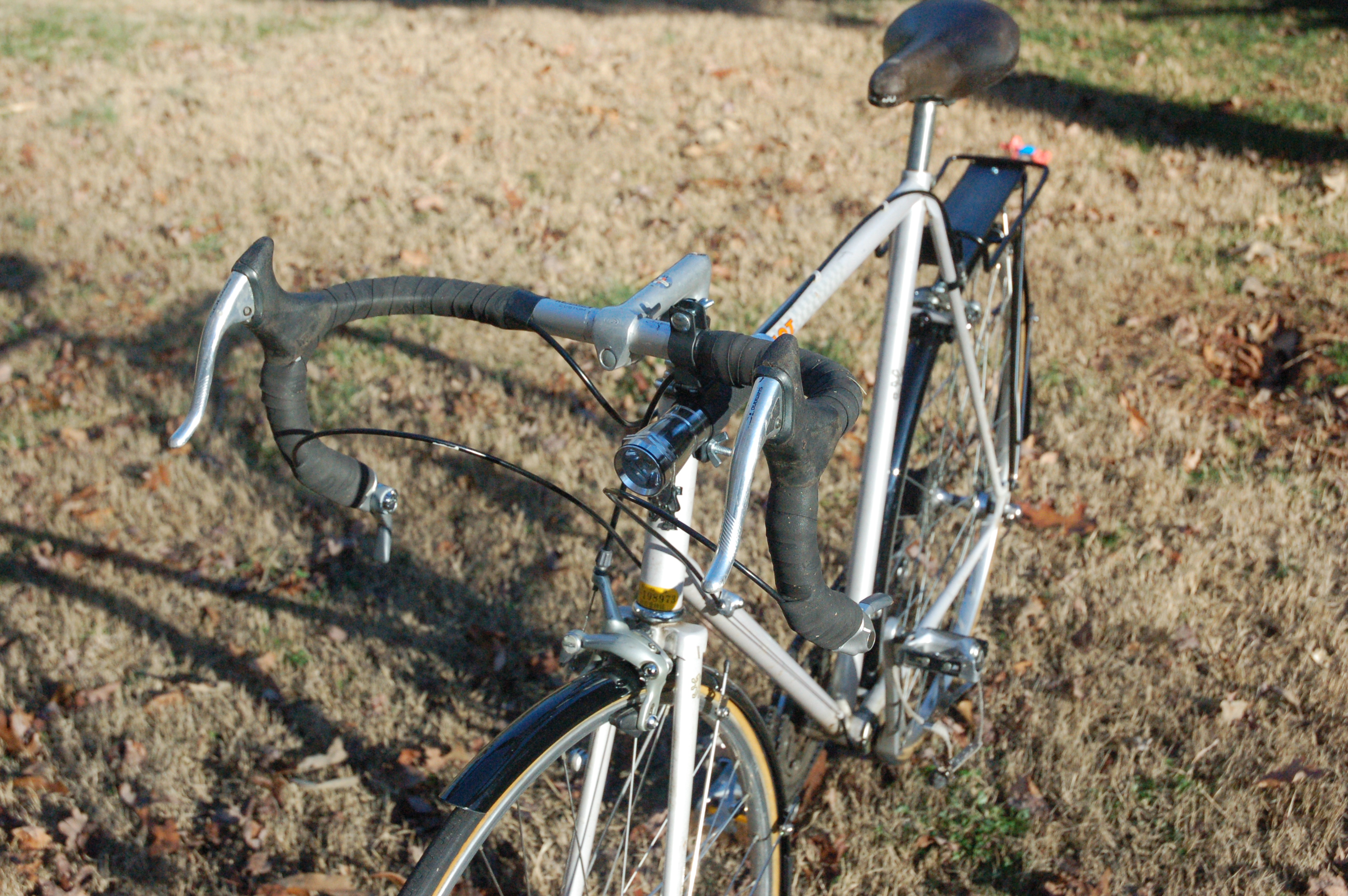
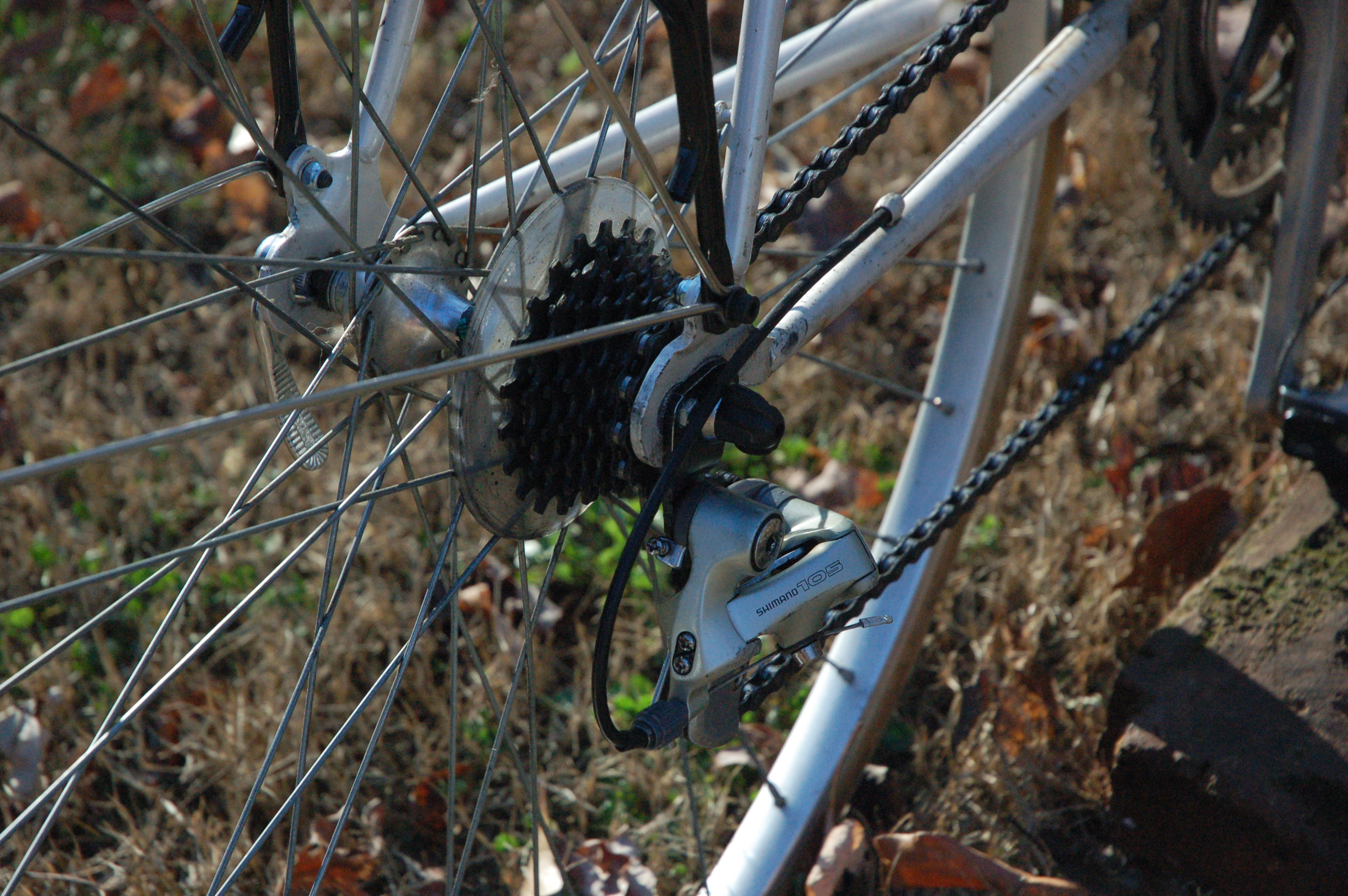
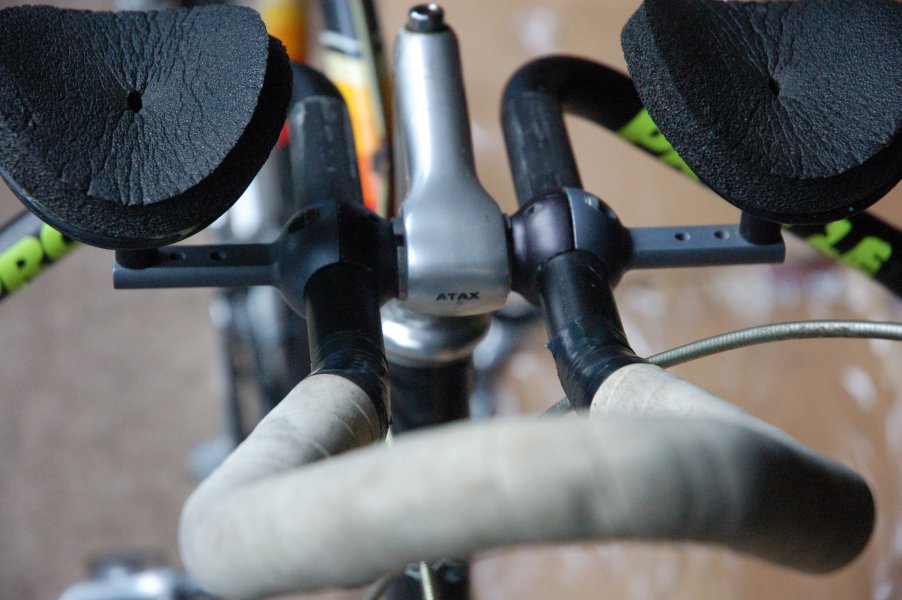
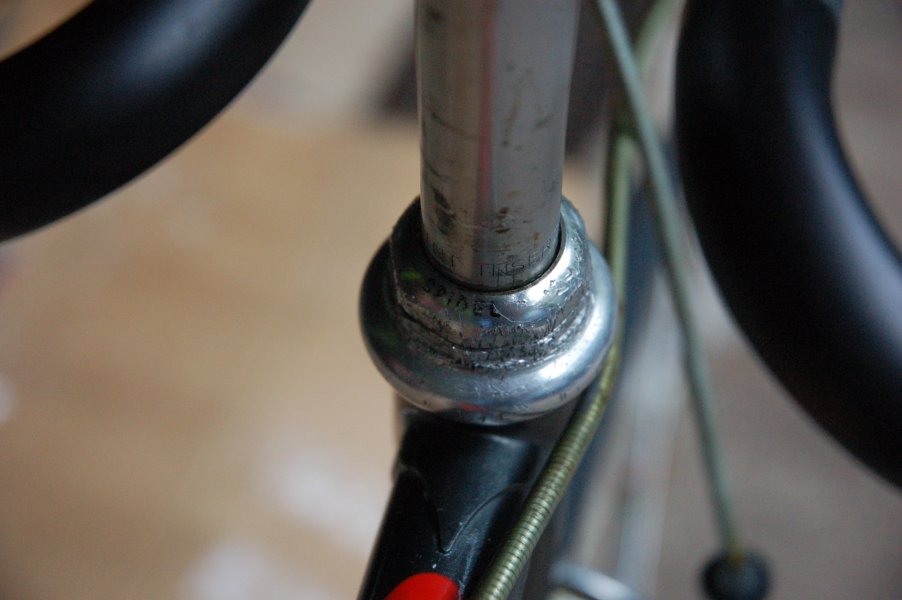
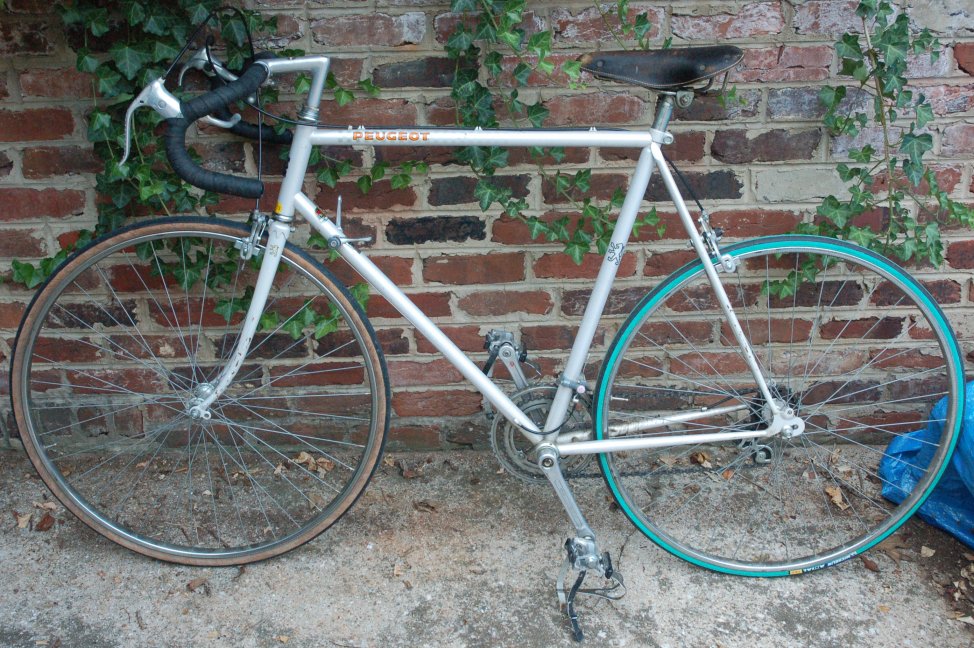
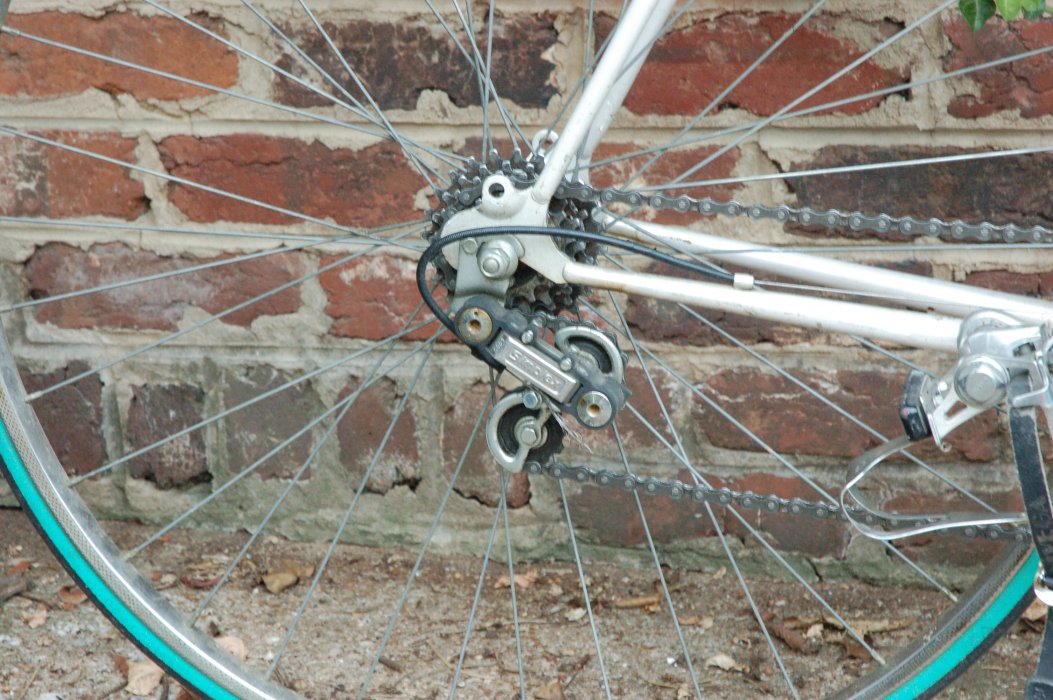
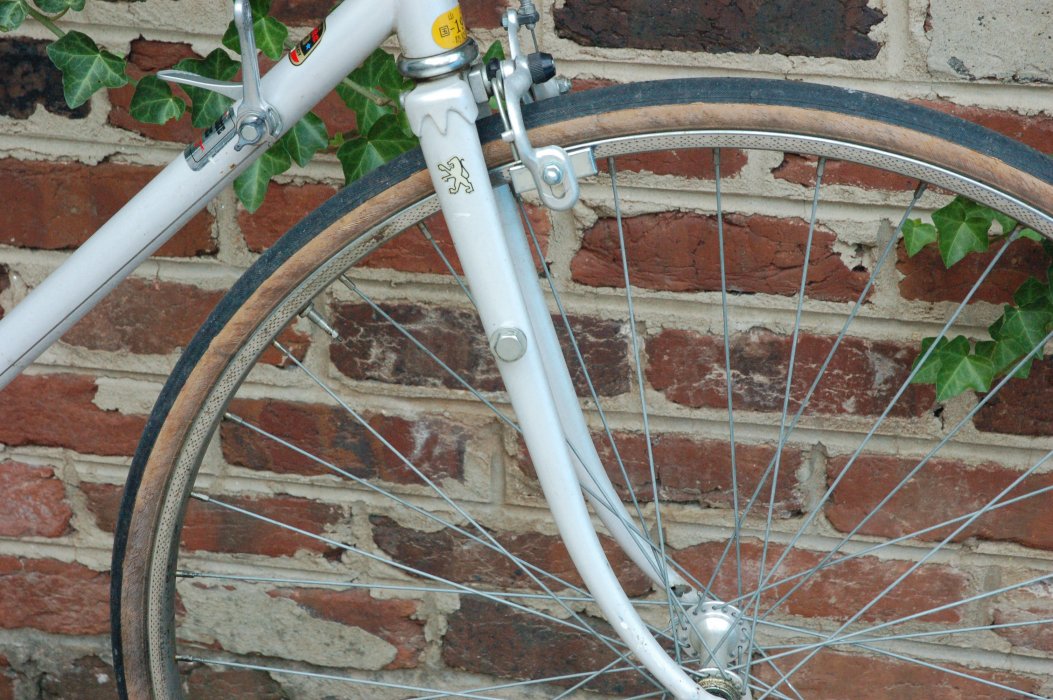
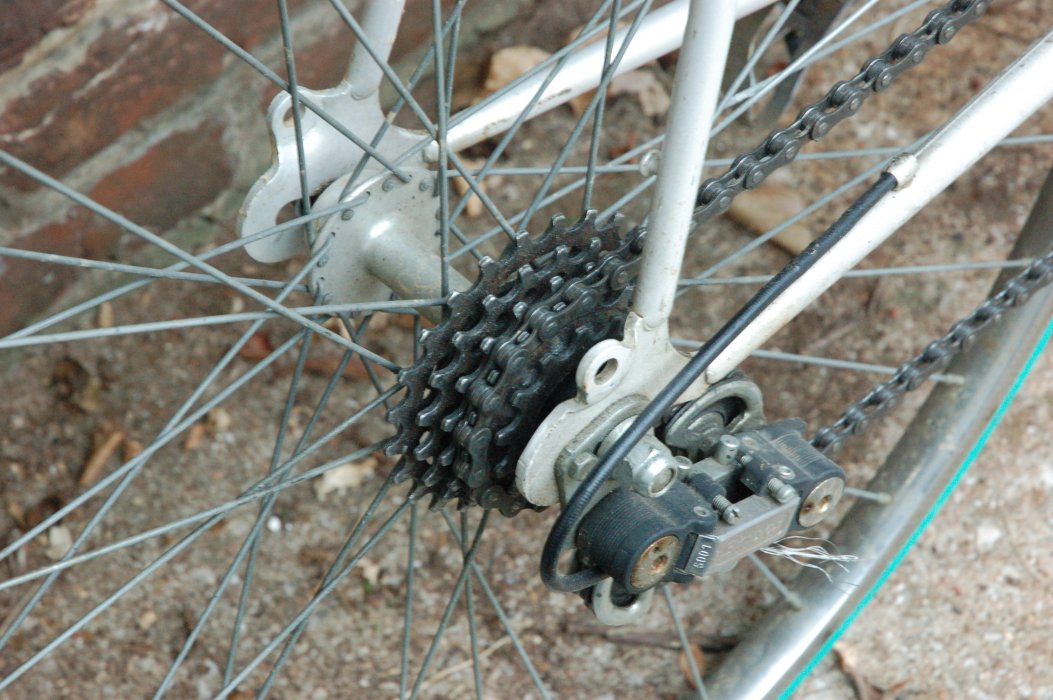
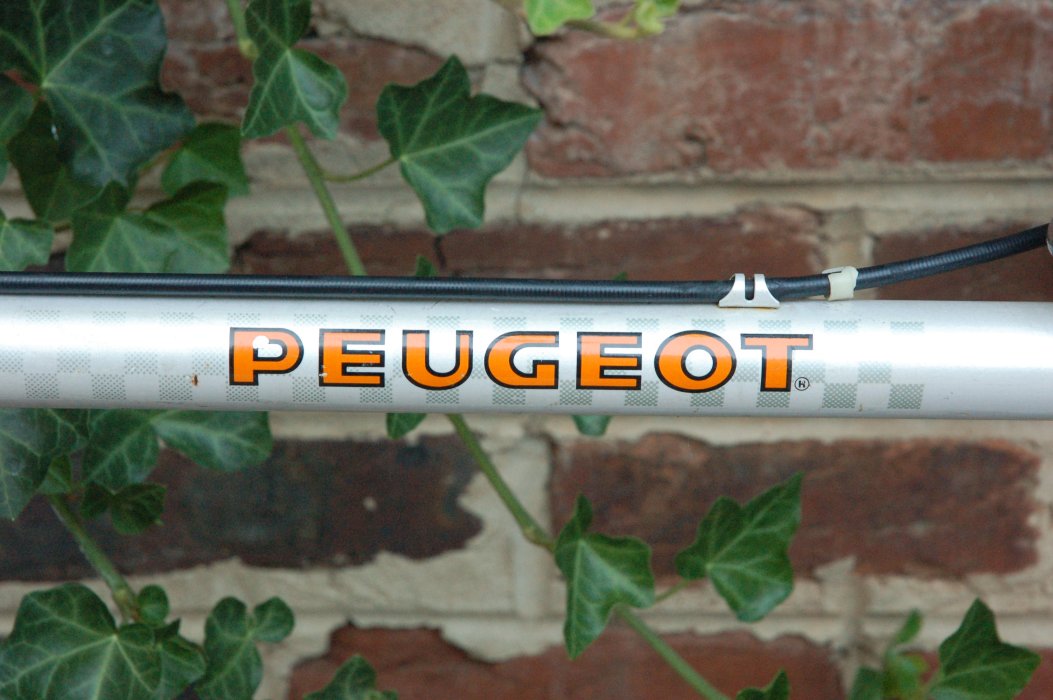
I'm still not sure the model and age of this bike. From what I've found, it seems to be a 1982 PBN10...maybe. It's really in great shape, though not particularly remarkable in build, componentry, etc. There is a lug on the right side of the fork that I do not know the purpose of (a generator for a light?). Seems like this could be a great commuter & utility bike and it would not be much trouble to outfit it with some more modern components if one chose to go that route.
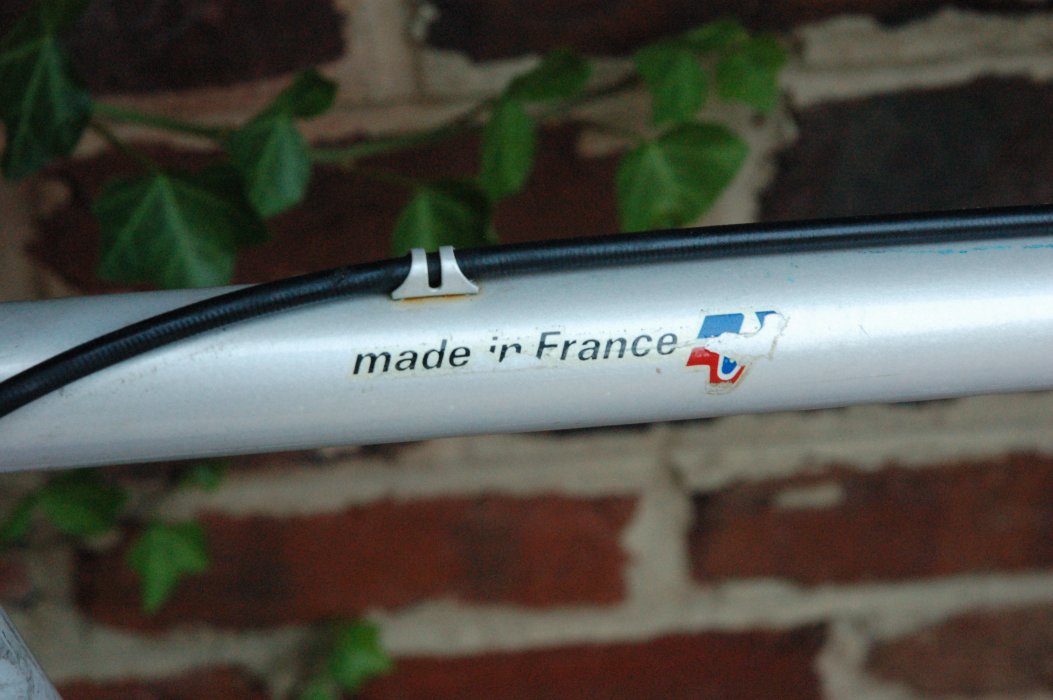
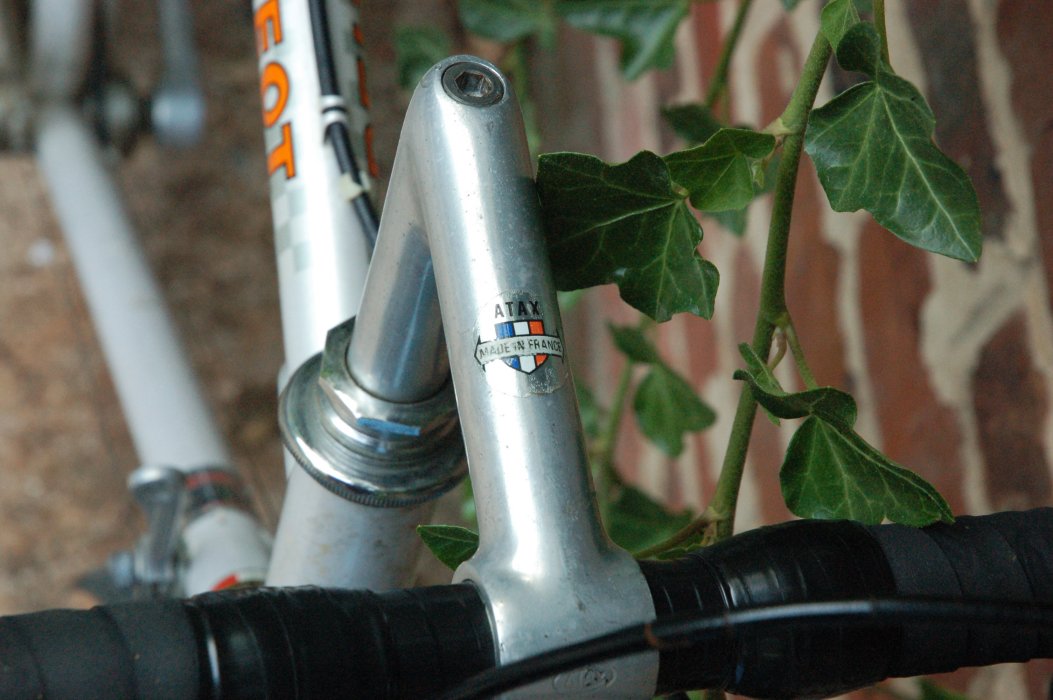
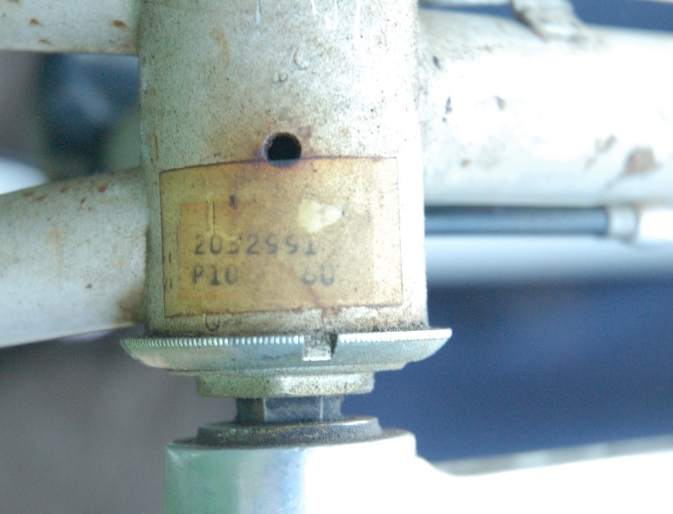
Some folks asked for the ID info & some detail on the tag on the headset (not Peugeot...but maybe an indication of the origin of the bike because it may have originated in the Japanese market), so here they are:
Continue reading Peugeot 103 Carbolite Frame Road Bike.